
Little Prudy’s Captain Horace
Sophie May
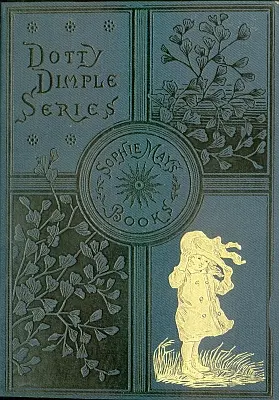
THE CLASSIC COLLECTION · 1868
"Dotty Dimple at Her Grandmother's" by Sophie May is a children's fiction book, likely written in the late 19th century. The story follows a young girl named Dotty, or Alice, as she navigates life with her siblings while spending time at her grandmother's home. The narrative captures the innocence and curiosities of childhood, focusing on Dotty's adventures, interactions with other children, and her moral lessons learned throughout. At the start of the book, the three Parlin siblings are introduced as they arrive at their grandmother's house on a lovely Sunday morning. Dotty Dimple observes the beauty of nature and finds herself grappling with feelings of envy and admiration as she compares herself to another girl, Jennie. The opening reveals Dotty’s innocence and her childlike misunderstanding of social status, wealth, and virtue, particularly as she contemplates the act of giving and the lessons learned in Sunday school. The interactions and discussions amongst the children set the stage for Dotty's adventures and moral growth throughout the story, indicating that themes of generosity, honesty, and childhood imagination will be central to the narrative.
Introduction adapted from the source catalogue; source summaries may be automatically generated.
Free to read · English · 24,521 words · No account needed
MAKE TIME FOR A GOOD BOOK
On by default. Untick to stop anonymous reading totals. Each page counts after 10 seconds in view. How this works.
Anonymous counting is on unless you have switched it off.
"I will carry it in to my grandmother," said Susy; and she entered the house, followed by all the children.
"Who knows but he's a griller?" said Jennie.
"Lem me see paper," cried Katie, snatching at it, and holding it up to
her left ear.
"O, dear!" sighed she, in a grieved tone; "it won't talk to me, Susy. I don't hear nuffin 'tall."
"She's a cunning baby, so she is," said Dotty. "She s'poses writing talks to people; she thinks that's the way they read it."
Grandmamma Parlin thought the man was probably an impostor. She went herself and talked with him; but, when she came back, instead of searching the closets for old garments, as Dotty had expected, she seated herself at her sewing, and did not offer to bestow a single copper on the beggar.
"Susy," said she, "he says he is hungry, and I cannot turn him away without food. You may spread some bread and butter, with ham between the slices, and carry out to him."
"What makes her so cruel?" whispered Dotty.
"O, Grandma knows best," replied Prudy. "She never is cruel."
"What makes you put on so much butter?" said Jennie Vance; "I wouldn't give him a single thing but cold beans."
Dotty, whose Sunday school lesson was all the while ringing in her ears, looked at the judge's daughter severely.
"Would you pour cold beans into anybody's hands, Jennie Vance? Once my mamma gave some preserves to a beggar,--quince preserves,--she did."
Jennie only tossed her head.
"I'm going to give him some money," continued Dotty, defiantly; "just as cheerfully as ever I can."
"O, yes, because he called you the handsomest."
"No, Jennie Vance; because I am not stingy."
"Um isn't stinchy," echoed Katie.
"I've got some Christmas money here. I earned it by picking pins off the floor, six for a cent. It took a great while, Jennie, but I wouldn't be selfish, like some little girls."
"Now, little sister," said Prudy, taking Dotty one side, "don't give your money to this man. You'll be sorry by and by."
But there was a stubborn look in Dotty's eyes, and she marched off to her money-box as fast as she could go. When she returned with the pieces of scrip, which amounted in all to fifteen cents, the children were grouped about the beggar, who sat upon the door-step, the plate of sandwiches before him.
"Here's some money, sir, for your sick children," cried Dotty, with an
air of importance.
"Blessings on your pretty face," replied the man, eagerly.
Dotty cast a triumphant glance at Jennie.
Your reading position is saved on this browser. Take it to another device with a library code. Reading pages adapt to text, rather than matching a printed edition.
BEHIND THE BOOK
This eBook is for the use of anyone anywhere in the United States and most other parts of the world at no cost and with almost no restrictions whatsoever. You may copy it, give it away or re-use it under the terms of the Project Gutenberg License included with this eBook or online at www.gutenberg.org. If you are not located in the United States, you will have to check the laws of the country where you are located before using this eBook. Read the source licence.
The original source file, including credits and licence, is retained by this library. Request an original-format copy at no charge. Please include the book title and Project Gutenberg identifier #20699.
KEEP YOUR CURIOSITY GOING
Coulson Kernahan

Maurice Baring
Frances Wright
Cécile Tormay

Frederic Jesup Stimson

W. H. P. (William Henry Pope) Jarvis

