
Billy Topsail, M.D.: A Tale of Adventure With Doctor Luke of the Labrador
Norman Duncan
THE CLASSIC COLLECTION · 1904
"Doctor Luke of the Labrador" by Norman Duncan is a novel written in the early 20th century. The story is set against the backdrop of the rugged and barren landscape of Labrador, focusing on the themes of love, resilience, and the bond between a mother and child. The opening chapters introduce the main character, Davy, a young boy, and his close relationship with his mother and father, highlighting the unique challenges of life in this remote and harsh environment. At the start of the novel, the narrative paints a vivid picture of Davy's home and the surrounding harbour, setting the stage for a life defined by the merciless sea and the beauty of familial love. Davy spends time exploring the landscape, enjoying adventures with his mother, and listening to the tales of local fishermen. As the story unfolds, a sense of unease emerges regarding his mother’s health, leading to a tense decision to call for a doctor amidst growing worries about her wellbeing. The dynamics between Davy, his loving but troubled mother, and the colorful characters of the community, including the eccentric Skipper Tommy, establish a poignant tone that draws readers into the challenges of love and the natural world in this isolated part of the world.
Introduction adapted from the source catalogue; source summaries may be automatically generated.
Free to read · English · 67,487 words · No account needed
MAKE TIME FOR A GOOD BOOK
On by default. Untick to stop anonymous reading totals. Each page counts after 10 seconds in view. How this works.
Anonymous counting is on unless you have switched it off.
Then, frankly, he told me as much, I fancy, as a man may tell a lad of
such things....
In horror--in shame--ay, in shame so deep I flushed and dared not look at him--I flung off his arms. And I sprang away--desperately fingering my collar: for it seemed I must choke, so was my throat filled with indignation. "You wicked man!" I cried. "You kissed my sister. You--you--kissed my sister!"
"Davy!"
"You wicked, wicked man!"
"Don't, Davy!"
"Go 'way!" I screamed.
Rather, he came towards me, opening his arms, beseeching me. But I was hot-headed and willful, being only a lad, without knowledge of sin gained by sinning, and, therefore, having no compassion; and, still, I fell away from him, but he followed, continuing to beseech me, until, at last, I struck him on the breast: whereupon, he winced, and turned away. Then, in a flash--in the still, illuminating instant that follows a blow struck in blind rage--I was appalled by what I had done; and I stood stiff, my hands yet clinched, a storm of sobs on the point of breaking: hating him and myself and all the world, because of the wrong he had done us, and the wrong I had done him, and the wrong that life had worked us all.
I took to my heels.
"Davy!" he called.
The more he cried after me, the more beseechingly his voice rang in my ears, the more my heart urged me to return--the harder I ran.
I wish I had not struck him ... I wish, I say, I had not struck him ... I wish that when he came towards me, with his arms wide open, his grave, gray eyes pleading--wretched soul that he was--I wish that then I had let him enfold me. What poor cleverness, what a poor sacrifice, it would have been! 'Twas I--strange it may have been--but still 'twas I, Davy Roth, a child, Labrador born and bred, to whom he stretched out his hand. I should have blessed God that to this remote place a needful man had come. 'Twas my great moment of opportunity. I might--I might--have helped him. How rare the chance! And to a child! I might have taken his hand. I might have led him immediately into placid waters. But I was I--unfeeling, like all lads: blind, too, reprehensible, deserving of blame. In all my life--and, as it happens (of no merit of my own, but of his), it has thus far been spent seeking to give help and comfort to such as need it--never, never, in the diligent course of it, has an opportunity so momentous occurred. I wish--oh, I wish--he might once again need me! To lads--and to men--and to frivolous maids--and to beggars and babies and cripples and evil persons--and to all sorts and conditions of human kind! Who knows to whom the stricken soul--downcast whether of sin or sorrow--may appeal? Herein is justification--the very key to heaven, with which one may unlock the door and enter, claiming bliss by right, defiant of God Himself, if need were: "I have sinned, in common with all men, O God, but I have sought to help such as were in sorrow, whether of sin or the misfortunes incident to life in the pit below, which is the world. You dare not cast me out!" Oh, men and women, lads and maids, I speak because of the wretchedness of my dear folk, out of their sorrow, which is common to us all, but here, in this barren place, is unrelieved, not hidden. Take the hand stretched out! And watch: lest in the great confusion this hand appear--and disappear. If there be sin, here it is: that the hand wavered, beseeching, within reach of such as were on solid ground, and was not grasped.
Your reading position is saved on this browser. Take it to another device with a library code. Reading pages adapt to text, rather than matching a printed edition.
Norman Duncan
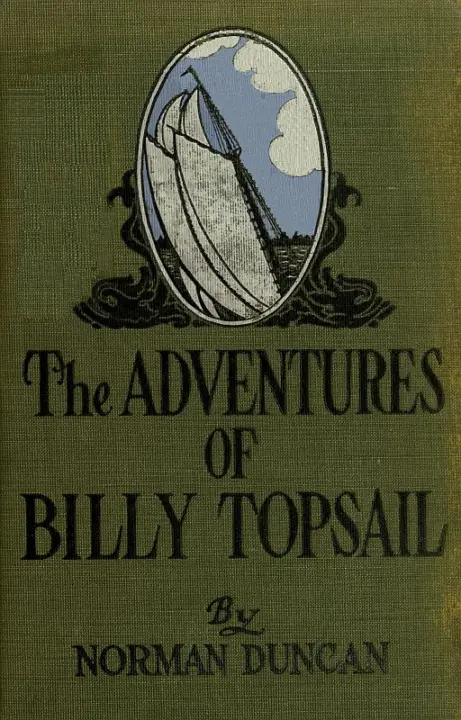
Norman Duncan
Norman Duncan
Norman Duncan
BEHIND THE BOOK
This eBook is for the use of anyone anywhere in the United States and most other parts of the world at no cost and with almost no restrictions whatsoever. You may copy it, give it away or re-use it under the terms of the Project Gutenberg License included with this eBook or online at www.gutenberg.org. If you are not located in the United States, you will have to check the laws of the country where you are located before using this eBook. Read the source licence.
The original source file, including credits and licence, is retained by this library. Request an original-format copy at no charge. Please include the book title and Project Gutenberg identifier #19981.
KEEP YOUR CURIOSITY GOING
Coulson Kernahan

Maurice Baring
Frances Wright
Cécile Tormay

Frederic Jesup Stimson

W. H. P. (William Henry Pope) Jarvis