THE CLASSIC COLLECTION✦A dead man’s diaryCLASSIC FREE BOOKS
A dead man’s diary
Coulson Kernahan
THE CLASSIC COLLECTION · 1906
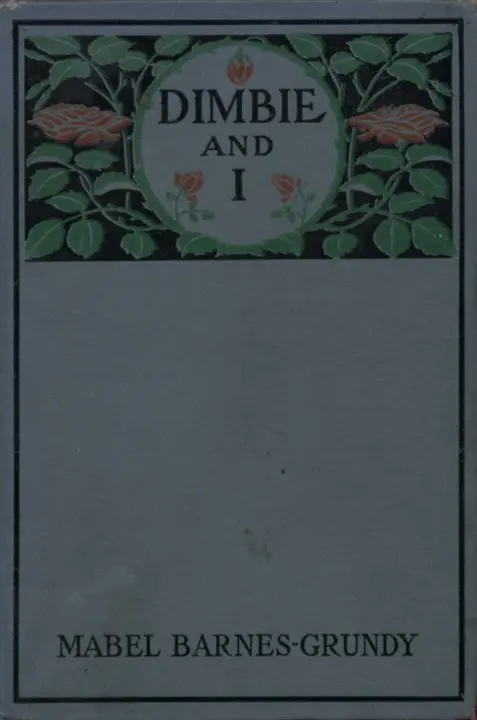
"Dimbie and I—and Amelia" by Mabel Barnes-Grundy is a novel written in the early 20th century. The story follows the life of Marguerite Westover as she navigates her recent marriage to Dimbie, exploring her feelings of happiness and fulfillment while also dealing with the comical complications of daily life, including her eccentric household help, Amelia. The novel appears to blend humor with domestic themes, focusing on Marguerite's relationships and her domestic adventures. The opening of the novel introduces Marguerite basking in the spring sunshine, filled with anticipation for her husband Dimbie's return after an absence due to family matters. As she reflects on her deep affection for him and her contrasting feelings towards her father, Peter, the reader gets a glimpse into her lively and humorous character. Furthermore, Marguerite reveals her playful spirit through anecdotes about Dimbie and her domestic life, including her interactions with Amelia, the servant whose unique approaches sometimes sow chaos. The stage is set for a lighthearted but insightful exploration of marriage and domesticity in early 20th-century England, with hints of the challenges and joys that await them.
Introduction adapted from the source catalogue; source summaries may be automatically generated.
Free to read · English · 77,700 words · No account needed
MAKE TIME FOR A GOOD BOOK
On by default. Untick to stop anonymous reading totals. Each page counts after 10 seconds in view. How this works.
Anonymous counting is on unless you have switched it off.
And when I extolled the virtue of palest mauve taffeta, Jane simply laughed outright and asked me to look at her colouring.
"I'm looking," I said. "You've brown hair and bright red cheeks."
But she ignored all our suggestions.
"I shall be married in silver-grey poplin," she pronounced.
"Exactly like a servant." Nanty closed her eyes. "They always wear silver-grey. I had three parlour-maids in succession who had selected it for their wedding-gowns."
"But alpaca, surely! Mine will be silk poplin of a good quality."
But Nanty and mother refused to take any further interest in the subject, and Nanty picked up a paper.
"What about grey cloth, then--pale dove-grey?" Jane waived the silver poplin with an apparent effort.
Nanty put down the paper.
"Grey cloth with chinchilla is rather nice," she admitted grudgingly.
"I did not mention chinchilla," said Jane meekly.
"I will give the chinchilla as a wedding present if you don't mind. Grey cloth alone would be most uninteresting."
"The coat must be a bolero," said mother firmly, "lined with white
satin."
"You are all evidently going to run me into a lot of money. I am not accustomed to satin linings. I thought of having Italian cloth."
"What?" shouted mother and Nanty.
"Italian cloth," repeated Jane firmly. "I hope to do the whole thing
for about five pounds."
"Impossible!" said Nanty. "Fifteen would be mean and skimpy."
Jane set her mouth good-humouredly.
"Then I can't get married."
"No, you evidently can't," agreed Nanty. "It would be unfair to the
man."
"It's a pity," observed Jane, "because I rather wanted to."
"A foolish desire on your part which should be checked at once."
Mother began to look worried. With a desire to cheer her up I casually inquired of Nanty if she had seen anything more of Professor Leighrail. I was unprepared for her dropping the patterns about like chaff in a wind.
"Professor Leighrail!" said mother, with widely-open eyes.
"Anastasia's old lover?"
"Exactly," I replied. "He's a friend of ours, and Nanty met him here the other day. Have you seen him again?" I asked.
She did not reply.
"It is a pity when deafness overtakes people--the first sign of old
age."
"She is not deaf," said mother, "and is only fifty-one."
I laughed.
"Kiss me, mother, dear," I said, "you are so practical at times. And yet some people of your age are quite romantic and sentimental."
"La, la, la, la!" sang Nanty. She leaned over my couch. "Marguerite," she said, "I should slap you if you were strong and well."
Your reading position is saved on this browser. Take it to another device with a library code. Reading pages adapt to text, rather than matching a printed edition.
BEHIND THE BOOK
This eBook is for the use of anyone anywhere in the United States and most other parts of the world at no cost and with almost no restrictions whatsoever. You may copy it, give it away or re-use it under the terms of the Project Gutenberg License included with this eBook or online at www.gutenberg.org. If you are not located in the United States, you will have to check the laws of the country where you are located before using this eBook. Read the source licence.
The original source file, including credits and licence, is retained by this library. Request an original-format copy at no charge. Please include the book title and Project Gutenberg identifier #47003.
KEEP YOUR CURIOSITY GOING
Coulson Kernahan

Maurice Baring
Frances Wright
Cécile Tormay

Frederic Jesup Stimson

W. H. P. (William Henry Pope) Jarvis