THE CLASSIC COLLECTION✦A dead man’s diaryCLASSIC FREE BOOKS
A dead man’s diary
Coulson Kernahan
THE CLASSIC COLLECTION · 1906
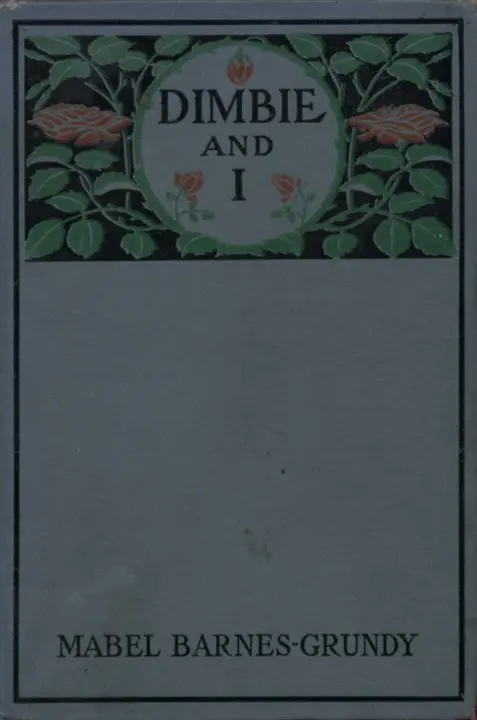
"Dimbie and I—and Amelia" by Mabel Barnes-Grundy is a novel written in the early 20th century. The story follows the life of Marguerite Westover as she navigates her recent marriage to Dimbie, exploring her feelings of happiness and fulfillment while also dealing with the comical complications of daily life, including her eccentric household help, Amelia. The novel appears to blend humor with domestic themes, focusing on Marguerite's relationships and her domestic adventures. The opening of the novel introduces Marguerite basking in the spring sunshine, filled with anticipation for her husband Dimbie's return after an absence due to family matters. As she reflects on her deep affection for him and her contrasting feelings towards her father, Peter, the reader gets a glimpse into her lively and humorous character. Furthermore, Marguerite reveals her playful spirit through anecdotes about Dimbie and her domestic life, including her interactions with Amelia, the servant whose unique approaches sometimes sow chaos. The stage is set for a lighthearted but insightful exploration of marriage and domesticity in early 20th-century England, with hints of the challenges and joys that await them.
Introduction adapted from the source catalogue; source summaries may be automatically generated.
Free to read · English · 77,700 words · No account needed
MAKE TIME FOR A GOOD BOOK
On by default. Untick to stop anonymous reading totals. Each page counts after 10 seconds in view. How this works.
Anonymous counting is on unless you have switched it off.
Peter and mother are here again, and Jane has been transferred to the
bachelor's room.
Peter is gouty, irritable, chilly--for October is with us and giving us sharp little frosts--and sulphurous in his language.
Amelia wears a patient, stand-by-me-O-Lord air; and Dimbie is crossly resigned to the inevitable.
He came to me this morning.
"I am going to kick Peter."
"Yes," I agreed, drawing my blue nightingale, which mother has made me, more closely round my shoulders.
"I am going to pitch him out of the front door."
I nodded.
"You have no objection?"
"Well, choose a flower-bed for his descent."
"But I want to hurt him."
"I quite sympathise with you in your desire, which is most reasonable. But were he to alight on the gravel path he might break his leg, and then we should be obliged to have him here for weeks."
"Then I shall certainly not choose the path," said Dimbie decisively.
"That is right. What has he been doing?"
"Everything he shouldn't do. Your mother is reduced to tears, and Amelia is flinging the saucepans and kettles at the kitchen-range."
"She is certainly making a noise."
Dimbie sat down on the bed and knit his brows.
"I am sorry, dear," I said sympathetically. "I couldn't help his
coming; I didn't invite him."
"I know. Naturally your mother wanted to see you."
"Yes. Poor mother! To live for three months without any respite upon the edge of a crater subject at any moment to volcanic eruptions is naturally wearing, and she must have an occasional change in order to keep her reason."
Dimbie nursed his leg, and his mouth was a little more crooked than usual. I lay and watched him. How unselfish and forbearing he was! He put up with Peter for mother's sake, he put up with mother for my sake, he put up with Jane for her own and the Doctor's sake. Here he was yearning to be alone, to be by ourselves; and the house was full up with parents, friends, and doctors. And I, to add to his worries, have been obliged to keep my room for the last week owing to a feverish cold and general poorliness.
"But they will all go soon," I said, trying to comfort him. "Peter and mother are returning home after the wedding, and Jane is to be married next month."
"November is an idiotic month for a wedding," he said irritably.
"Why?"
"She mightn't have been in such a deuce of a hurry."
"But it isn't she, it's the Doctor."
"Then he ought to have learnt patience at his age."
I smiled.
"You've grown fond of Jane?"
Your reading position is saved on this browser. Take it to another device with a library code. Reading pages adapt to text, rather than matching a printed edition.
BEHIND THE BOOK
This eBook is for the use of anyone anywhere in the United States and most other parts of the world at no cost and with almost no restrictions whatsoever. You may copy it, give it away or re-use it under the terms of the Project Gutenberg License included with this eBook or online at www.gutenberg.org. If you are not located in the United States, you will have to check the laws of the country where you are located before using this eBook. Read the source licence.
The original source file, including credits and licence, is retained by this library. Request an original-format copy at no charge. Please include the book title and Project Gutenberg identifier #47003.
KEEP YOUR CURIOSITY GOING
Coulson Kernahan

Maurice Baring
Frances Wright
Cécile Tormay

Frederic Jesup Stimson

W. H. P. (William Henry Pope) Jarvis