THE CLASSIC COLLECTION✦A dead man’s diaryCLASSIC FREE BOOKS
A dead man’s diary
Coulson Kernahan
THE CLASSIC COLLECTION · 1906
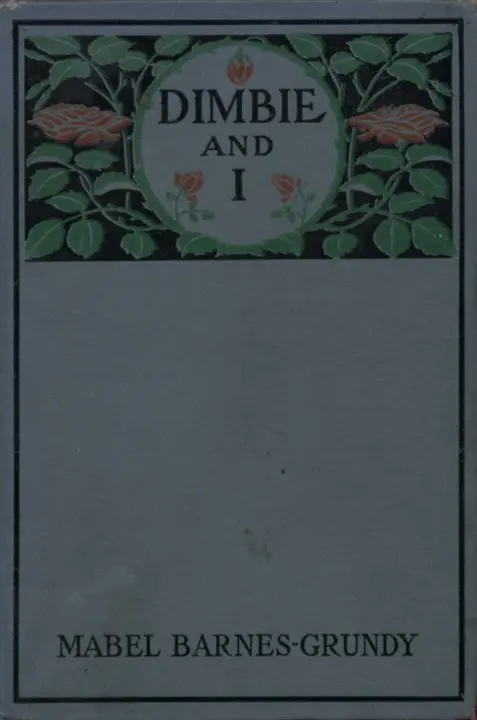
"Dimbie and I—and Amelia" by Mabel Barnes-Grundy is a novel written in the early 20th century. The story follows the life of Marguerite Westover as she navigates her recent marriage to Dimbie, exploring her feelings of happiness and fulfillment while also dealing with the comical complications of daily life, including her eccentric household help, Amelia. The novel appears to blend humor with domestic themes, focusing on Marguerite's relationships and her domestic adventures. The opening of the novel introduces Marguerite basking in the spring sunshine, filled with anticipation for her husband Dimbie's return after an absence due to family matters. As she reflects on her deep affection for him and her contrasting feelings towards her father, Peter, the reader gets a glimpse into her lively and humorous character. Furthermore, Marguerite reveals her playful spirit through anecdotes about Dimbie and her domestic life, including her interactions with Amelia, the servant whose unique approaches sometimes sow chaos. The stage is set for a lighthearted but insightful exploration of marriage and domesticity in early 20th-century England, with hints of the challenges and joys that await them.
Introduction adapted from the source catalogue; source summaries may be automatically generated.
Free to read · English · 77,700 words · No account needed
MAKE TIME FOR A GOOD BOOK
On by default. Untick to stop anonymous reading totals. Each page counts after 10 seconds in view. How this works.
Anonymous counting is on unless you have switched it off.
Nanty checked a gasp of surprise.
"I have always felt that he was a man with a hidden--something. I have wondered about it," she said, recovering herself.
"Most women wonder at single men, and they wonder still more when they are married," said mother.
"Who," I asked, laughing, "the women or the men?"
"Oh, the women!"
She spoke with an earnestness that recalled Peter and his blackberrying to my mind, and I laughed again.
"Men," said Nanty, "are necessary for the continuation of the race. I cannot see that they are of any other use in the world."
"Now I am waiting for your opinion, Marguerite," said Jane with a
twinkle. "I should like to have no illusions about man before I marry
him."
"I am not to be drawn," I returned. "There are men and men. The two looking for squirrels at the moment are extreme types. Perhaps there is something half-way between, and you may be fairly fortunate."
Jane smiled with a satisfied air.
"You have not congratulated me," she said to Nanty. "It is usual, I
think."
"I don't congratulate people on marriage."
"You are a cynic."
"No, but my eyes are open; there was a time when they were closed like
yours."
"It is a pity," said Jane softly. "I hope mine will always remain
shut."
"Let us hope so," returned Nanty a little bitterly.
"I thought we were to discuss Jane's wedding gown," said mother plaintively, bringing us back to actualities.
She fetched two big bundles of patterns from a side-table and handed
them to Jane.
"Before we begin," said the latter, turning again to Nanty, "won't you change your mind and congratulate me?"
"I'll congratulate Dr. Renton, if that will satisfy you."
"But it won't. I think I am quite as much, if not more, to be
congratulated than he."
"Now you are being humble," said Nanty whimsically, "and I don't like humility in a woman. A woman should always remember that she is quite good enough for any man living." And with that Jane had to be satisfied.
And what a discussion followed as to the gown Jane should wear on the great day. We might have been schoolgirls. And the trouble was that no two of us agreed on any single point--colour, material, or fashion of making. When mother had soared away to silver gauze posed on chiffon, Jane said--
"Kindly remember my age, and that I am going to a wedding and not to a
ball."
When Nanty even, roused to enthusiasm, had completed a dream of a princess gown of softest pastel-blue, chiffon velvet, Jane said--
"Kindly remember that I am small and dumpy."
Your reading position is saved on this browser. Take it to another device with a library code. Reading pages adapt to text, rather than matching a printed edition.
BEHIND THE BOOK
This eBook is for the use of anyone anywhere in the United States and most other parts of the world at no cost and with almost no restrictions whatsoever. You may copy it, give it away or re-use it under the terms of the Project Gutenberg License included with this eBook or online at www.gutenberg.org. If you are not located in the United States, you will have to check the laws of the country where you are located before using this eBook. Read the source licence.
The original source file, including credits and licence, is retained by this library. Request an original-format copy at no charge. Please include the book title and Project Gutenberg identifier #47003.
KEEP YOUR CURIOSITY GOING
Coulson Kernahan

Maurice Baring
Frances Wright
Cécile Tormay

Frederic Jesup Stimson

W. H. P. (William Henry Pope) Jarvis