
Life of Edwin Forrest, the American Tragedian. Volume 2 (of 2)
William Rounseville Alger & Horatio, Jr. Alger
THE CLASSIC COLLECTION · 1888
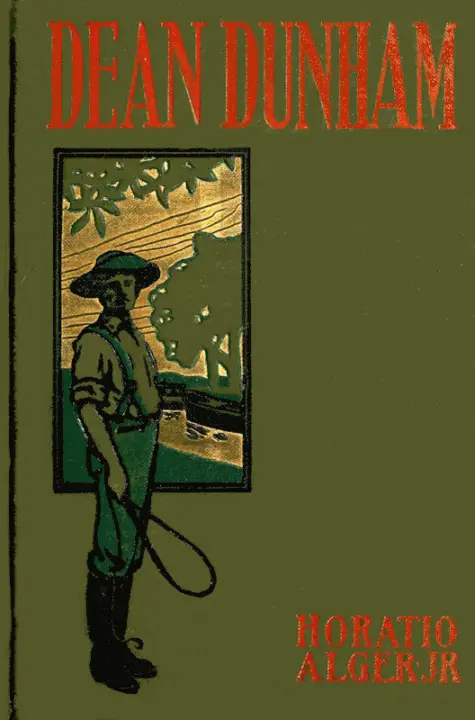
"Dean Dunham; Or, the Waterford Mystery" by Horatio Alger, Jr. is a novel written in the late 19th century. The story follows Adin Dunham, a simple carpenter, who unexpectedly receives a thousand dollars for a piece of land he inherited, only to be robbed shortly after. The narrative also introduces Dean Dunham, Adin's nephew, who becomes pivotal in unraveling the mystery surrounding the theft, especially as suspicions arise concerning the enigmatic Squire Bates. The opening of the book sets the stage by showcasing Adin Dunham's anticipation of receiving his money, a sum that symbolizes not just wealth, but hope for a better future. Through the dialogue between Adin and his wife, Sarah, we see their characterization and the dynamics of their household. As Adin prepares for his trip to Rockmount, hints of danger and foreshadowing are introduced when his wife and lawyer warn him about potential robbers. After Adin's robbery, Dean, who deeply respects his uncle, begins to investigate the incident and uncovers clues that lead him to suspect the local lawyer Squire Bates—a man with questionable morals. The initial chapters create a blend of domestic life and emerging intrigue, suggesting that Dean is on the brink of a significant adventure to seek justice and rectify the wrong done to his beloved uncle.
Introduction adapted from the source catalogue; source summaries may be automatically generated.
Free to read · English · 53,630 words · No account needed
MAKE TIME FOR A GOOD BOOK
On by default. Untick to stop anonymous reading totals. Each page counts after 10 seconds in view. How this works.
Anonymous counting is on unless you have switched it off.
Dr. Thorp had been pleased with Peter Kirby, who had laid himself out to be agreeable, and the doctor was far from suspecting his real character. When this was revealed to him by Dean, he quickly decided to test it for himself.
Some men, inclined to be nervous and timid, would have had their apprehensions excited, and dreaded an encounter with a professional criminal. But Dr. Thorp was cool, resolute and determined. He proposed to facilitate Kirby's designs, and catch him in a trap.
When he reached home he found Kirby smoking on the piazza.
"Have you been taking a walk, Doctor?" he asked.
"Yes," answered Dr. Thorp. "I made a call on a neighbor. I hope you
have not been lonesome."
"Oh, no! Your daughter has enabled me to pass the time pleasantly. But I am glad to see you back."
Had Kirby known that Dr. Thorp had had an interview with Dean Dunham, his anxiety would have been excited.
"By the way, Doctor," said Kirby with apparent carelessness, "I have a little money to invest. Can you recommend any form of investment?"
"You might buy a house in the village and settle down. I believe the
next estate is for sale."
"It would certainly be an inducement to become your neighbor," said Kirby politely, "but I am a rolling stone. I am always traveling. I couldn't content myself in any one place, not even in a large city."
"I suspect your mode of life makes frequent removals necessary," thought Dr. Thorp, though he did not say so.
"Well, if you don't care to invest in real estate," he said a moment later, "you might purchase government bonds or railroad securities."
"To which do you give the preference?" asked Kirby.
The doctor smiled inwardly. He saw that Kirby was trying to ascertain whether he had any negotiable securities in his possession, but he was ready to play into his hands.
"Well," he said, "I think well of both."
"I had some government bonds at one time," said Kirby, "but they were stolen. That has made me cautious."
"Perhaps you were careless."
"No doubt I was. I kept them in a trunk at my boarding-house. I presume you wouldn't venture, even in a quiet village like this, to keep bonds in your house?"
"Oh, yes, we never receive visits from thieves or burglars. I don't consider trunks so safe as—that cabinet."
He pointed to a black walnut cabinet with several drawers standing in
one corner of the room.
Kirby's face lighted up. He had got the information he desired, but he resumed his indifferent manner.
Your reading position is saved on this browser. Take it to another device with a library code. Reading pages adapt to text, rather than matching a printed edition.
William Rounseville Alger & Horatio, Jr. Alger

William Rounseville Alger & Horatio, Jr. Alger

Horatio, Jr. Alger

Horatio, Jr. Alger
BEHIND THE BOOK
This eBook is for the use of anyone anywhere in the United States and most other parts of the world at no cost and with almost no restrictions whatsoever. You may copy it, give it away or re-use it under the terms of the Project Gutenberg License included with this eBook or online at www.gutenberg.org. If you are not located in the United States, you will have to check the laws of the country where you are located before using this eBook. Read the source licence.
The original source file, including credits and licence, is retained by this library. Request an original-format copy at no charge. Please include the book title and Project Gutenberg identifier #55947.
KEEP YOUR CURIOSITY GOING
Coulson Kernahan

Maurice Baring
Frances Wright
Cécile Tormay

Frederic Jesup Stimson

W. H. P. (William Henry Pope) Jarvis