
Life of Edwin Forrest, the American Tragedian. Volume 2 (of 2)
William Rounseville Alger & Horatio, Jr. Alger
THE CLASSIC COLLECTION · 1888
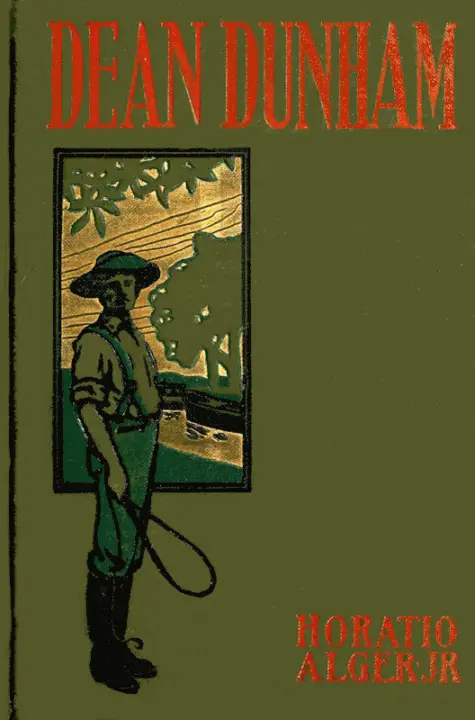
"Dean Dunham; Or, the Waterford Mystery" by Horatio Alger, Jr. is a novel written in the late 19th century. The story follows Adin Dunham, a simple carpenter, who unexpectedly receives a thousand dollars for a piece of land he inherited, only to be robbed shortly after. The narrative also introduces Dean Dunham, Adin's nephew, who becomes pivotal in unraveling the mystery surrounding the theft, especially as suspicions arise concerning the enigmatic Squire Bates. The opening of the book sets the stage by showcasing Adin Dunham's anticipation of receiving his money, a sum that symbolizes not just wealth, but hope for a better future. Through the dialogue between Adin and his wife, Sarah, we see their characterization and the dynamics of their household. As Adin prepares for his trip to Rockmount, hints of danger and foreshadowing are introduced when his wife and lawyer warn him about potential robbers. After Adin's robbery, Dean, who deeply respects his uncle, begins to investigate the incident and uncovers clues that lead him to suspect the local lawyer Squire Bates—a man with questionable morals. The initial chapters create a blend of domestic life and emerging intrigue, suggesting that Dean is on the brink of a significant adventure to seek justice and rectify the wrong done to his beloved uncle.
Introduction adapted from the source catalogue; source summaries may be automatically generated.
Free to read · English · 53,630 words · No account needed
MAKE TIME FOR A GOOD BOOK
On by default. Untick to stop anonymous reading totals. Each page counts after 10 seconds in view. How this works.
Anonymous counting is on unless you have switched it off.
Mr. Gunnison had several children, including one boy of about Dean's age, who was disposed at first to regard our hero with distant respect as a professional star, but soon became intimate with him on finding that Dean had the same tastes as himself. This appeared to surprise him.
"I say," he remarked, "I thought you wouldn't have anything to say to a
fellow like me."
"Why not?" asked Dean, innocently.
"Oh, because you're a big gun."
"How's that?"
"You give concerts, and have your name in the papers."
"Oh!" said Dean smiling, "I have to do that for a living, you know. I'm
only a boy after all."
"And do you like to play baseball?"
"I only wish I had a chance."
"Do you?" said Gus Gunnison, brightening up. "Well, our club is going to play the Resolutes from the next town this afternoon. We are one man short. Will you take his place?"
"Yes, I shall be glad to."
"What place do you prefer?"
"I'll take any you choose to give me."
"Can you catch?"
"I like it better than anything else."
"Then that's settled. Come over and I'll show you the ground, and introduce you to some of the fellows."
When the members of the Carterville club learned that the famous young musician, Dean Dunham, had agreed to play on their side, they were very much elated. There was, however, a slight uneasiness lest he should not prove a skillful player, as they were eager to beat their visitors. A little practice playing, however, showed them that Dean was quite equal to any one in their club, and they became eager for the fray.
Dean did not disappoint them. He entered into the game with enthusiasm, and played with unusual skill, so that the Resolutes were beaten by a score of 18 to 8, and the victory was largely attributed to the good playing of the new catcher, who proved equally good in batting.
The members of the club came up and tendered their thanks to Dean.
"If you can play on the harmonica as well as you can play ball," said Gus Gunnison, "you'll do. Our club will attend the entertainment in a body, and hear you."
"I hope you won't be disappointed," said Dean smiling.
Evening came, and Dean was called upon to play at four different points in the entertainment. On the front seats just facing him were the members of the Active Baseball Club. Dean nodded to them from the platform, and they felt proud of such a public recognition.
Your reading position is saved on this browser. Take it to another device with a library code. Reading pages adapt to text, rather than matching a printed edition.
William Rounseville Alger & Horatio, Jr. Alger

William Rounseville Alger & Horatio, Jr. Alger

Horatio, Jr. Alger

Horatio, Jr. Alger
BEHIND THE BOOK
This eBook is for the use of anyone anywhere in the United States and most other parts of the world at no cost and with almost no restrictions whatsoever. You may copy it, give it away or re-use it under the terms of the Project Gutenberg License included with this eBook or online at www.gutenberg.org. If you are not located in the United States, you will have to check the laws of the country where you are located before using this eBook. Read the source licence.
The original source file, including credits and licence, is retained by this library. Request an original-format copy at no charge. Please include the book title and Project Gutenberg identifier #55947.
KEEP YOUR CURIOSITY GOING
Coulson Kernahan

Maurice Baring
Frances Wright
Cécile Tormay

Frederic Jesup Stimson

W. H. P. (William Henry Pope) Jarvis