
Life of Edwin Forrest, the American Tragedian. Volume 2 (of 2)
William Rounseville Alger & Horatio, Jr. Alger
THE CLASSIC COLLECTION · 1888
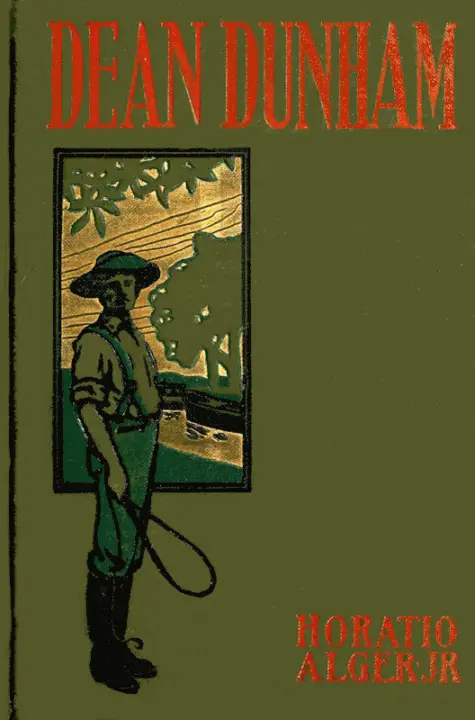
"Dean Dunham; Or, the Waterford Mystery" by Horatio Alger, Jr. is a novel written in the late 19th century. The story follows Adin Dunham, a simple carpenter, who unexpectedly receives a thousand dollars for a piece of land he inherited, only to be robbed shortly after. The narrative also introduces Dean Dunham, Adin's nephew, who becomes pivotal in unraveling the mystery surrounding the theft, especially as suspicions arise concerning the enigmatic Squire Bates. The opening of the book sets the stage by showcasing Adin Dunham's anticipation of receiving his money, a sum that symbolizes not just wealth, but hope for a better future. Through the dialogue between Adin and his wife, Sarah, we see their characterization and the dynamics of their household. As Adin prepares for his trip to Rockmount, hints of danger and foreshadowing are introduced when his wife and lawyer warn him about potential robbers. After Adin's robbery, Dean, who deeply respects his uncle, begins to investigate the incident and uncovers clues that lead him to suspect the local lawyer Squire Bates—a man with questionable morals. The initial chapters create a blend of domestic life and emerging intrigue, suggesting that Dean is on the brink of a significant adventure to seek justice and rectify the wrong done to his beloved uncle.
Introduction adapted from the source catalogue; source summaries may be automatically generated.
Free to read · English · 53,630 words · No account needed
MAKE TIME FOR A GOOD BOOK
On by default. Untick to stop anonymous reading totals. Each page counts after 10 seconds in view. How this works.
Anonymous counting is on unless you have switched it off.
"Then if he makes any fuss, tell him to charge the expense of the
theatre to your salary."
"I might do that. How much will it cost to go to the theater?"
"We can get a fair seat for fifty cents."
"Then I think I'll go," said Dean after some hesitation.
"Have you any choice as to theatres?"
"No, I don't know anything about them. I never went to a theatre in my
life."
"Well, you are a fresh young countryman, and no mistake. Here, I'll get an evening paper, and see what's playing at the different theaters."
The result was that Niblo's was selected. It is not necessary to mention the name of the play, which was at that time a popular favorite, but is now forgotten. The two boys obtained seats in the balcony, rather far off from the stage, but both were possessed of good eyes, and had no difficulty in seeing what was passing on the boards.
Dean was enchanted. He had had but vague ideas of what a theater was like, and to him everything seemed real. There was one place where the villain of the piece throws the heroine from a bridge into the water. Dean uttered a little exclamation.
Guy turned to him with a smile.
"What's the matter?" he asked.
"I—I almost thought it was real," said Dean. "I was afraid she would
drown."
"And I dare say you wanted to punish the brutal ruffian?"
"Yes, I did," admitted Dean.
"Probably he and the girl are excellent friends in real life. Why, they are husband and wife," he added, referring to the play bill.
"It doesn't seem possible."
"I envy you, Dean. You enjoy the play much better than I do, for you believe in it while I know it for a sham—that is, I know it's merely play-acting. Look in the next row—you see there is some one who believes in it as much as you do."
Guy pointed to a lady in plain, old-fashioned attire who was wiping her
eyes.
"She takes it worse than you do," whispered Guy.
The play continued, and ended at last to the satisfaction of Dean, who saw all the bad characters visited with retribution, while oppressed innocence and virtue through much tribulation attained happiness and peace.
When the play was over, they joined the throng and passed out through the lobby. Suddenly a cry was heard from a little distance in front.
"I've been robbed! I've lost my pocket-book," and a small man with a red and excited face began to feel wildly in his pockets for his lost treasure.
Your reading position is saved on this browser. Take it to another device with a library code. Reading pages adapt to text, rather than matching a printed edition.
William Rounseville Alger & Horatio, Jr. Alger

William Rounseville Alger & Horatio, Jr. Alger

Horatio, Jr. Alger

Horatio, Jr. Alger
BEHIND THE BOOK
This eBook is for the use of anyone anywhere in the United States and most other parts of the world at no cost and with almost no restrictions whatsoever. You may copy it, give it away or re-use it under the terms of the Project Gutenberg License included with this eBook or online at www.gutenberg.org. If you are not located in the United States, you will have to check the laws of the country where you are located before using this eBook. Read the source licence.
The original source file, including credits and licence, is retained by this library. Request an original-format copy at no charge. Please include the book title and Project Gutenberg identifier #55947.
KEEP YOUR CURIOSITY GOING
Coulson Kernahan

Maurice Baring
Frances Wright
Cécile Tormay

Frederic Jesup Stimson

W. H. P. (William Henry Pope) Jarvis