
Life of Edwin Forrest, the American Tragedian. Volume 2 (of 2)
William Rounseville Alger & Horatio, Jr. Alger
THE CLASSIC COLLECTION · 1888
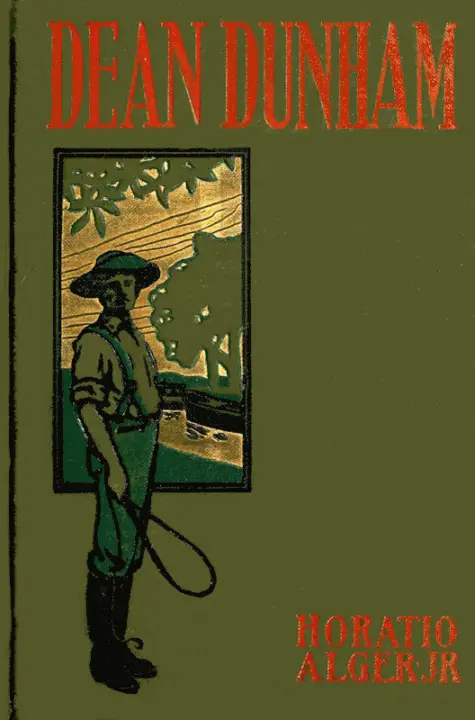
"Dean Dunham; Or, the Waterford Mystery" by Horatio Alger, Jr. is a novel written in the late 19th century. The story follows Adin Dunham, a simple carpenter, who unexpectedly receives a thousand dollars for a piece of land he inherited, only to be robbed shortly after. The narrative also introduces Dean Dunham, Adin's nephew, who becomes pivotal in unraveling the mystery surrounding the theft, especially as suspicions arise concerning the enigmatic Squire Bates. The opening of the book sets the stage by showcasing Adin Dunham's anticipation of receiving his money, a sum that symbolizes not just wealth, but hope for a better future. Through the dialogue between Adin and his wife, Sarah, we see their characterization and the dynamics of their household. As Adin prepares for his trip to Rockmount, hints of danger and foreshadowing are introduced when his wife and lawyer warn him about potential robbers. After Adin's robbery, Dean, who deeply respects his uncle, begins to investigate the incident and uncovers clues that lead him to suspect the local lawyer Squire Bates—a man with questionable morals. The initial chapters create a blend of domestic life and emerging intrigue, suggesting that Dean is on the brink of a significant adventure to seek justice and rectify the wrong done to his beloved uncle.
Introduction adapted from the source catalogue; source summaries may be automatically generated.
Free to read · English · 53,630 words · No account needed
MAKE TIME FOR A GOOD BOOK
On by default. Untick to stop anonymous reading totals. Each page counts after 10 seconds in view. How this works.
Anonymous counting is on unless you have switched it off.
"So you're starting, are you, Dean?" said the squire.
"Yes, sir."
"I hope you'll do your duty by your employer."
"I shall try to do so, sir."
"I have indorsed you, and he has taken you on my recommendation."
"I ought to thank you for that, sir."
"I take it for granted that you will verify the good things I have said of you. If you don't—if you throw discredit on me and on your worthy uncle and aunt, why then—" and he paused.
Dean listened to hear how he would end the sentence.
"Then," resumed the squire, "I honestly advise you to stay away, and
not return to Waterford."
"I won't come back unless I can come back with a good record," said
Dean impetuously.
"A good resolution! Stick to it, my lad."
The train came up with a rush, and Dean got on board He was a little disturbed by the squire's parting words. Why should he harp so much on Dean's acting discreditably?
"It almost seems as if he expected I would," soliloquized Dean. "If I know myself, I know that I am honest, industrious and faithful. Mr. Kirby won't be disappointed in me, unless he is an unreasonable man."
Waterford was about fifty miles from New York, and the journey consumed two hours. Dean was considerably interested in looking out of the window at the towns along the railroad. But besides this, he scanned the faces of the passengers around him.
Just behind him was a boy about his own age, who after a while leaned over and said, "Come back here and sit with me."
Dean was of a social disposition, and needed no second invitation.
His new acquaintance was a pleasant-looking boy of sixteen, with dark hair and dark eyes, and a bright, alert look.
"Where are you going?" he asked.
"To New York."
"Do you expect to stay there?"
"No, I am going to work for a gentleman whom I am to find at French's
Hotel."
"Yes, I know where that is."
"Do you? Then you have the advantage of me. I was never in New York since I was a very little boy."
"Oh, it's easy enough to find it. We shall land at the Grand Central Depot. You can take a Fourth Avenue car in front of it, and it'll carry you right by French's Hotel."
"Is it far?"
"About three miles, I guess."
"That's a good distance."
"It isn't much in the city. I didn't know you had a place. I was going
to ask you to join me."
"Why what are you going to do?" Dean asked in some curiosity.
"You won't give me away, will you?"
Your reading position is saved on this browser. Take it to another device with a library code. Reading pages adapt to text, rather than matching a printed edition.
William Rounseville Alger & Horatio, Jr. Alger

William Rounseville Alger & Horatio, Jr. Alger

Horatio, Jr. Alger

Horatio, Jr. Alger
BEHIND THE BOOK
This eBook is for the use of anyone anywhere in the United States and most other parts of the world at no cost and with almost no restrictions whatsoever. You may copy it, give it away or re-use it under the terms of the Project Gutenberg License included with this eBook or online at www.gutenberg.org. If you are not located in the United States, you will have to check the laws of the country where you are located before using this eBook. Read the source licence.
The original source file, including credits and licence, is retained by this library. Request an original-format copy at no charge. Please include the book title and Project Gutenberg identifier #55947.
KEEP YOUR CURIOSITY GOING
Coulson Kernahan

Maurice Baring
Frances Wright
Cécile Tormay

Frederic Jesup Stimson

W. H. P. (William Henry Pope) Jarvis