
Life of Edwin Forrest, the American Tragedian. Volume 2 (of 2)
William Rounseville Alger & Horatio, Jr. Alger
THE CLASSIC COLLECTION · 1888
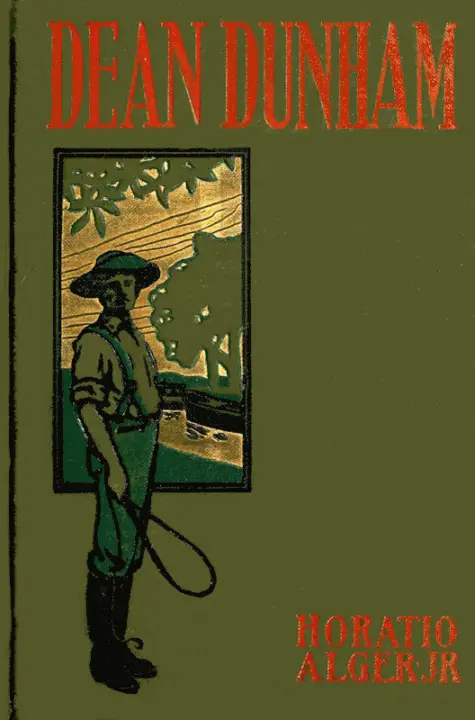
"Dean Dunham; Or, the Waterford Mystery" by Horatio Alger, Jr. is a novel written in the late 19th century. The story follows Adin Dunham, a simple carpenter, who unexpectedly receives a thousand dollars for a piece of land he inherited, only to be robbed shortly after. The narrative also introduces Dean Dunham, Adin's nephew, who becomes pivotal in unraveling the mystery surrounding the theft, especially as suspicions arise concerning the enigmatic Squire Bates. The opening of the book sets the stage by showcasing Adin Dunham's anticipation of receiving his money, a sum that symbolizes not just wealth, but hope for a better future. Through the dialogue between Adin and his wife, Sarah, we see their characterization and the dynamics of their household. As Adin prepares for his trip to Rockmount, hints of danger and foreshadowing are introduced when his wife and lawyer warn him about potential robbers. After Adin's robbery, Dean, who deeply respects his uncle, begins to investigate the incident and uncovers clues that lead him to suspect the local lawyer Squire Bates—a man with questionable morals. The initial chapters create a blend of domestic life and emerging intrigue, suggesting that Dean is on the brink of a significant adventure to seek justice and rectify the wrong done to his beloved uncle.
Introduction adapted from the source catalogue; source summaries may be automatically generated.
Free to read · English · 53,630 words · No account needed
MAKE TIME FOR A GOOD BOOK
On by default. Untick to stop anonymous reading totals. Each page counts after 10 seconds in view. How this works.
Anonymous counting is on unless you have switched it off.
"I'll borrow neighbor Gould's horse and buggy. That horse is pretty strong, and he won't mind the twenty miles—ten there and ten back."
"I don't like to have you travelin' so far with all that money. S'pose you should meet with robbers."
"There ain't any robbers round here, Sarah. This is a respectable
community."
"You might meet a tramp."
"Well, the chances are that he'd be more afraid of me than I would be of him. I ain't a child, Sarah. I can lift a barrel of potatoes and put it in a wagon as easy as most men."
"Well, Adin, you know best. Hadn't you better take Dean with you?"
"Why should I take Dean?"
"It would be safer for two than for one."
"You don't mean to say that I need a boy of sixteen to protect me? If I thought I did, I'd stay at home and send Dean by himself."
"Well, Adin, I don't want to interfere. It wouldn't be much use, either, for you generally have your own way. Have you told any of the neighbors that you are goin' for some money?"
"No except Lawyer Bates."
"What made you tell him?"
"Well, I was in his office the other evenin', and somehow I was led into tellin' it. I gave a sort of hint, and the lawyer he drew it out of me. Them lawyers are great on cross-examinin', you know."
"What did Squire Bates say?"
"He told me I'd better not tell anybody else. He talked for all the world just like you did, Sarah. You haven't been chatterin' with the squire, have you?"
"No, Adin, I don't like him well enough for that. I never fancied the squire. He's always showin' those long front teeth of his, like a wild beast."
"They ain't very handsome teeth, I'm bound to admit, Sarah, but the poor man can't help himself. He's as God made him."
"He gave you good advice at any rate, Adin. There's so many dishonest people in the world that it's best to be careful. Did you tell him when you were goin' for the money?"
"I don't exactly remember. I guess I did."
"Do you think Squire Bates is a rich man, Adin?"
"I don't know. He's a lawyer, and keeps his affairs mighty close."
"That boy of his—Brandon—is his very image, even to the teeth."
"Well, he does favor his father considerable."
"Dean doesn't like him. He's a very big feeling boy. He looks down on Dean because he is the nephew of a poor man."
"O, he'll get wiser in time. We mustn't mind them young folks so much.
Boys will be boys."
Your reading position is saved on this browser. Take it to another device with a library code. Reading pages adapt to text, rather than matching a printed edition.
William Rounseville Alger & Horatio, Jr. Alger

William Rounseville Alger & Horatio, Jr. Alger

Horatio, Jr. Alger

Horatio, Jr. Alger
BEHIND THE BOOK
This eBook is for the use of anyone anywhere in the United States and most other parts of the world at no cost and with almost no restrictions whatsoever. You may copy it, give it away or re-use it under the terms of the Project Gutenberg License included with this eBook or online at www.gutenberg.org. If you are not located in the United States, you will have to check the laws of the country where you are located before using this eBook. Read the source licence.
The original source file, including credits and licence, is retained by this library. Request an original-format copy at no charge. Please include the book title and Project Gutenberg identifier #55947.
KEEP YOUR CURIOSITY GOING
Coulson Kernahan

Maurice Baring
Frances Wright
Cécile Tormay

Frederic Jesup Stimson

W. H. P. (William Henry Pope) Jarvis