
Life of Edwin Forrest, the American Tragedian. Volume 2 (of 2)
William Rounseville Alger & Horatio, Jr. Alger
THE CLASSIC COLLECTION · 1888
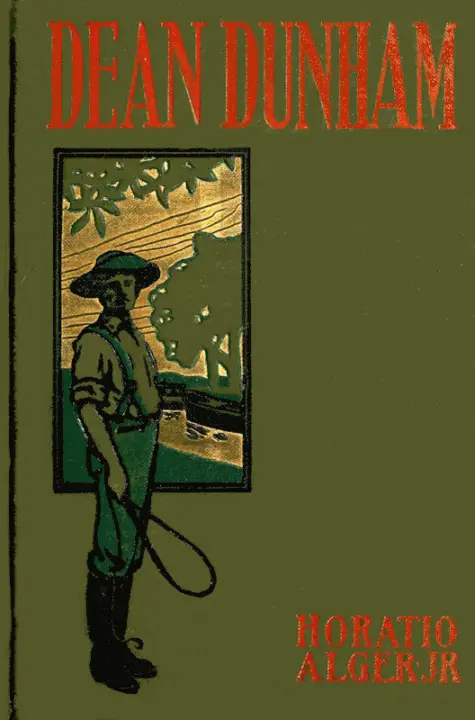
"Dean Dunham; Or, the Waterford Mystery" by Horatio Alger, Jr. is a novel written in the late 19th century. The story follows Adin Dunham, a simple carpenter, who unexpectedly receives a thousand dollars for a piece of land he inherited, only to be robbed shortly after. The narrative also introduces Dean Dunham, Adin's nephew, who becomes pivotal in unraveling the mystery surrounding the theft, especially as suspicions arise concerning the enigmatic Squire Bates. The opening of the book sets the stage by showcasing Adin Dunham's anticipation of receiving his money, a sum that symbolizes not just wealth, but hope for a better future. Through the dialogue between Adin and his wife, Sarah, we see their characterization and the dynamics of their household. As Adin prepares for his trip to Rockmount, hints of danger and foreshadowing are introduced when his wife and lawyer warn him about potential robbers. After Adin's robbery, Dean, who deeply respects his uncle, begins to investigate the incident and uncovers clues that lead him to suspect the local lawyer Squire Bates—a man with questionable morals. The initial chapters create a blend of domestic life and emerging intrigue, suggesting that Dean is on the brink of a significant adventure to seek justice and rectify the wrong done to his beloved uncle.
Introduction adapted from the source catalogue; source summaries may be automatically generated.
Free to read · English · 53,630 words · No account needed
MAKE TIME FOR A GOOD BOOK
On by default. Untick to stop anonymous reading totals. Each page counts after 10 seconds in view. How this works.
Anonymous counting is on unless you have switched it off.
"There's one thing in the way," observed Rawson. "Our claims are valuable—more so than six months ago. If we leave 'em some one will take possession, and that'll be an end of our ownership."
"Sell 'em," said Eben, concisely.
"That will take time."
"I'll stay till it's done. I'm not going to give 'em away."
"Trust a Connecticut Yankee for that," said Rawson, laughing. "Well, to-morrow, then, we'll let our neighbors know that our claims are for sale."
Dean and his two friends retired at an early hour. They usually became fatigued by the labors of the day, and did not require to court slumber long. They rose early, and took their breakfast at a restaurant near by. Before this was opened, they took turns at cooking breakfast themselves, but were glad to delegate that duty to some one else.
Dean, as the best penman, prepared the sign,
rather fortunately, as Rawson was weak not only in writing but in spelling, and would have been very likely to write "Theas clames fer sail," without a thought that he had committed an error.
About nine o'clock on the second morning, a small man, dressed in a drab suit, walked leisurely up to Rawson, and remarked: "I understand that you wish to sell these claims."
"Exactly, if we can get a fair price."
"By we you mean----?"
"Myself, Mr. Jones, and the boy. We are partners. Where might you be
from, friend?"
"I have an office in Denver. I am commissioned by a Philadelphia syndicate to buy some mining property, which will be worked with the help of improved machinery in a systematic manner."
"Then you will need more than we have to sell."
"I have secured the property on each side of you," said the agent
composedly.
"What figures are you prepared to offer?" asked Rawson, with a look of business. "I don't want to be extortionate, but the claims are good ones, and we don't want to sacrifice them."
Then ensued a few minutes of bargaining, in which Dean took no part. Eben, though usually the most silent of the three, now developed the qualities characteristic of the New England Yankee, and it was due to him that the property was sold for six thousand dollars.
"I might have got more if I'd stood out a little longer," he said, half
regretfully.
"We've done pretty well, though," said Rawson, complacently. "It's two thousand dollars apiece, say three, with what we've taken from it in the last six months. What do you say to that, lad? You'll go home with three thousand dollars."
Your reading position is saved on this browser. Take it to another device with a library code. Reading pages adapt to text, rather than matching a printed edition.
William Rounseville Alger & Horatio, Jr. Alger

William Rounseville Alger & Horatio, Jr. Alger

Horatio, Jr. Alger

Horatio, Jr. Alger
BEHIND THE BOOK
This eBook is for the use of anyone anywhere in the United States and most other parts of the world at no cost and with almost no restrictions whatsoever. You may copy it, give it away or re-use it under the terms of the Project Gutenberg License included with this eBook or online at www.gutenberg.org. If you are not located in the United States, you will have to check the laws of the country where you are located before using this eBook. Read the source licence.
The original source file, including credits and licence, is retained by this library. Request an original-format copy at no charge. Please include the book title and Project Gutenberg identifier #55947.
KEEP YOUR CURIOSITY GOING
Coulson Kernahan

Maurice Baring
Frances Wright
Cécile Tormay

Frederic Jesup Stimson

W. H. P. (William Henry Pope) Jarvis