
A Son of Ishmael: A Novel
L. T. Meade
THE CLASSIC COLLECTION · 1900
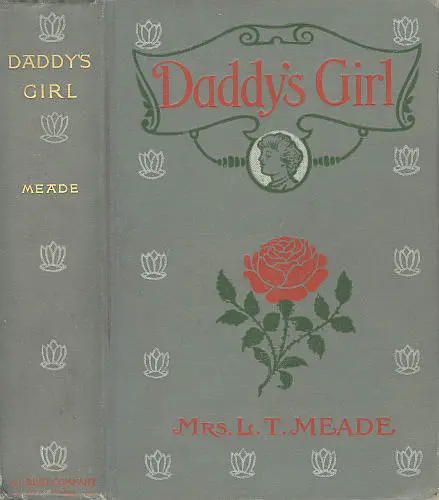
"Daddy's Girl" by L. T. Meade is a novel written during the late 19th century. The story revolves around an eight-year-old girl named Sibyl Ogilvie, affectionately referred to as "the Angel," who navigates the complexities of her family dynamics, including her quarrelling parents and her own understanding of love, beauty, and perfection. The book explores themes of innocence, the longing for parental approval, and the perceived perfection of childhood versus the reality of adult relationships. At the start of the novel, we are introduced to young Sibyl, who remains blissfully unaware of the discord between her parents, Philip and Mildred Ogilvie. While her father seems to cherish her without any conditions, her mother only doles out affection when Sibyl presents herself as pretty, leading the child to reflect deeply on relationships and her own self-worth. As Sibyl prepares for an important occasion, her innocent thoughts are colored by the stark realities of her parents’ marriage, setting the stage for a narrative rich in emotional complexity and the exploration of familial love.
Introduction adapted from the source catalogue; source summaries may be automatically generated.
Free to read · English · 75,662 words · No account needed
MAKE TIME FOR A GOOD BOOK
On by default. Untick to stop anonymous reading totals. Each page counts after 10 seconds in view. How this works.
Anonymous counting is on unless you have switched it off.
"How do you do, Mr. Holman," she said; "I hope I find you quite well."
"Thank you, Missy; I am in the enjoyment of good health," replied the shopman, flushing with pleasure and grasping the little hand.
"I am glad of that," answered Sibyl. "I have come, Mr. Holman, to buy a big thing, it will do your shop a lot of good. I am going to spend twenty shillings in your shop. What would you like me to buy?"
"You thought a doll's house," interrupted Miss Winstead, who stood
behind the child.
"Oh, it don't matter about that," said Sibyl, looking gravely back at her; "I mean it don't matter now. Mr. Holman, what's the most dusty of your toys, what's the most scratched, what's the toy that none of the other children would like?"
"I have a whole heap of 'em," said Holman, shaking his head sadly.
"That he have, poor dear," here interrupted Mrs. Holman. "How do you do, Missy, we are both glad to see you back again; we have had a dull season, very dull, and the children, they didn't buy half the toys they ought to at Christmas time. It's because our shop is in a back street."
"Oh, but it's a very nice street," said Sibyl; "it's retired, isn't it? Well, I'll buy twenty shillings' worth of the most dusty of the toys, and please send them home to-morrow. Please, Miss Winstead, put the money down."
Miss Winstead laid a sovereign on the counter.
"Good-by, Mr. Holman; good-by, Mrs. Holman," said Sibyl. She shook hands solemnly with the old pair, and then went out of the shop.
"What ails her?" said Holman. "She looks as if something had died inside her. I don't like her looks a bit."
Mrs. Ogilvie enjoyed herself very much that evening. Her friends were glad to see her back. They were full of just the pleasant sympathy which she liked best to receive. She must be lonely without her husband. When would he return? When she said in a few months' time, they congratulated her, and asked her how she had enjoyed herself at Grayleigh Manor. In short, there was that sort of fuss made about her which most appealed to her fancy. She forgot all about Sibyl. She looked at other women of her acquaintance, and thought that when her husband came home she would wear just as dazzling gems and just as beautiful dresses, and she, too, might talk about her country place, and invite her friends down to this rural retreat at Whitsuntide, and make up a nice house-party in the autumn, and again in the winter. Oh, yes, the world with its fascinations was stealing more and more into her heart, and she had no room for the best of all. She forgot her lonely child during these hours.
Your reading position is saved on this browser. Take it to another device with a library code. Reading pages adapt to text, rather than matching a printed edition.
BEHIND THE BOOK
This eBook is for the use of anyone anywhere in the United States and most other parts of the world at no cost and with almost no restrictions whatsoever. You may copy it, give it away or re-use it under the terms of the Project Gutenberg License included with this eBook or online at www.gutenberg.org. If you are not located in the United States, you will have to check the laws of the country where you are located before using this eBook. Read the source licence.
The original source file, including credits and licence, is retained by this library. Request an original-format copy at no charge. Please include the book title and Project Gutenberg identifier #30333.
KEEP YOUR CURIOSITY GOING
Coulson Kernahan

Maurice Baring
Frances Wright
Cécile Tormay

Frederic Jesup Stimson

W. H. P. (William Henry Pope) Jarvis


