
A Son of Ishmael: A Novel
L. T. Meade
THE CLASSIC COLLECTION · 1900
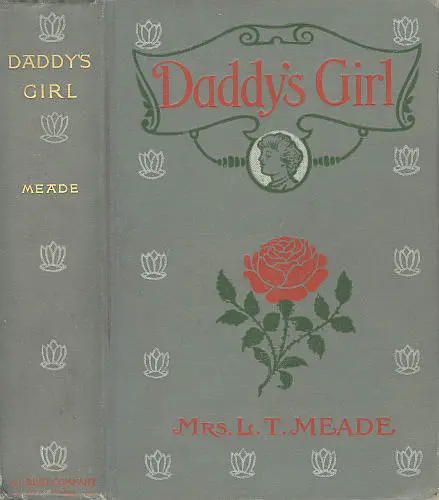
"Daddy's Girl" by L. T. Meade is a novel written during the late 19th century. The story revolves around an eight-year-old girl named Sibyl Ogilvie, affectionately referred to as "the Angel," who navigates the complexities of her family dynamics, including her quarrelling parents and her own understanding of love, beauty, and perfection. The book explores themes of innocence, the longing for parental approval, and the perceived perfection of childhood versus the reality of adult relationships. At the start of the novel, we are introduced to young Sibyl, who remains blissfully unaware of the discord between her parents, Philip and Mildred Ogilvie. While her father seems to cherish her without any conditions, her mother only doles out affection when Sibyl presents herself as pretty, leading the child to reflect deeply on relationships and her own self-worth. As Sibyl prepares for an important occasion, her innocent thoughts are colored by the stark realities of her parents’ marriage, setting the stage for a narrative rich in emotional complexity and the exploration of familial love.
Introduction adapted from the source catalogue; source summaries may be automatically generated.
Free to read · English · 75,662 words · No account needed
MAKE TIME FOR A GOOD BOOK
On by default. Untick to stop anonymous reading totals. Each page counts after 10 seconds in view. How this works.
Anonymous counting is on unless you have switched it off.
Ogilvie went up to Sibyl. Suffering and love had taught him many lessons, amongst others those of absolute self-control. His face was smiling and calm as he crossed the room, bent over the child and kissed her. Those blue eyes of hers, always so full of penetration and of knowledge, which was not all this earth, could detect no sorrow in her father's.
"I must go to town, I shall be away for as short a time as possible. As soon as I come back I will come to you," he said. "Look after her, please, Miss Winstead. If you cannot remain in the room, send nurse. Now, don't tire yourself, my little love. Remember that father will be back very soon."
"Don't hurry, father darling," replied Sibyl "'cos I am quite happy thinking about you, even if you are not here."
He went away, ran downstairs, put on his hat and went out. His wife
was standing in the porch.
"One moment, Phil," she called, "where are you going?"
"To town."
"To do what?"
"To do what I said," he answered, and he gave her a strange look, which frightened her, and caused her to fall back against the wall.
He disappeared down the avenue, she sank into a chair and began to weep. She was thoroughly miserable and frightened. Philip had returned, but all pleasant golden dreams were shattered, for although he had sent a cablegram to Lord Grayleigh, saying that all was well, better than well, his conscience was speaking to him, that troublesome terrible conscience of his, and he was about to destroy his own work.
"What fearful creatures men with consciences are," moaned Mrs.
Ogilvie.
Meanwhile Ogilvie walked quickly up the avenue. Just at the gates he met an old couple who were coming in. They were a queer-looking old pair, dressed in old-fashioned style. Ogilvie did not know them, but the woman paused when she saw him, came forward, dropped a curtsey and said:
"I beg your pardon, sir."
"What can I do for you?" said Ogilvie. He tried to speak courteously, but this delay, and the presence of the old couple whose names he did not even know, irritated him.
"If you please, sir, you are Mr. Ogilvie?"
"That is my name."
"We know you," continued the old woman, "by the likeness to your
little daughter."
The mention of Sibyl caused Ogilvie now to regard them more
attentively.
"May I inquire your names?" he asked.
Your reading position is saved on this browser. Take it to another device with a library code. Reading pages adapt to text, rather than matching a printed edition.
BEHIND THE BOOK
This eBook is for the use of anyone anywhere in the United States and most other parts of the world at no cost and with almost no restrictions whatsoever. You may copy it, give it away or re-use it under the terms of the Project Gutenberg License included with this eBook or online at www.gutenberg.org. If you are not located in the United States, you will have to check the laws of the country where you are located before using this eBook. Read the source licence.
The original source file, including credits and licence, is retained by this library. Request an original-format copy at no charge. Please include the book title and Project Gutenberg identifier #30333.
KEEP YOUR CURIOSITY GOING
Coulson Kernahan

Maurice Baring
Frances Wright
Cécile Tormay

Frederic Jesup Stimson

W. H. P. (William Henry Pope) Jarvis


