
A Son of Ishmael: A Novel
L. T. Meade
THE CLASSIC COLLECTION · 1900
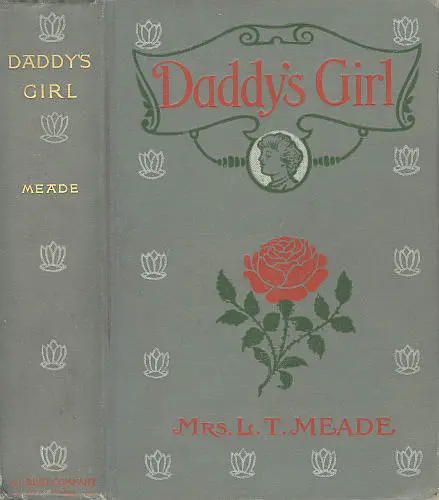
"Daddy's Girl" by L. T. Meade is a novel written during the late 19th century. The story revolves around an eight-year-old girl named Sibyl Ogilvie, affectionately referred to as "the Angel," who navigates the complexities of her family dynamics, including her quarrelling parents and her own understanding of love, beauty, and perfection. The book explores themes of innocence, the longing for parental approval, and the perceived perfection of childhood versus the reality of adult relationships. At the start of the novel, we are introduced to young Sibyl, who remains blissfully unaware of the discord between her parents, Philip and Mildred Ogilvie. While her father seems to cherish her without any conditions, her mother only doles out affection when Sibyl presents herself as pretty, leading the child to reflect deeply on relationships and her own self-worth. As Sibyl prepares for an important occasion, her innocent thoughts are colored by the stark realities of her parents’ marriage, setting the stage for a narrative rich in emotional complexity and the exploration of familial love.
Introduction adapted from the source catalogue; source summaries may be automatically generated.
Free to read · English · 75,662 words · No account needed
MAKE TIME FOR A GOOD BOOK
On by default. Untick to stop anonymous reading totals. Each page counts after 10 seconds in view. How this works.
Anonymous counting is on unless you have switched it off.
"Oh, my darling," said nursie, "this has hurt you horribly."
"Don't," said Sibyl, "don't be sympathisy." She pushed nurse's
detaining hand away.
"It's the little shots that tell," she repeated. "I wouldn't have felt anything if it had been a big, big bang; if he had been dead, I mean, but I'm not going to cry, I'm not going to let anybody think that I care anything at all. Give me my hat and gloves and jacket, please, nurse."
She went to Miss Winstead, put her hand in hers, and the two went downstairs. When they got into the street Sibyl looked full at her, and asked her one question.
"Was it mother said you was to tell me?"
"Yes."
"Then mother did tell me a----" Sibyl left off abruptly, her poor little face quivered. The suffering in her eyes was so keen that Miss Winstead did not dare to meet them. They went for a walk in the park, and Sibyl talked in her most proper style, but she did not say any of the nice, queer, interesting things she was, as a rule, noted for. Instead, she told Miss Winstead dry, uninteresting little facts, with regard to her visit to the country.
"I hear you have got a pony," said Miss Winstead.
"I don't want to talk about my pony, please," interrupted Sibyl. "Let me tell you just what were the most perfect views near the place we were in."
"But why may we not talk about your pony?"
"I don't want to ride my pony now."
Miss Winstead was alarmed about the child.
"You have walked quite far enough to-night," she said, "you look very
white."
"I'm not a scrap tired, I never felt better in my life. Do let us go
to the toy-shop."
"A good idea," said the governess, much cheered to find Sibyl, in her opinion, human after all. "We will certainly go there and will choose a beautiful toy."
"Well, this is the turning, come along," said Sibyl.
"But why should we go to Holman's, there is a splendid toy-shop in
this street."
"I'd much rather go to Mr. Holman's."
Miss Winstead did not expostulate any further. Presently they reached the shabby little shop. Mr. Holman, the owner of the shop, was a special friend of the child's. He had once or twice, charmed by her sympathetic way, confided some of his griefs to her. He found it, he told her, extremely difficult to make the toy-shop pay; and Sibyl, in consequence, considered it her bounden duty to spend every half-penny she could spare at this special shop. She entered now, went straight up to the counter and held out her hand.
Your reading position is saved on this browser. Take it to another device with a library code. Reading pages adapt to text, rather than matching a printed edition.
BEHIND THE BOOK
This eBook is for the use of anyone anywhere in the United States and most other parts of the world at no cost and with almost no restrictions whatsoever. You may copy it, give it away or re-use it under the terms of the Project Gutenberg License included with this eBook or online at www.gutenberg.org. If you are not located in the United States, you will have to check the laws of the country where you are located before using this eBook. Read the source licence.
The original source file, including credits and licence, is retained by this library. Request an original-format copy at no charge. Please include the book title and Project Gutenberg identifier #30333.
KEEP YOUR CURIOSITY GOING
Coulson Kernahan

Maurice Baring
Frances Wright
Cécile Tormay

Frederic Jesup Stimson

W. H. P. (William Henry Pope) Jarvis


