
A Son of Ishmael: A Novel
L. T. Meade
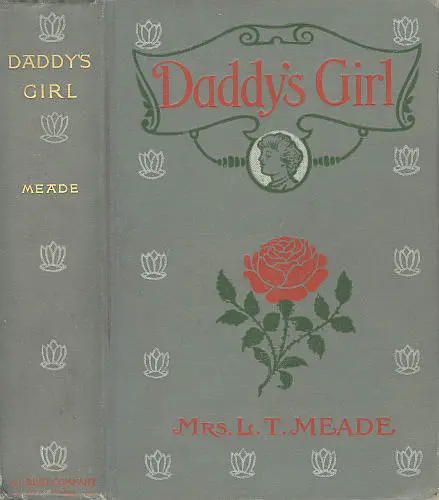
THE CLASSIC COLLECTION · 1900
"Daddy's Girl" by L. T. Meade is a novel written during the late 19th century. The story revolves around an eight-year-old girl named Sibyl Ogilvie, affectionately referred to as "the Angel," who navigates the complexities of her family dynamics, including her quarrelling parents and her own understanding of love, beauty, and perfection. The book explores themes of innocence, the longing for parental approval, and the perceived perfection of childhood versus the reality of adult relationships. At the start of the novel, we are introduced to young Sibyl, who remains blissfully unaware of the discord between her parents, Philip and Mildred Ogilvie. While her father seems to cherish her without any conditions, her mother only doles out affection when Sibyl presents herself as pretty, leading the child to reflect deeply on relationships and her own self-worth. As Sibyl prepares for an important occasion, her innocent thoughts are colored by the stark realities of her parents’ marriage, setting the stage for a narrative rich in emotional complexity and the exploration of familial love.
Introduction adapted from the source catalogue; source summaries may be automatically generated.
Free to read · English · 75,662 words · No account needed
MAKE TIME FOR A GOOD BOOK
On by default. Untick to stop anonymous reading totals. Each page counts after 10 seconds in view. How this works.
Anonymous counting is on unless you have switched it off.
"Holman, sir," said the woman. "This is my husband, sir. We heard only yesterday of dear little Missie's illness, and we couldn't rest until we came to enquire after her. We greatly 'opes, sir, that the dear little lamb is better. We thought you wouldn't mind if we asked."
"By no means," answered Ogilvie. "Any friends of Sibyl's, any real friends, are of interest to me."
He paused and looked into the old woman's face.
"She's better, ain't she, dear lamb?" asked Mrs. Holman.
Ogilvie shook his head; it was a quick movement, his face was very white, his lips opened but no words came. The next instant he had hurried down the road, leaving the old pair looking after him.
Mrs. Holman caught her husband's hand.
"What do it mean, John?" she asked, "what do it mean?"
"We had best go to the house and find out," was Holman's response.
"Yes, we had best," replied Mrs. Holman; "but, John, I take it that it means the worst. The little lamb was too good for this earth. I always said it, John, always."
"Come to the house and let's find out," said Holman again.
He took his old wife's hand, and the strange-looking pair walked down the avenue. Presently they found themselves standing outside the pretty old-fashioned porch of lovely Silverbel. They did not know as they walked that they were in full view of the windows of the Chamber of Peace, and that eager blue eyes were watching them, eager eyes which filled with love and longing when they gazed at them.
"Miss Winstead!" cried little Sibyl.
"What is it, dear?" asked the governess.
Sibyl had been silent for nearly a quarter of an hour, and Miss Winstead, tired with the bazaar and many other things, had been falling into a doze. The sudden excitement in Sibyl's voice now arrested her attention.
"Oh, Miss Winstead, they have come."
"Who have come, dear?"
"The Holmans, the darlings! I saw them walking down the avenue. Oh, I should so like to see them. Will you go down and bring them up? Please do."
"But the doctor said you were to be quiet, and not excite yourself."
"What does it matter whether I incite myself or not? Please, please
let me see the Holmans."
"Yes, dear," replied Miss Winstead. She left the room and went downstairs. As she entered the central hall she suddenly found herself listening to an animated conversation.
Your reading position is saved on this browser. Take it to another device with a library code. Reading pages adapt to text, rather than matching a printed edition.
BEHIND THE BOOK
This eBook is for the use of anyone anywhere in the United States and most other parts of the world at no cost and with almost no restrictions whatsoever. You may copy it, give it away or re-use it under the terms of the Project Gutenberg License included with this eBook or online at www.gutenberg.org. If you are not located in the United States, you will have to check the laws of the country where you are located before using this eBook. Read the source licence.
The original source file, including credits and licence, is retained by this library. Request an original-format copy at no charge. Please include the book title and Project Gutenberg identifier #30333.
KEEP YOUR CURIOSITY GOING
Coulson Kernahan

Maurice Baring
Frances Wright
Cécile Tormay

Frederic Jesup Stimson

W. H. P. (William Henry Pope) Jarvis


