THE CLASSIC COLLECTION✦The hermit of Turkey HollowCLASSIC FREE BOOKS
The hermit of Turkey Hollow
Arthur Cheney Train
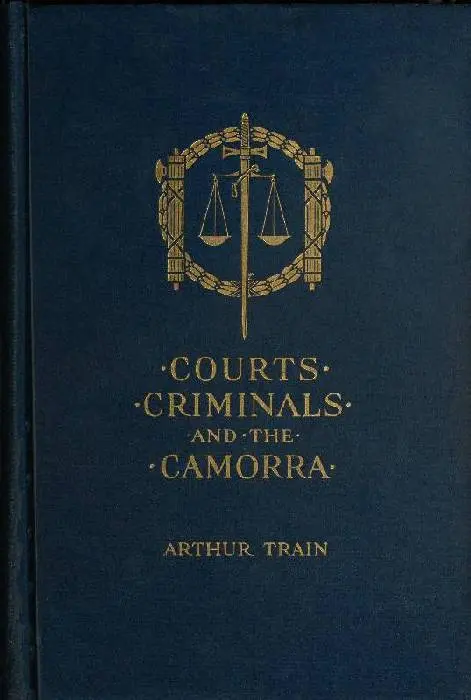
THE CLASSIC COLLECTION · 1912
"Courts, Criminals, and the Camorra" by Arthur Cheney Train is a detailed examination of the American criminal justice system, structured as a historical account likely written in the early 20th century. The book delves into various aspects of criminal law, including the presumption of innocence, police practices, and the intricacies of preparing a criminal case for trial. Train, who has experience as a prosecutor, demonstrates a comprehensive understanding of the flaws and nuances within the legal framework and the often paradoxical nature of justice. At the start of the narrative, Train introduces the case of an individual named Duffy, who was improperly treated by police officers, highlighting the tension between law enforcement practices and citizens' rights. He uses Duffy's experience to set the stage for a broader discussion about the systemic issues within the judicial system, such as the questionable legality of certain police actions, the difficulties in maintaining civil liberties, and the conflicting pressures faced by law enforcement. Train argues that while the presumption of innocence is a cornerstone of American jurisprudence, the reality often reflects a presumption of guilt stemming from public sentiments, societal norms, and procedural inequities, leading to a complex portrayal of justice that raises ethical questions about liberty and law enforcement.
Introduction adapted from the source catalogue; source summaries may be automatically generated.
Free to read · English · 64,141 words · No account needed
MAKE TIME FOR A GOOD BOOK
On by default. Untick to stop anonymous reading totals. Each page counts after 10 seconds in view. How this works.
Anonymous counting is on unless you have switched it off.
This is an extraordinary admission for a public functionary to make, and it is only fair to the Questor to state that his interview was not made intentionally for publication. It is what would be called in law an “admission against interest” and is evidence of the weightiest character. One can read between the lines that he but hints at the real state of things. His opinion that the solidarity of the Camorra has been greatly weakened seems to be borne out by many other evidences. For example, the depositions of the informer Abattemaggio are filled with detailed accounts of how various local “camorristi” quarrelled over the division of their petty spoils, tricked and cheated one another, and often betrayed each other to the police. The day of the real camorrista,—he of the swift dagger, the man of “heart,”—seems to be over and to have given place to an era of filthy traders in vice, petty grafters, blackmailers, and cheap thieves. But popular imagination still surrounds these with the halo of romance and regards the Camorra as “the friend of the people.”
[Footnote 1: Now abolished.]
[Footnote 2: In the State of New York.]
[Footnote 3: The following table gives the yearly percentages of convictions and acquittals by verdict in New York County since 1901:
+------+-------------+------------+-------------+------------+ | | NUMBER | NUMBER | | | | YEAR | CONVICTIONS | ACQUITTALS | CONVICTIONS | ACQUITTALS | | | BY VERDICT | BY VERDICT | PER CENT | PER CENT | +------+-------------+------------+-------------+------------+ | 1901 | 551 | 344 | 62 | 38 | | 1902 | 419 | 349 | 55 | 45 | | 1903 | 485 | 307 | 61 | 39 | | 1904 | 495 | 357 | 58 | 42 | | 1905 | 489 | 299 | 62 | 38 | | 1906 | 464 | 246 | 65 | 35 | | 1907 | 582 | 264 | 69 | 31 | | 1908 | 649 | 301 | 68 | 32 | | 1909 | 463 | 235 | 66 | 34 | | 1910 | 649 | 325 | 66 | 34 | +------+-------------+------------+-------------+------------+]
[Footnote 4: Written in 1909.]
[Footnote 5: Naples and Sicily were united under that name in 1734.]
[Footnote 6: G. M. Trevelyan, “Garibaldi and the Thousand,” c. iii, p. 45. De Cesares F. di P., p. lxix.]
[Footnote 7: Compare the Florentine carcisfo “artichoke” for
gendarme.]
[Footnote 8: H. D. Sedgwick, “Letters from Italy.”]
[Footnote 9: G. M. Trevelyan, “Garibaldi and the Thousand,” c. i., p.
19.]
[Footnote 10: Compassion.]
[Footnote 11: Publica Securezza, or Public Safety—the regular
police.]
[Footnote 12: The Italian Parliament approved in June last a bill proposed by the government authorizing the establishment of 6,000 schools, mainly in the southern provinces, at a cost of 250,000,000 lire ($50,000,000).]
[Footnote 13: See appendix.]
[Footnote 14: In stolen burial shrouds and the bones of children.]
[Footnote 15: About equivalent to our “quartermaster-sergeant.”]
[Footnote 16: May, 1912.]
[Footnote 17: Ten or more have been liberated already on this ground.]
[Footnote 18: Much more likely in Italy than in the United States.]
[Footnote 19: Petrosino is a national hero in Italy, where he was known as “Il Sherlock Holmes d’Italia”—“the Italian Sherlock Holmes.” Many novels in which he figures as the central character have a wide circulation there.]
Transcriber’s note:
1. Silently corrected simple spelling, grammar, and typographical
errors.
Your reading position is saved on this browser. Take it to another device with a library code. Reading pages adapt to text, rather than matching a printed edition.
Arthur Cheney Train
Arthur Cheney Train
Arthur Cheney Train
Arthur Cheney Train
BEHIND THE BOOK
This eBook is for the use of anyone anywhere in the United States and most other parts of the world at no cost and with almost no restrictions whatsoever. You may copy it, give it away or re-use it under the terms of the Project Gutenberg License included with this eBook or online at www.gutenberg.org. If you are not located in the United States, you will have to check the laws of the country where you are located before using this eBook. Read the source licence.
The original source file, including credits and licence, is retained by this library. Request an original-format copy at no charge. Please include the book title and Project Gutenberg identifier #61628.
KEEP YOUR CURIOSITY GOING
Cécile Tormay

Moritz Busch
John L. Ransom
Frances Wright
Cécile Tormay

Mabel Potter Daggett