THE CLASSIC COLLECTION✦The hermit of Turkey HollowCLASSIC FREE BOOKS
The hermit of Turkey Hollow
Arthur Cheney Train
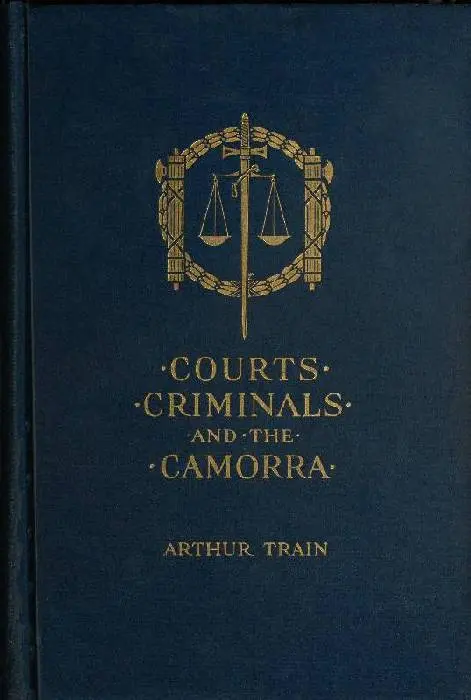
THE CLASSIC COLLECTION · 1912
"Courts, Criminals, and the Camorra" by Arthur Cheney Train is a detailed examination of the American criminal justice system, structured as a historical account likely written in the early 20th century. The book delves into various aspects of criminal law, including the presumption of innocence, police practices, and the intricacies of preparing a criminal case for trial. Train, who has experience as a prosecutor, demonstrates a comprehensive understanding of the flaws and nuances within the legal framework and the often paradoxical nature of justice. At the start of the narrative, Train introduces the case of an individual named Duffy, who was improperly treated by police officers, highlighting the tension between law enforcement practices and citizens' rights. He uses Duffy's experience to set the stage for a broader discussion about the systemic issues within the judicial system, such as the questionable legality of certain police actions, the difficulties in maintaining civil liberties, and the conflicting pressures faced by law enforcement. Train argues that while the presumption of innocence is a cornerstone of American jurisprudence, the reality often reflects a presumption of guilt stemming from public sentiments, societal norms, and procedural inequities, leading to a complex portrayal of justice that raises ethical questions about liberty and law enforcement.
Introduction adapted from the source catalogue; source summaries may be automatically generated.
Free to read · English · 64,141 words · No account needed
MAKE TIME FOR A GOOD BOOK
On by default. Untick to stop anonymous reading totals. Each page counts after 10 seconds in view. How this works.
Anonymous counting is on unless you have switched it off.
A bill amending the present law to this effect has received the enthusiastic approval of the immigration authorities and of the President. At first the Italian officials here and abroad expressed themselves as heartily in sympathy with this proposed addition to the excluded classes; but, once the bill was drawn and submitted to Congress, some of these same officials entered violent protests against it, on the ground that such a provision discriminated unfairly against Italy and the other countries issuing such certificates. The result of this has been to delay all action on the bill which is now being held in committee. Meanwhile the Black Hander is arriving almost daily, and we have no adequate laws to keep him out.
ANXIOUS for the actual facts, the writer asked an Italian friend to secure an interview with Cavalier Tarantelli, Questor of Florence, who for a long time was a functionary of the Public Safety in Naples, and testified in this capacity, at Viterbo, on August 9, 1911. In discussing the power of the Camorra, the Questor, after having given it as his opinion that the actual criminal organization had lost most of its unity, said: “At present there exist what are called ‘combricole di quartiere’ (conventicles of the quarters) small secret associations of ‘camorristi’ belonging to the same quarter of Naples. Naturally the different combricole in the different quarters of Naples assist each other, as likewise do the different chiefs of the quarters. Perhaps there is still a kind of hierarchy among the chiefs as there may still exist a hierarchy among the ‘camorristi’ in the different quarters. These ‘camorristi’ are, as a rule, bad characters, whose chief characteristics are immorality and overbearing insolence, and who live accordingly. They impose upon women and get money out of them; they practice usury; they receive and hide stolen things. Naples has now a special and intense criminality. The ‘camorristi’ are at present almost all habitual criminals. But the real so-called ‘act of camorra’ (atto d’camorra) is extortion, namely, a price imposed upon those who fear individual or collective imposition, either occult or open, on the part of the ‘Camorra.’ Every morning a ‘camorrista’ will go to the shopkeepers and tradesmen of the quarter (quartiere) and collect the price paid by him to be let alone. There are instances even nowadays of people who go to the chief ‘camorrista’ of their quarter in order to have their persons and property protected. This protection, however, is now more apparent than real. For instance, it is much more difficult now than it was formerly to find people who try to recover stolen property by having recourse to the ‘Camorra’ rather than to the police. The ‘camorristi’ are extremely numerous in Naples; at funeral processions, for example, you may see thousands of them. Songs are sung beneath the windows of prisons by the friends and relatives of the prisoners as a means of communicating with the latter. But this custom of ‘the songs’ is now disappearing and the same may be said of the ‘dichiaramenti’ (kinds of challenges), and of the tribunal of the ‘Camorra.’ Some large meetings of ‘camorristi’ still take place now and then. They will meet in some deserted place in the country far away from the city or among the mountains. I shall not deny that the judiciary of Naples is somewhat different from that of Northern Italy. The former is sometimes exceedingly indulgent, perhaps corrupt; that will explain the influence of the ‘Camorra.’ It is no exaggeration to state that magistrates in Naples are at times in awe of the ‘camorristi,’ and especially of their friends who always appear as perfectly honorable persons. It is a fact that the police now endeavor to destroy the ‘Camorra,’ a thing which they would not even have dreamt of a few years ago, and we must not forget that the police consist for the most part of men from the South of Italy. That there are officials and agents taking bribes from secret associations for delinquency is well known, but, of course, that does not occur in Naples or in Italy alone. In Naples the ‘Camorra’ places itself at the disposal of those who pay it, even in the case of elections. As a rule, it is the candidates of the conservative parties who avail themselves of the ‘Camorra.’ Thus, you see, even ministers and prefects may avail themselves of it! At all events, these deplorable facts are becoming less and less frequent. Let us hope they may completely disappear! To the Socialist party, however, must be given the credit of fighting against the ‘Camorra’ to the best of its ability.”
Your reading position is saved on this browser. Take it to another device with a library code. Reading pages adapt to text, rather than matching a printed edition.
Arthur Cheney Train
Arthur Cheney Train
Arthur Cheney Train
Arthur Cheney Train
BEHIND THE BOOK
This eBook is for the use of anyone anywhere in the United States and most other parts of the world at no cost and with almost no restrictions whatsoever. You may copy it, give it away or re-use it under the terms of the Project Gutenberg License included with this eBook or online at www.gutenberg.org. If you are not located in the United States, you will have to check the laws of the country where you are located before using this eBook. Read the source licence.
The original source file, including credits and licence, is retained by this library. Request an original-format copy at no charge. Please include the book title and Project Gutenberg identifier #61628.
KEEP YOUR CURIOSITY GOING
Cécile Tormay

Moritz Busch
John L. Ransom
Frances Wright
Cécile Tormay

Mabel Potter Daggett