The clammer
William John Hopkins
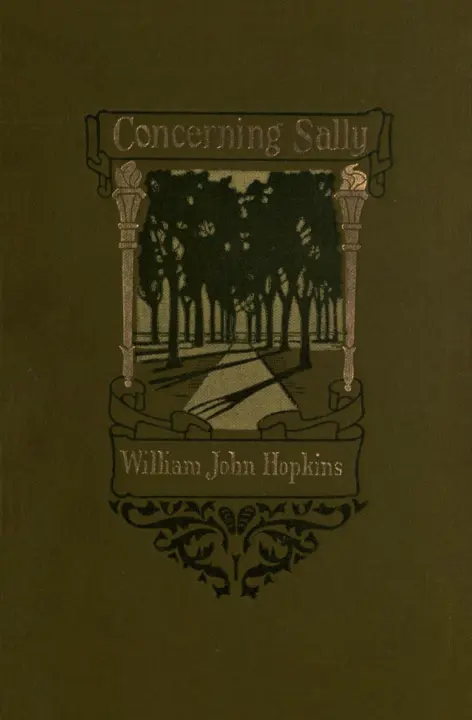
THE CLASSIC COLLECTION · 1912
"Concerning Sally" by William John Hopkins is a novel written in the early 20th century. The story revolves around Sally, a ten-year-old girl, and her family dynamics, particularly focusing on her relationship with her father, Professor Ladue, who struggles with his own demons as he balances his ambitions and family responsibilities. The book paints a tender portrait of childhood innocence amidst the complexities of adult failures and the emotional challenges in Sally's life. The opening of the book introduces us to Professor Ladue, who is portrayed as both a dedicated academic and an emotionally distant father. As he prepares to leave for a college meeting, he interacts with Sally, who demonstrates a mixture of seriousness and concern for her family, especially her mother, who suffers from frequent headaches. This initial scene sets up a backdrop of tension, as Sally exhibits an awareness of her family's troubles, highlighting the themes of innocence against adult struggles. The narrative captures Sally's resilience as she assumes roles that highlight her maturity, despite her young age, hinting at the deeper emotional journey she will face as the story unfolds.
Introduction adapted from the source catalogue; source summaries may be automatically generated.
Free to read · English · 123,390 words · No account needed
MAKE TIME FOR A GOOD BOOK
On by default. Untick to stop anonymous reading totals. Each page counts after 10 seconds in view. How this works.
Anonymous counting is on unless you have switched it off.
When Sally emerged, a minute or two later, she was blushing. She seemed burning up. She hid her burning cheeks in Fox's shoulder.
"Fox," she murmured from her hiding place, "don't you remember
Margaret Savage?"
"Oh, yes," he answered quite cheerfully. "She is very pretty now--very attractive to the young men--but she's as much of a fool as ever."
Sally laughed again. "And Henrietta told me," she said, "that you might succumb. So you see that, when you spoke of getting married--"
"Why, I meant you, all the time."
"Ye--es, but I didn't know that--and--and I thought that you meant Margaret and--and Henrietta's remarks set me to thinking and then--then, pretty soon, I knew that--that I loved you, Fox, and I was very unhappy. Oh, Fox, I was unhappy!"
"I'm sorry, darling. I'm very sorry. Sally!"
She looked up at him and, as she looked, the red once more mounted slowly, flooding her throat and then her cheeks. Again she put her arms up and drew his head down.
The crimson flood had left her face and there was in it only a lovely color as she lay back in his arms. "Don't you love me, Fox?"
He laughed. "Love you! Love you! I should think it was--"
"Then," she asked, "why don't you say so, sir? You haven't said so yet--not once." His arms tightened about her. "Close, Fox, dear!" she whispered. "Hold me closer. I don't want to get away, ever."
It was getting late when they finally stood at a window from which they could see the little cream-colored house--they had got as far as that--and the grove behind it.
"I want to open that house," Fox was saying. "I want to live in it."
"I want to live in it," Sally said.
"But," he returned quickly, "you know what must happen first. How
soon, Sally?"
"Just as soon as ever I can manage it, dear. You may depend upon that. And now I must go. I'm disgracefully late, even now."
She hastily rearranged her hair, which, strangely enough, was much disordered, and she put on her hat. Then she stood before him.
"Now, don't you be troubled about your father, Sally, or about Charlie, or anything. We will take care of those troubles together."
"As if you hadn't always tried to take those troubles off my shoulders!" She raised her radiant eyes to his. "If this is what you meant by 'paying in kind,' you shall be paid, Fox. Oh, you shall be paid. And, dear, nothing troubles me now. Do you understand? Nothing. Now I must run. Don't come with me. People couldn't help noticing something. Good night."
Your reading position is saved on this browser. Take it to another device with a library code. Reading pages adapt to text, rather than matching a printed edition.
William John Hopkins
William John Hopkins
William John Hopkins
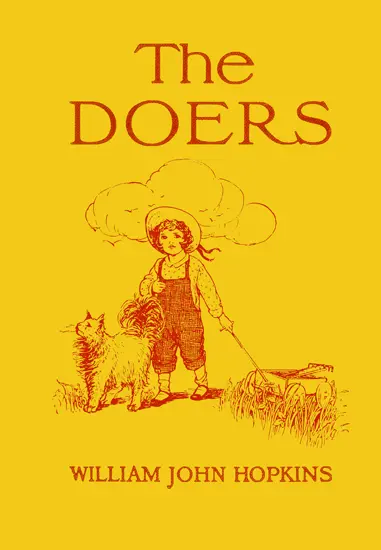
William John Hopkins
BEHIND THE BOOK
This eBook is for the use of anyone anywhere in the United States and most other parts of the world at no cost and with almost no restrictions whatsoever. You may copy it, give it away or re-use it under the terms of the Project Gutenberg License included with this eBook or online at www.gutenberg.org. If you are not located in the United States, you will have to check the laws of the country where you are located before using this eBook. Read the source licence.
The original source file, including credits and licence, is retained by this library. Request an original-format copy at no charge. Please include the book title and Project Gutenberg identifier #37118.
KEEP YOUR CURIOSITY GOING
Coulson Kernahan

Maurice Baring
Frances Wright
Cécile Tormay

Frederic Jesup Stimson

W. H. P. (William Henry Pope) Jarvis