The clammer
William John Hopkins
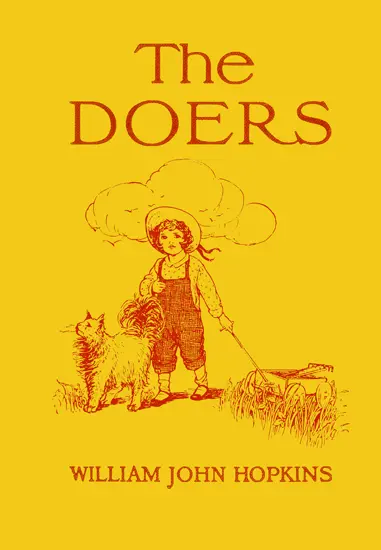
THE CLASSIC COLLECTION · 1914
"The Doers" by William John Hopkins is a children's book written in the early 20th century. This charming work follows a young boy named David, who is almost five years old, as he explores the construction site of a new house next to his home. With the constant presence of his cat and his trusty cart, the boy engages with various workmen, learning about the different trades involved in building a house, including digging, masonry, plumbing, and painting. The opening of the book introduces readers to David's playful spirit and curiosity about the world around him. One day, David wanders to a nearby construction site, where he observes men digging a cellar for the house. As he interacts with the workers, he expresses a desire to help and learns about the tools and tasks they perform. The narrative captures David's innocence and excitement, using simple language to describe his adventures, offering a whimsical portrayal of childhood exploration and the value of labor.
Introduction adapted from the source catalogue; source summaries may be automatically generated.
Free to read · English · 27,127 words · No account needed
MAKE TIME FOR A GOOD BOOK
On by default. Untick to stop anonymous reading totals. Each page counts after 10 seconds in view. How this works.
Anonymous counting is on unless you have switched it off.
Once upon a time there was a little boy who was almost five years old. And his mother used to let him wander about the garden and in the road near the house, for there weren't many horses going by, and the men who drove the horses that did go by knew the little boy and they were careful.
So this boy wandered about and played happily by himself.
He had his cat and his cart and his shovel and his hoe, and he always wore his overalls. And wherever he went his cat went too.
One morning he saw some men come with a big cart and two horses, and they stopped in a field near his house where there were some queer boards nailed on sticks that were stuck in the ground; and the boards turned corners, and there were strings across from one board to another.
And the men got out of the big cart and unhitched the horses from the cart, and the little boy thought he had better go there and see what they were going to do.
So he went, dragging his cart behind him, with his shovel and his hoe rattling in the bottom of it.
And his cat saw him going, and she ran on ahead with her bushy tail sticking straight up in the air.
And the little boy came to the men and the horses and he stopped and
stood still.
And his cat stopped too, but she didn't stand still; she rolled over on her back on the ground and wanted to play, but nobody would pay any attention to her.
Pretty soon one of the men looked down and saw the little boy.
"Hello!" he said.
"Hello," said the little boy. "What are you going to do?"
"Why," said the man, "we're going to dig dirt."
"Are you going to dig a hole?" the little boy asked.
"Yes," said the man; "a great big hole."
"And what is the hole for?" the little boy asked. "Is it to plant
something in?"
"No," said the man, "it's going to be the cellar of a house."
"Oh," said the little boy, "is it? And do you think I could help you dig? I've got my shovel and my cart."
"I'm afraid," said the man, "that it wouldn't do. You see that great
scoop?"
He pointed to a big iron scoop that was in the cart.
The little boy looked and nodded.
"Is that a scoop? What is it for?"
"The horses drag it, and a man takes hold of those two handles like plough-handles, and it scoops the dirt right up."
The little boy nodded again.
Your reading position is saved on this browser. Take it to another device with a library code. Reading pages adapt to text, rather than matching a printed edition.
William John Hopkins
William John Hopkins
William John Hopkins
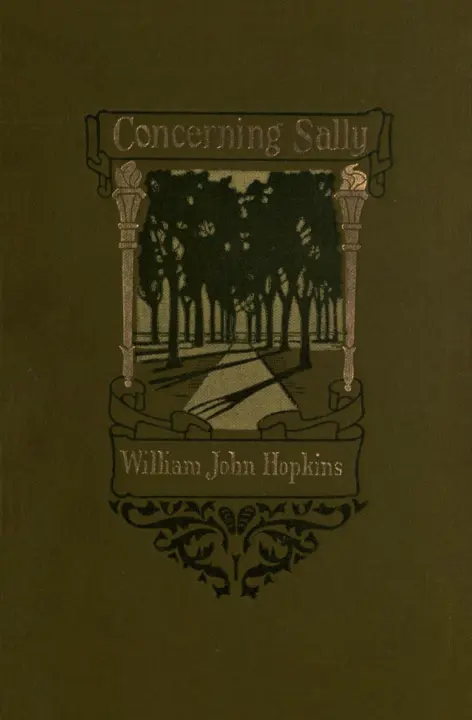
William John Hopkins
BEHIND THE BOOK
This eBook is for the use of anyone anywhere in the United States and most other parts of the world at no cost and with almost no restrictions whatsoever. You may copy it, give it away or re-use it under the terms of the Project Gutenberg License included with this eBook or online at www.gutenberg.org. If you are not located in the United States, you will have to check the laws of the country where you are located before using this eBook. Read the source licence.
The original source file, including credits and licence, is retained by this library. Request an original-format copy at no charge. Please include the book title and Project Gutenberg identifier #27650.
KEEP YOUR CURIOSITY GOING
Abby Morton Diaz
Helen Hunt Jackson
Mary Frances Blaisdell
Stuart Dodgson Collingwood
Kate Douglas Smith Wiggin
Hesba Stretton