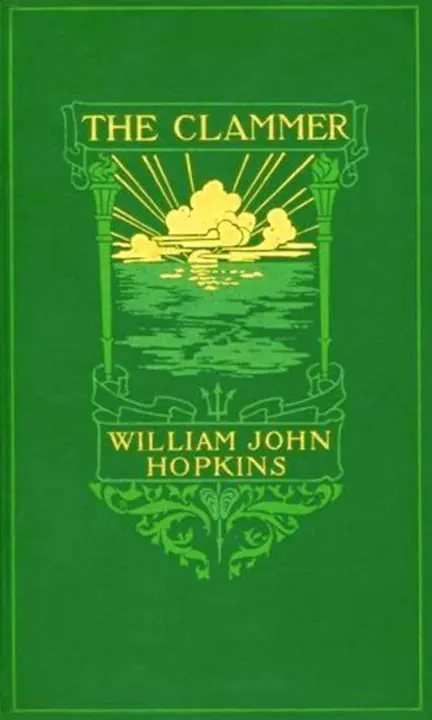
The clammer
William John Hopkins
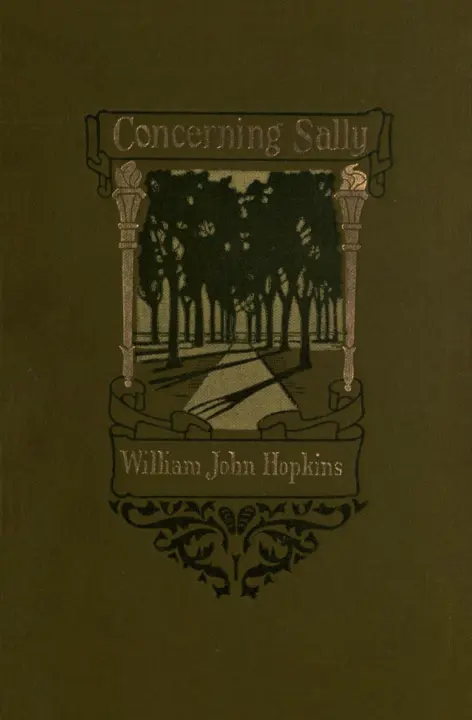
THE CLASSIC COLLECTION · 1912
"Concerning Sally" by William John Hopkins is a novel written in the early 20th century. The story revolves around Sally, a ten-year-old girl, and her family dynamics, particularly focusing on her relationship with her father, Professor Ladue, who struggles with his own demons as he balances his ambitions and family responsibilities. The book paints a tender portrait of childhood innocence amidst the complexities of adult failures and the emotional challenges in Sally's life. The opening of the book introduces us to Professor Ladue, who is portrayed as both a dedicated academic and an emotionally distant father. As he prepares to leave for a college meeting, he interacts with Sally, who demonstrates a mixture of seriousness and concern for her family, especially her mother, who suffers from frequent headaches. This initial scene sets up a backdrop of tension, as Sally exhibits an awareness of her family's troubles, highlighting the themes of innocence against adult struggles. The narrative captures Sally's resilience as she assumes roles that highlight her maturity, despite her young age, hinting at the deeper emotional journey she will face as the story unfolds.
Introduction adapted from the source catalogue; source summaries may be automatically generated.
Free to read · English · 123,390 words · No account needed
MAKE TIME FOR A GOOD BOOK
On by default. Untick to stop anonymous reading totals. Each page counts after 10 seconds in view. How this works.
Anonymous counting is on unless you have switched it off.
Sally was not completely deprived of the society of other children, although her temperament made this question a rather difficult one. Her father did not bother himself about Sally's goings and comings, which was quite what would have been expected. Indeed, he bothered himself very little about the doings of his family; as a general thing, he did not know what they did, nor did he care, so long as they refrained from interference with his own actions. They had learned to do that.
Mrs. Ladue did bother herself about Sally's doings a good deal, in spite of the difficulty of the question; and one would have thought that she had her fill of difficult questions. She went to the door and looked out. She saw Charlie playing alone near the foot of a tree. He was tied to the tree by a long string, one end of which was about his body, under his arms.
"Charlie," she called, "where's Sally?"
Charlie looked up, impatiently, and shook his head. Mrs. Ladue
repeated her question.
"Up there," he answered, pointing into the tree above his head. "And I'm a giraffe in a menagerie and giraffes can't talk, mother."
"Oh, excuse me, little giraffe," she said, smiling.
"Great, big giraffe. Not little giraffe."
Meanwhile there had been a sound of scrambling in the tree and Sally
dropped to the ground.
"Did you want me, mother?" she asked.
"I only thought that you have had the care of Charlie for a long time. Don't you want to go up to Margaret Savage's and play with her?" This was, perhaps, the hundredth time that Mrs. Ladue had asked that question.
"No, mother," Sally replied, also for the hundredth time, "I don't. But if you want me to go, I will."
Mrs. Ladue laughed outright at her daughter's directness. "Why?" she asked. "I am really curious to know why you don't like to play with other little girls."
"They are so stupid, mother," Sally answered quietly. "I have a lot
better time alone."
"Well, my dear little daughter," began Mrs. Ladue, laughing again; and there she stopped. "I should like, Sally,--I should like it very much, if I could manage to send you to dancing-school this winter."
"Very well, mother," said Sally again.
"But I don't know what your father would think of the idea."
"No," Sally returned. "You can't ever tell, can you?"
"Wouldn't you like to go and be with the other children and do what
they do?"
Sally was quite serious. "I don't think it would be very interesting," she said. "But if you want me to go, I will."
Your reading position is saved on this browser. Take it to another device with a library code. Reading pages adapt to text, rather than matching a printed edition.
William John Hopkins
William John Hopkins
William John Hopkins
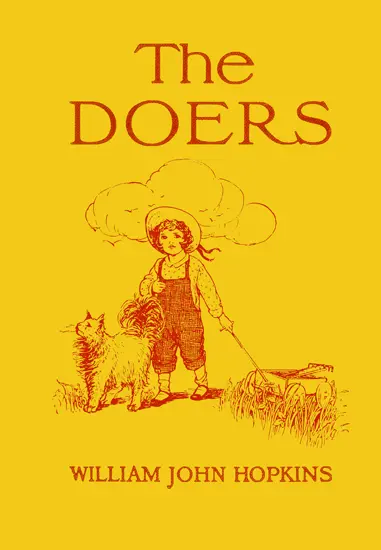
William John Hopkins
BEHIND THE BOOK
This eBook is for the use of anyone anywhere in the United States and most other parts of the world at no cost and with almost no restrictions whatsoever. You may copy it, give it away or re-use it under the terms of the Project Gutenberg License included with this eBook or online at www.gutenberg.org. If you are not located in the United States, you will have to check the laws of the country where you are located before using this eBook. Read the source licence.
The original source file, including credits and licence, is retained by this library. Request an original-format copy at no charge. Please include the book title and Project Gutenberg identifier #37118.
KEEP YOUR CURIOSITY GOING
Coulson Kernahan

Maurice Baring
Frances Wright
Cécile Tormay

Frederic Jesup Stimson

W. H. P. (William Henry Pope) Jarvis