The clammer
William John Hopkins
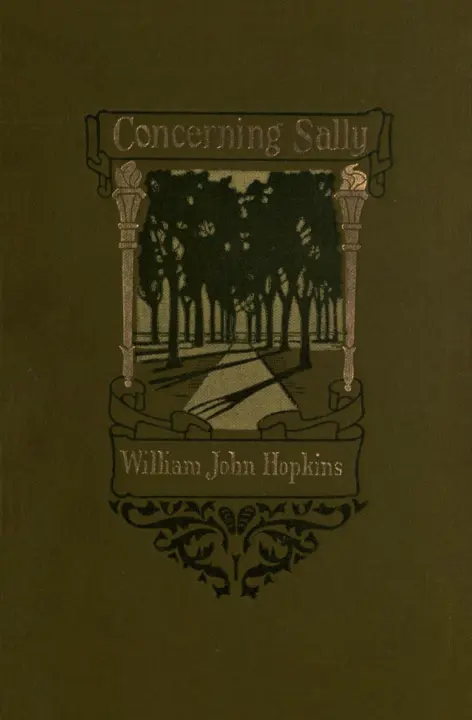
THE CLASSIC COLLECTION · 1912
"Concerning Sally" by William John Hopkins is a novel written in the early 20th century. The story revolves around Sally, a ten-year-old girl, and her family dynamics, particularly focusing on her relationship with her father, Professor Ladue, who struggles with his own demons as he balances his ambitions and family responsibilities. The book paints a tender portrait of childhood innocence amidst the complexities of adult failures and the emotional challenges in Sally's life. The opening of the book introduces us to Professor Ladue, who is portrayed as both a dedicated academic and an emotionally distant father. As he prepares to leave for a college meeting, he interacts with Sally, who demonstrates a mixture of seriousness and concern for her family, especially her mother, who suffers from frequent headaches. This initial scene sets up a backdrop of tension, as Sally exhibits an awareness of her family's troubles, highlighting the themes of innocence against adult struggles. The narrative captures Sally's resilience as she assumes roles that highlight her maturity, despite her young age, hinting at the deeper emotional journey she will face as the story unfolds.
Introduction adapted from the source catalogue; source summaries may be automatically generated.
Free to read · English · 123,390 words · No account needed
MAKE TIME FOR A GOOD BOOK
On by default. Untick to stop anonymous reading totals. Each page counts after 10 seconds in view. How this works.
Anonymous counting is on unless you have switched it off.
"That's just the trouble," Sally replied, frowning. "I don't know, although I can find out. I didn't think of that. It's a place where college boys go, sometimes," she added, flushing slowly.
"In Boston, eh?" Mr. Gilfeather's brow cleared and his eyes opened again. The color in Sally's face had not escaped him. "It's my advice, Miss Ladue, that you give it up. I don't know anything about them Boston places--I would say those places--or I'd offer to go for you. Perhaps I can guess--"
"It's my brother," said Sally simply.
Mr. Gilfeather nodded. "I'd heard it or I shouldn't have spoken of it," he said gently. "I'm very sorry, Miss Ladue. Nobody else shall hear of it from me."
"I'm afraid that will make very little difference," she remarked, "but
I thank you."
Mr. Gilfeather was silent for some moments while Sally sipped her
tea.
"Haven't you got any gentleman friend," he asked at last, "who would
do your errand for you?"
"I don't know who would be the most likely to--to know the way about," she returned. "I can't very well ask for bids." She smiled quickly. "If I knew the best person to ask I would ask him."
"That you would," Mr. Gilfeather murmured admiringly. "You ain't afraid. Do you want me to suggest?" he asked.
"I hoped you would be willing to."
"Well, how would Everett Morton do? I guess he knows his way about. I always understood that he did." Mr. Gilfeather smiled furtively. The matter of the palms rankled.
Sally looked reflective. "If he is the best man to do it I'll ask him." She sighed. She felt a strange repugnance to asking him--for that service. She had finished her tea and Mr. Gilfeather had finished his. "Well," she said, rising slowly, "I thank you for your advice, Mr. Gilfeather,--and for your tea," she added, "which I have enjoyed."
"The honor is mine," returned Mr. Gilfeather gallantly.
Sally smiled and bowed and was on her way to the door. "Miss Ladue," called Mr. Gilfeather. She stopped and turned. "I wish you would be kind enough to favor me with a bit of advice, too."
"Gladly," said Sally. "What about?"
Mr. Gilfeather came close and spoke low. "It's these palms and ferns. I got 'em this morning. Might I ask your opinion of 'em?"
"Surely, they're very nice and attractive," said Sally doubtfully.
He remarked the doubt. "You don't really think that. Now, do you? Wouldn't real ones be more--more high-toned, as you might say? I was advised that--paper flowers, he called 'em--weren't in keeping. Would you advise me to take 'em out and put in real ones?"
Your reading position is saved on this browser. Take it to another device with a library code. Reading pages adapt to text, rather than matching a printed edition.
William John Hopkins
William John Hopkins
William John Hopkins
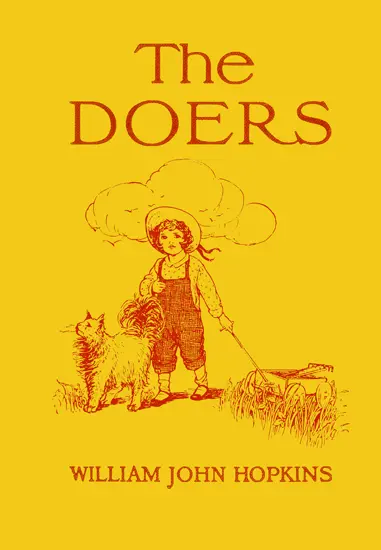
William John Hopkins
BEHIND THE BOOK
This eBook is for the use of anyone anywhere in the United States and most other parts of the world at no cost and with almost no restrictions whatsoever. You may copy it, give it away or re-use it under the terms of the Project Gutenberg License included with this eBook or online at www.gutenberg.org. If you are not located in the United States, you will have to check the laws of the country where you are located before using this eBook. Read the source licence.
The original source file, including credits and licence, is retained by this library. Request an original-format copy at no charge. Please include the book title and Project Gutenberg identifier #37118.
KEEP YOUR CURIOSITY GOING
Coulson Kernahan

Maurice Baring
Frances Wright
Cécile Tormay

Frederic Jesup Stimson

W. H. P. (William Henry Pope) Jarvis