The clammer
William John Hopkins
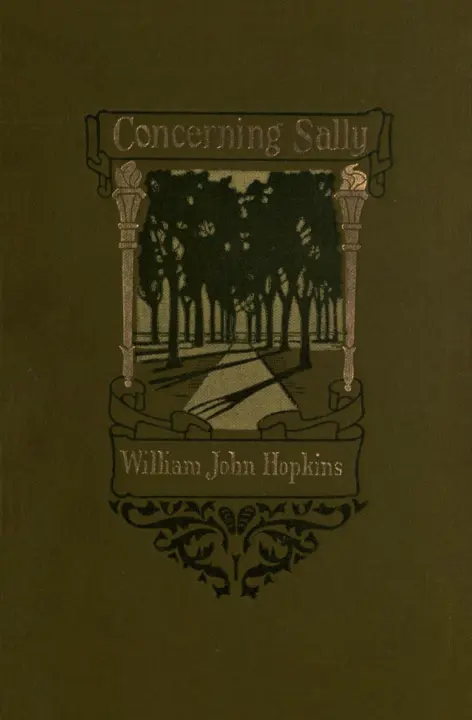
THE CLASSIC COLLECTION · 1912
"Concerning Sally" by William John Hopkins is a novel written in the early 20th century. The story revolves around Sally, a ten-year-old girl, and her family dynamics, particularly focusing on her relationship with her father, Professor Ladue, who struggles with his own demons as he balances his ambitions and family responsibilities. The book paints a tender portrait of childhood innocence amidst the complexities of adult failures and the emotional challenges in Sally's life. The opening of the book introduces us to Professor Ladue, who is portrayed as both a dedicated academic and an emotionally distant father. As he prepares to leave for a college meeting, he interacts with Sally, who demonstrates a mixture of seriousness and concern for her family, especially her mother, who suffers from frequent headaches. This initial scene sets up a backdrop of tension, as Sally exhibits an awareness of her family's troubles, highlighting the themes of innocence against adult struggles. The narrative captures Sally's resilience as she assumes roles that highlight her maturity, despite her young age, hinting at the deeper emotional journey she will face as the story unfolds.
Introduction adapted from the source catalogue; source summaries may be automatically generated.
Free to read · English · 123,390 words · No account needed
MAKE TIME FOR A GOOD BOOK
On by default. Untick to stop anonymous reading totals. Each page counts after 10 seconds in view. How this works.
Anonymous counting is on unless you have switched it off.
"I suppose she can call it that, but I don't believe that Doctor Sanderson is running a boarding-house or a hotel either. I always thought that she was bound for the asylum. And, another thing, I had it from the same authority that Meriwether Beatty goes to see her regularly once or twice a week, and he's real kind, too. I leave it to you whether that isn't a sign that he thinks her mind is growing feeble. He always used to say the most brutal things."
"I should say it was rather a sign that Doctor Beatty was losing his mind than that Patty was losing hers," rejoined Mrs. Upjohn.
"Well," said Letty with an air of finality, "you just wait and see if
I'm not right."
"I will," said Mrs. Upjohn.
Miss Lambkin glanced at her smiling face and thought it best to change
the subject.
"Dick Torrington," she observed, "is going to be married to that Henrietta girl. But I suppose you know."
"Yes," said Mrs. Upjohn.
"I understood," Miss Lambkin resumed, "that the wedding was to be the
last of June."
"The twenty-eighth," said Mrs. Upjohn.
"Oh," rejoined Miss Lambkin, somewhat taken aback by Mrs. Upjohn's ready replies. "And I understood that Henrietta was coming on here to visit right away."
"She came last night," said Mrs. Upjohn.
"To visit with Sally, I suppose?" Letty was consumed with curiosity as to the source of Mrs. Upjohn's accurate information. She always liked to be the source herself.
"She is the guest of Mrs. Torrington," said Mrs. Upjohn, raising her
eyes at last.
"Dear me, Alicia," Letty exclaimed impatiently, "how you do snap a person up! I suppose that was why Dick was grinning so like a monkey when I saw him yesterday afternoon."
"Because I snap a person up?"
"Because Henrietta was coming. He seemed to be on his way to the
station."
"Possibly. He didn't tell me the reason. But Henrietta didn't come
until nearly ten o'clock."
"Well!" The discomfited Letty devoted herself to her work for some minutes in silence. But she could not keep silent long. "So Dick gave you all that information, I suppose. I wondered how you got it all so pat."
"No," returned Mrs. Upjohn calmly. "I haven't seen Dick, to speak to,
for a good while."
Miss Lambkin laid down her work. "Well, Alicia," she said slowly, "will you be good enough to tell me how you found out all that--right up to last night?"
"Better than that, Letty," Mrs. Upjohn replied. "I know what happened this morning, about half past seven."
"They ate their breakfast, I suppose," snapped Letty. "I could have
told you that."
Your reading position is saved on this browser. Take it to another device with a library code. Reading pages adapt to text, rather than matching a printed edition.
William John Hopkins
William John Hopkins
William John Hopkins
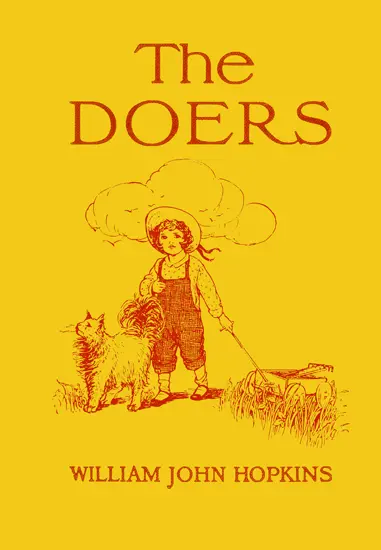
William John Hopkins
BEHIND THE BOOK
This eBook is for the use of anyone anywhere in the United States and most other parts of the world at no cost and with almost no restrictions whatsoever. You may copy it, give it away or re-use it under the terms of the Project Gutenberg License included with this eBook or online at www.gutenberg.org. If you are not located in the United States, you will have to check the laws of the country where you are located before using this eBook. Read the source licence.
The original source file, including credits and licence, is retained by this library. Request an original-format copy at no charge. Please include the book title and Project Gutenberg identifier #37118.
KEEP YOUR CURIOSITY GOING
Coulson Kernahan

Maurice Baring
Frances Wright
Cécile Tormay

Frederic Jesup Stimson

W. H. P. (William Henry Pope) Jarvis