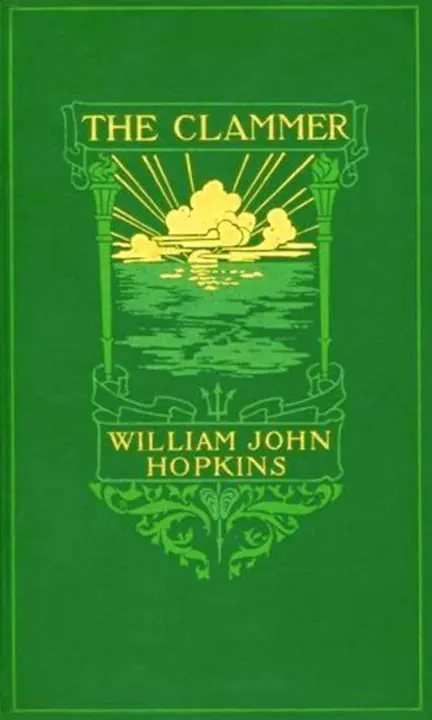
The clammer
William John Hopkins
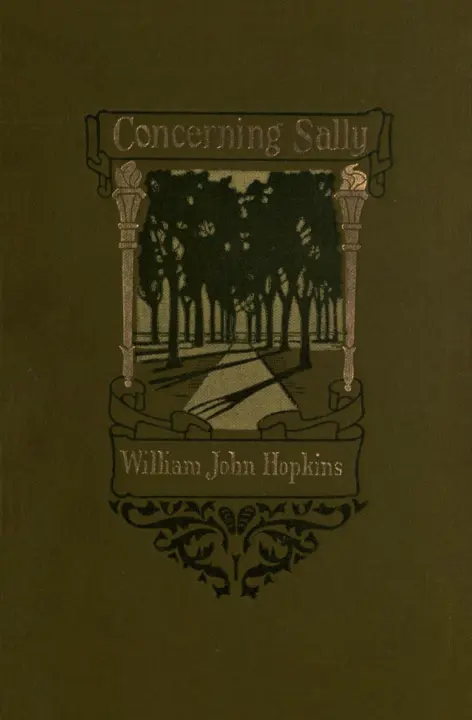
THE CLASSIC COLLECTION · 1912
"Concerning Sally" by William John Hopkins is a novel written in the early 20th century. The story revolves around Sally, a ten-year-old girl, and her family dynamics, particularly focusing on her relationship with her father, Professor Ladue, who struggles with his own demons as he balances his ambitions and family responsibilities. The book paints a tender portrait of childhood innocence amidst the complexities of adult failures and the emotional challenges in Sally's life. The opening of the book introduces us to Professor Ladue, who is portrayed as both a dedicated academic and an emotionally distant father. As he prepares to leave for a college meeting, he interacts with Sally, who demonstrates a mixture of seriousness and concern for her family, especially her mother, who suffers from frequent headaches. This initial scene sets up a backdrop of tension, as Sally exhibits an awareness of her family's troubles, highlighting the themes of innocence against adult struggles. The narrative captures Sally's resilience as she assumes roles that highlight her maturity, despite her young age, hinting at the deeper emotional journey she will face as the story unfolds.
Introduction adapted from the source catalogue; source summaries may be automatically generated.
Free to read · English · 123,390 words · No account needed
MAKE TIME FOR A GOOD BOOK
On by default. Untick to stop anonymous reading totals. Each page counts after 10 seconds in view. How this works.
Anonymous counting is on unless you have switched it off.
Sally chuckled, but she did not reply to this remark directly.
"Charlie," she called, "you be a saurus something."
"Don't want to be a--Sally, what's a--that thing that you said for
me to be? What is it?"
"Well," replied Sally slowly, "it's an animal kind of like an alligator--and such things, you know. I guess I'm one. And Charlie, you can't talk. Animals--especially sauruses--never talked."
"Parrots can," returned Charlie sullenly.
Sally did not think it worth while to try to answer this objection.
"There wasn't any kind of a thing, millions of years ago, that could talk," she said calmly, "so, of course, they couldn't learn."
"Then you can't talk, either," said Charlie, in triumph. And he subsided and returned to the eating of crackers, of which, as everybody knows, the saurians were extremely fond.
Sally, meanwhile, was enjoying the prospect of treetops; an unbroken prospect of treetops, except for a swamp which, in historic times, became their own little valley.
Sally had ceased, for the moment, her flitting lightly from bough to bough, and there was no sign of her presence; and Charlie had come to the end of his crackers and was browsing around in the grass, picking up a crumb here and there.
"Hello!" said a strange voice; a strange voice, but a very pleasant one. "As I'm a living sinner, if here isn't a little pony!"
Charlie looked up into the eyes of a very serious young man. The eyes were twinkling over the wall and through the gap in the trees. Charlie decided not to be frightened. But he shook his head. He wasn't a pony.
"Well, well, of course not," the voice went on. "I was rather hasty, but it looked like a pony, at the first glance. I guess it's a fierce bull."
Charlie shook his head again, less positively. Now that it had been suggested, he yearned to be a fierce bull. He wished that he had thought of it before he shook his head.
"A camel?" asked the young man. "Can it be a camel?"
Once more Charlie shook his head, and he laughed.
"It sounds like a hyena," remarked the stranger solemnly, "but it can't be, for hyenas eat--" He put his hand to his forehead and seemed to be puzzling it out. "Aha!" he cried at last. "I have it. A giraffe!"
"No!" Charlie shouted. "I'm aren't a giraffe. I'm a saw-horse."
And he straddled his legs far apart and his arms far apart, and he looked as much like a saw-horse as he could. That isn't saying much.
Your reading position is saved on this browser. Take it to another device with a library code. Reading pages adapt to text, rather than matching a printed edition.
William John Hopkins
William John Hopkins
William John Hopkins
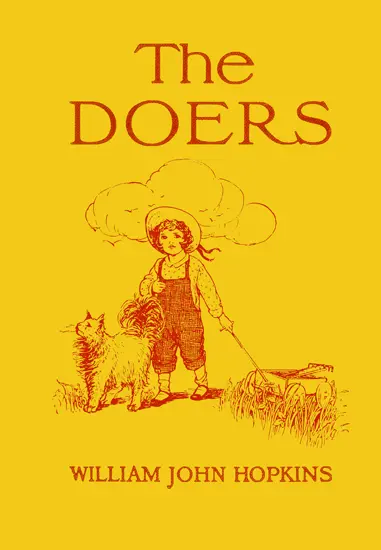
William John Hopkins
BEHIND THE BOOK
This eBook is for the use of anyone anywhere in the United States and most other parts of the world at no cost and with almost no restrictions whatsoever. You may copy it, give it away or re-use it under the terms of the Project Gutenberg License included with this eBook or online at www.gutenberg.org. If you are not located in the United States, you will have to check the laws of the country where you are located before using this eBook. Read the source licence.
The original source file, including credits and licence, is retained by this library. Request an original-format copy at no charge. Please include the book title and Project Gutenberg identifier #37118.
KEEP YOUR CURIOSITY GOING
Coulson Kernahan

Maurice Baring
Frances Wright
Cécile Tormay

Frederic Jesup Stimson

W. H. P. (William Henry Pope) Jarvis