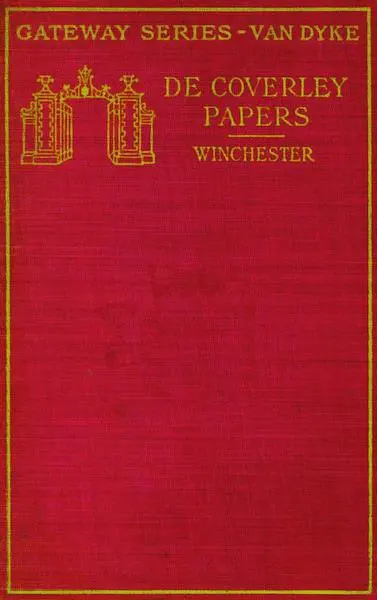
The Sir Roger de Coverley Papers
Joseph Addison & Eustace Budgell & Richard, Sir Steele
THE CLASSIC COLLECTION · 1713
"Cato: A Tragedy, in Five Acts" by Joseph Addison is a dramatic play written in the early 18th century, specifically around the early 1700s. This work belongs to the genre of tragedy and engages with themes of freedom, political integrity, and the moral struggles of its characters within the context of ancient Rome. The narrative focuses on the figure of Cato, a Roman statesman, who stands as a symbol of virtue and resistance against tyranny. The plot unfolds during a tumultuous time in Rome as Cato and his supporters grapple with the advancing power of Julius Caesar. Throughout the five acts, Cato embodies the struggle between liberty and oppression as he prepares to face Caesar’s forces in Utica. The story weaves together various subplots involving his children, Portius and Marcia, who navigate their own conflicts of love and allegiance against the backdrop of civil war, adding depth to the central theme of sacrifice for one’s country. Cato's unwavering commitment to his principles ultimately leads him to a tragic yet noble end, reflecting Addison's exploration of stoicism and virtue in the face of despair.
Introduction adapted from the source catalogue; source summaries may be automatically generated.
Free to read · English · 15,158 words · No account needed
MAKE TIME FOR A GOOD BOOK
On by default. Untick to stop anonymous reading totals. Each page counts after 10 seconds in view. How this works.
Anonymous counting is on unless you have switched it off.
Por. To my confusion and eternal grief,
I must approve the sentence that destroys me.
Lucia. Portius, no more; thy words shoot through my heart, Melt my resolves, and turn me all to love. Why are those tears of fondness in thy eyes? Why heaves thy heart? Why swells thy soul with sorrow? It softens me too much--Farewell, my Portius! Farewell, though death is in the word,--for ever!
Por. Stay, Lucia, stay! What dost thou say? For ever?
Thou must not go; my soul still hovers o'er thee,
And can't get loose.
Lucia. If the firm Portius shake,
To hear of parting, think what Lucia suffers!
Por. 'Tis true, unruffled and serene, I've met
The common accidents of life, but here
Such an unlook'd-for storm of ills falls on me.
It beats down all my strength--I cannot bear it.
We must not part.
Lucia. What dost thou say? Not part! Hast thou forgot the vow that I have made? Are not there heavens, and gods, that thunder o'er us? --But see, thy brother Marcus bends this way; I sicken at the sight. Once more, farewell. Farewell, and know, thou wrong'st me, if thou think'st Ever was love or ever grief like mine. [Exit LUCIA.
Enter MARCUS.
Marc. Portius, what hopes? How stands she? am I doom'd
To life or death?
Por. What wouldst thou have me say?
Marc. What means this pensive posture? Thou appear'st
Like one amazed and terrified.
Por. I've reason.
Marc. Thy downcast looks, and thy disorder'd thoughts,
Tell me my fate. I ask not the success
My cause has found.
Por. I'm grieved I undertook it.
Marc. What, does the barbarous maid insult my heart, My aching heart, and triumph in my pains? That I could cast her from my thoughts for ever!
Por. Away! you're too suspicious in your griefs;
Lucia, though sworn never to think of love,
Compassionates your pains, and pities you.
Marc. Compassionates my pains, and pities me!
What is compassion, when 'tis void of love?
Fool that I was, to choose so cold a friend
To urge my cause!--Compassionates my pains!
Pr'ythee what art, what rhet'ric didst thou use
To gain this mighty boon?--She pities me!
To one that asks the warm returns of love,
Compassion's cruelty, 'tis scorn, 'tis death--
Por. Marcus, no more; have I deserved this treatment?
Marc. What have I said? Oh! Portius, Oh, forgive me!
A soul exasperated in ills, falls out
With every thing--its friend, itself--but hah! [Shout.
What means that shout, big with the sounds of war?
What new alarm?
Por. A second, louder yet,
Swells in the wind, and comes more full upon us.
Your reading position is saved on this browser. Take it to another device with a library code. Reading pages adapt to text, rather than matching a printed edition.
Joseph Addison & Eustace Budgell & Richard, Sir Steele
BEHIND THE BOOK
This eBook is for the use of anyone anywhere in the United States and most other parts of the world at no cost and with almost no restrictions whatsoever. You may copy it, give it away or re-use it under the terms of the Project Gutenberg License included with this eBook or online at www.gutenberg.org. If you are not located in the United States, you will have to check the laws of the country where you are located before using this eBook. Read the source licence.
The original source file, including credits and licence, is retained by this library. Request an original-format copy at no charge. Please include the book title and Project Gutenberg identifier #31592.
KEEP YOUR CURIOSITY GOING
Maurice Baring
W. B. (William Butler) Yeats
Edward Martyn

John Brougham & Charlotte Brontë
Marguerite Merington
Leonid Andreyev