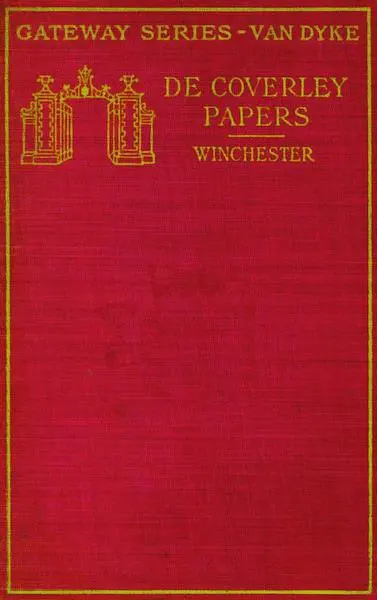
The Sir Roger de Coverley Papers
Joseph Addison & Eustace Budgell & Richard, Sir Steele
THE CLASSIC COLLECTION · 1713
"Cato: A Tragedy, in Five Acts" by Joseph Addison is a dramatic play written in the early 18th century, specifically around the early 1700s. This work belongs to the genre of tragedy and engages with themes of freedom, political integrity, and the moral struggles of its characters within the context of ancient Rome. The narrative focuses on the figure of Cato, a Roman statesman, who stands as a symbol of virtue and resistance against tyranny. The plot unfolds during a tumultuous time in Rome as Cato and his supporters grapple with the advancing power of Julius Caesar. Throughout the five acts, Cato embodies the struggle between liberty and oppression as he prepares to face Caesar’s forces in Utica. The story weaves together various subplots involving his children, Portius and Marcia, who navigate their own conflicts of love and allegiance against the backdrop of civil war, adding depth to the central theme of sacrifice for one’s country. Cato's unwavering commitment to his principles ultimately leads him to a tragic yet noble end, reflecting Addison's exploration of stoicism and virtue in the face of despair.
Introduction adapted from the source catalogue; source summaries may be automatically generated.
Free to read · English · 15,158 words · No account needed
MAKE TIME FOR A GOOD BOOK
On by default. Untick to stop anonymous reading totals. Each page counts after 10 seconds in view. How this works.
Anonymous counting is on unless you have switched it off.
Por. What should I do? If I disclose my passion, Our friendship's at an end: if I conceal it, The world will call me false to a friend and brother. [Aside.
Marc. But see, where Lucia, at her wonted hour, Amid the cool of yon high marble arch, Enjoys the noon-day breeze! Observe her, Portius; That face, that shape, those eyes, that heav'n of beauty! Observe her well, and blame me if thou canst.
Por. She sees us, and advances----
Marc. I'll withdraw,
And leave you for a while. Remember, Portius,
Thy brother's life depends upon thy tongue. [Exit.
Enter LUCIA.
Lucia. Did not I see your brother Marcus here?
Why did he fly the place, and shun my presence?
Por. Oh, Lucia, language is too faint to show
His rage of love; it preys upon his life;
He pines, he sickens, he despairs, he dies!
Lucia. How wilt thou guard thy honour, in the shock Of love and friendship! Think betimes, my Portius, Think how the nuptial tie, that might ensure Our mutual bliss, would raise to such a height Thy brother's griefs, as might perhaps destroy him.
Por. Alas, poor youth! What dost thou think, my Lucia?
His gen'rous, open, undesigning heart
Has begg'd his rival to solicit for him!
Then do not strike him dead with a denial.
Lucia. No, Portius, no; I see thy sister's tears,
Thy father's anguish, and thy brother's death,
In the pursuit of our ill-fated loves;
And, Portius, here I swear, to Heav'n I swear,
To Heav'n, and all the powers that judge mankind,
Never to mix my plighted hands with thine,
While such a cloud of mischief hangs upon us,
But to forget our loves, and drive thee out
From all my thoughts--as far as I am able.
Por. What hast thou said? I'm thunderstruck--recall
Those hasty words, or I am lost for ever.
Lucia. Has not the vow already pass'd my lips?
The gods have heard it, and 'tis seal'd in heav'n.
May all the vengeance that was ever pour'd
On perjured heads, o'erwhelm me if I break it!
Por. Fix'd in astonishment, I gaze upon thee,
Like one just blasted by a stroke from heav'n,
Who pants for breath and stiffens, yet alive,
In dreadful looks, a monument of wrath!
Lucia. Think, Portius, think thou see'st thy dying brother Stabb'd at his heart, and all besmear'd with blood, Storming at Heav'n and thee! Thy awful sire Sternly demands the cause, the accursed cause, That robs him of his son: poor Marcia trembles, Then tears her hair, and, frantic in her griefs, Calls out on Lucia. What could Lucia answer, Or how stand up in such a scene of sorrow?
Your reading position is saved on this browser. Take it to another device with a library code. Reading pages adapt to text, rather than matching a printed edition.
Joseph Addison & Eustace Budgell & Richard, Sir Steele
BEHIND THE BOOK
This eBook is for the use of anyone anywhere in the United States and most other parts of the world at no cost and with almost no restrictions whatsoever. You may copy it, give it away or re-use it under the terms of the Project Gutenberg License included with this eBook or online at www.gutenberg.org. If you are not located in the United States, you will have to check the laws of the country where you are located before using this eBook. Read the source licence.
The original source file, including credits and licence, is retained by this library. Request an original-format copy at no charge. Please include the book title and Project Gutenberg identifier #31592.
KEEP YOUR CURIOSITY GOING
Maurice Baring
W. B. (William Butler) Yeats
Edward Martyn

John Brougham & Charlotte Brontë
Marguerite Merington
Leonid Andreyev