Modern daughters
Alexander Black
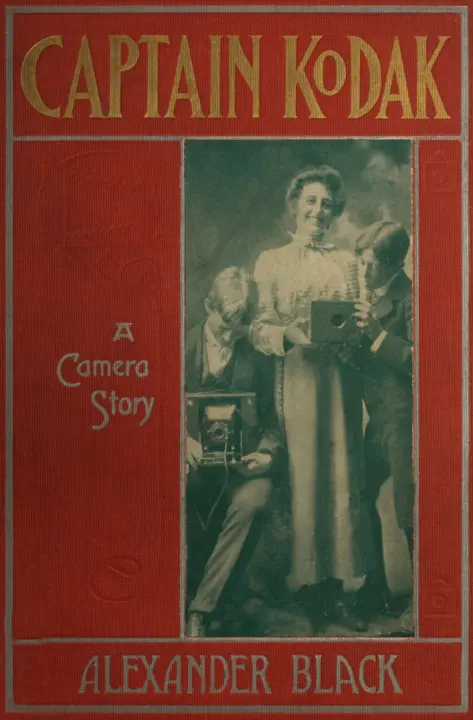
THE CLASSIC COLLECTION · 1899
"Captain Kodak: A Camera Story" by Alexander Black is a fictional narrative written in the late 19th century. The story revolves around an amateur photographer, Allan Hartel, and his adventures alongside his friends, particularly in relation to the excitement and challenges that come from their shared interest in photography. The plot begins with Allan receiving a camera, which ignites a series of events involving friendships, mishaps, and community interactions centered around photography. At the start of the narrative, readers are introduced to Allan and his friend McConnell amidst an amusing chaos after a circus elephant escapes and creates havoc in their town, Hazenfield. Allan expresses a desire to have documented the incident with a photograph, hinting at his budding passion for photography. Shortly afterward, he reveals to McConnell that he won a camera as a prize from a composition contest. This revelation sparks their enthusiasm for setting up a darkroom and experimenting with photography, leading them to a night filled with events surrounding a factory fire that they eagerly attempt to photograph. The opening sets the tone for a blend of adventure, friendship, and the exploratory nature of youth as they dive into the world of photography.
Introduction adapted from the source catalogue; source summaries may be automatically generated.
Free to read · English · 50,307 words · No account needed
MAKE TIME FOR A GOOD BOOK
On by default. Untick to stop anonymous reading totals. Each page counts after 10 seconds in view. How this works.
Anonymous counting is on unless you have switched it off.
“Now, what do you want to do?” he demanded, so abruptly that Allan was a little at a loss what to say.
“We should like to photograph some of the Indians,” said Allan, finally.
“Well, here’s Walking Dog, photograph him.” And Twink caught a passing
Indian by the arm.
Walking Dog was very solemn in appearance, and when Twink said something to him in a language the boys could not understand—it was the first Indian talk Allan or McConnell ever had heard—Walking Dog looked at the boys and at their camera without a smile.
Allan was sure that Walking Dog resented the proposition to be photographed, and felt sorry he had mentioned it. The Indian looked so savage in his paint.
“He says all right,” remarked Twink.
Now, Allan was sure Walking Dog had not uttered a sound, and he wondered very much what language the Indian had used that Twink should feel so sure.
“How about taking him over here?” said Twink, pointing to a spot where a stretch of canvas would form a background.
Walking Dog seemed to understand at once, and, striding across, he stood with his back against the canvas, his hands on his rifle, and in a position such as soldiers take at “parade rest.”
Walking Dog refused to look pleasant while Allan and McConnell got their camera ready. Or perhaps it was his natural look with the ugly war-paint added.
“Get it?” asked Twink, when he heard the camera click.
“Oh, wait a minute!” cried McConnell. He had forgotten the slide of his plate-holder. Allan rolled his cartridge another number, and took one more to keep McConnell company. Walking Dog remained as still as a soldier’s monument while this was going on.
“I wish you would tell him we are much obliged,” said Allan to Twink.
“Oh, he knows that,” said Twink; but he spoke to the Indian as he was moving away, and Walking Dog shook hands with both boys, stiffly and silently, then walked majestically away.
Twink now left them for a moment and spoke to another Indian, a much handsomer and more gorgeous Indian, though one not less solemn than Walking Dog. They came back together.
“This is Big Wolf,” said Twink. “You can take him, too.”
“Ugh!” said Big Wolf, and he sat down near by, looking straight before
him.
“Don’t they like to do this?” asked McConnell. He couldn’t get it out of his head that Big Wolf was likely to rebel at any moment and scalp them both.
Your reading position is saved on this browser. Take it to another device with a library code. Reading pages adapt to text, rather than matching a printed edition.
Alexander Black
Alexander Black
BEHIND THE BOOK
This eBook is for the use of anyone anywhere in the United States and most other parts of the world at no cost and with almost no restrictions whatsoever. You may copy it, give it away or re-use it under the terms of the Project Gutenberg License included with this eBook or online at www.gutenberg.org. If you are not located in the United States, you will have to check the laws of the country where you are located before using this eBook. Read the source licence.
The original source file, including credits and licence, is retained by this library. Request an original-format copy at no charge. Please include the book title and Project Gutenberg identifier #70197.
KEEP YOUR CURIOSITY GOING
Coulson Kernahan

Maurice Baring
Frances Wright
Cécile Tormay

Frederic Jesup Stimson

W. H. P. (William Henry Pope) Jarvis