Australia, New Zealand and some islands of the South seas
Frank G. (Frank George) Carpenter
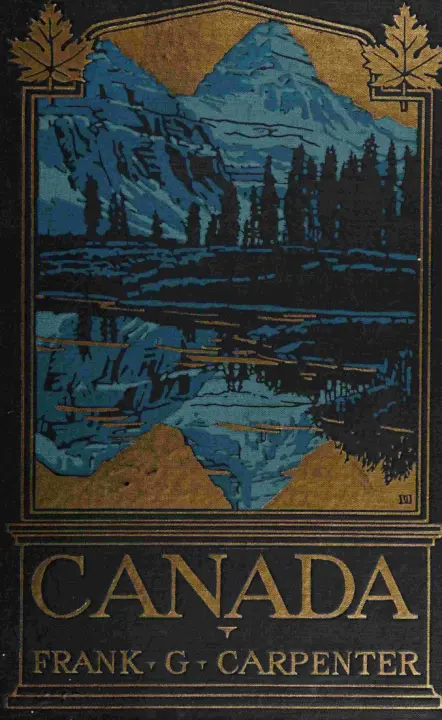
THE CLASSIC COLLECTION · 1924
"Canada and Newfoundland" by Frank G. Carpenter is a travelogue written in the early 20th century. The work explores the vast landscapes, unique cultures, and abundant natural resources of Canada, specifically focusing on the regions of Newfoundland and its historical significance. Carpenter combines his observations from extensive travels with insights into the socio-economic aspects of the places he visits, aiming to educate readers about the richness of Canadian life. The opening of the book invites readers into a journey through Canada, introducing the vastness of the country and highlighting its natural wealth. Carpenter mentions that Canada is nearly as large as all of Europe and discusses its potential for population growth due to its vast uncultivated lands. He shares his experiences visiting different parts of Canada, such as the St. Lawrence River and the cod fisheries of Newfoundland. The narrative sets up a tone of excitement and discovery, emphasizing the interconnectedness of the United States and Canada, suggesting that these two lands share a similar heritage that invites exploration and understanding.
Introduction adapted from the source catalogue; source summaries may be automatically generated.
Free to read · English · 93,267 words · No account needed
MAKE TIME FOR A GOOD BOOK
On by default. Untick to stop anonymous reading totals. Each page counts after 10 seconds in view. How this works.
Anonymous counting is on unless you have switched it off.
Fort Garry, present site of Winnipeg, 151.
Fort McMurray, on the route to the new oil fields, 203.
Fort Norman, trading post for the new oil region, 203.
Fort Smith, capital of the Northwest Territories, 203.
Fort Vermillion, last herd of wild wood buffalo reported near, 202.
Fort William, the great wheat centre, 135, 141.
Fox, Black, price of fur declining since advent of fur farming, 173.
Fox farms on Prince Edward Island, 40;
near Indian Lorette, Quebec, 44.
Fraser River, gold discoveries on, the first in British Columbia, 223.
Freighters, Lake Superior, 146.
French, dispute British claims to Newfoundland fisheries, 14;
attempts to hold Nova Scotia, 15;
driven from Cape Breton Island, 39.
French, the language of Quebec, 49.
French Canada--Quebec, 42.
French Catholicism, Quebec the American capital of, 57.
Fruit growing in the Okanagan Valley, British Columbia, 224.
Fundy, Bay of, the forty-foot tides of, 38.
Fur, and the great organizations concerned in its marketing, 166 et
seq.
Gas, natural, at Swift Current, Saskatchewan, 180;
at Medicine Hat and near Edmonton, 201.
Gates, Swift-Water Bill, his great strike in the Klondike, 277;
partnership with Jack London, 278;
partnership with Joe Boyle, 282.
Glace Bay, first transatlantic cable landed at, 39.
Gold, but little found in Labrador, 11;
production of, in the Porcupine district, 125;
in the Kootenay country, 221;
first discovery in British Columbia, on the Fraser River, 223;
supply being exhausted in the Klondike, 250;
the wonders of the Yukon, 266.
Gouin reservoir, immense water-power development in Quebec, 47.
Government ownership of railroads, how brought about, 162.
Governor-General, the, his position in the Canadian government, 84.
Grain-carrying ships, of the Great Lakes, 146.
Grain elevators, at Port Arthur and Fort William, 141 et seq.
Grain sacks, manufacture of, a leading industry of Montreal, 63.
Granby Company, miners and smelters of copper in British Columbia,
222.
Grand Banks, the cod fishing grounds, 4, 19.
Grand Forks, British Columbia, smelter closed down after a record
production, 222.
Grand Trunk railway, growth of, in Canada, 162.
Grande Prairie, largest town in the Peace River Valley, 202.
Great Divide, crossing the, 213.
Great Slave Lake, on the route to the new oil fields, 204.
Grenfell, Dr., sailors’ mission of, at St. John’s, 8.
Gulf Stream, its influence on Newfoundland, 4, 5.
Halibut, large production of the British Columbia fisheries, 230.
Halifax, chief city and capital of Nova Scotia, 31.
Halifax explosion, one of the greatest ever known, 33.
Hamilton, Ontario, prosperity due to cheap electric power from
Niagara, 117.
Hayward, Edward, his murder near Lesser Slave Lake, and the running down of his murderer, 295.
Hematite ore, in the Kootenay country, 221.
Hidden Creek copper mines, largest in British Columbia, 223.
Hill, James J., prediction of Canada’s future population, 189.
Hockey, the great game of Canada, 68.
Hogs, raised at Dawson, Yukon, 260, 262.
Hollinger Mine, largest gold mine in North America, 125.
Holt, Renfrew and Company, great furriers at Quebec, 171.
Homesteads in the Yukon, 265.
Horse raising, in Alberta, 209.
Hot-houses for cucumbers and tomatoes at Dawson, Yukon, 261.
Your reading position is saved on this browser. Take it to another device with a library code. Reading pages adapt to text, rather than matching a printed edition.
Frank G. (Frank George) Carpenter
Frank G. (Frank George) Carpenter
Frank G. (Frank George) Carpenter
BEHIND THE BOOK
This eBook is for the use of anyone anywhere in the United States and most other parts of the world at no cost and with almost no restrictions whatsoever. You may copy it, give it away or re-use it under the terms of the Project Gutenberg License included with this eBook or online at www.gutenberg.org. If you are not located in the United States, you will have to check the laws of the country where you are located before using this eBook. Read the source licence.
The original source file, including credits and licence, is retained by this library. Request an original-format copy at no charge. Please include the book title and Project Gutenberg identifier #71640.
KEEP YOUR CURIOSITY GOING
Wilfrid Scawen Blunt
Wilfrid Scawen Blunt

E. W. (Edgar Watson) Howe
Cécile Tormay

Moritz Busch
John L. Ransom