Australia, New Zealand and some islands of the South seas
Frank G. (Frank George) Carpenter
THE CLASSIC COLLECTION · 1924
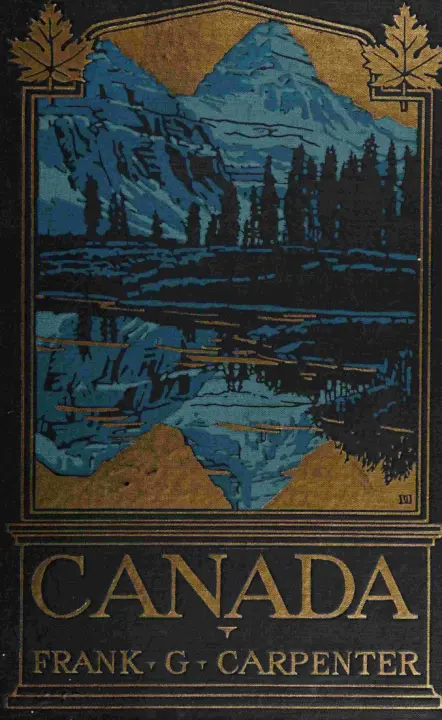
"Canada and Newfoundland" by Frank G. Carpenter is a travelogue written in the early 20th century. The work explores the vast landscapes, unique cultures, and abundant natural resources of Canada, specifically focusing on the regions of Newfoundland and its historical significance. Carpenter combines his observations from extensive travels with insights into the socio-economic aspects of the places he visits, aiming to educate readers about the richness of Canadian life. The opening of the book invites readers into a journey through Canada, introducing the vastness of the country and highlighting its natural wealth. Carpenter mentions that Canada is nearly as large as all of Europe and discusses its potential for population growth due to its vast uncultivated lands. He shares his experiences visiting different parts of Canada, such as the St. Lawrence River and the cod fisheries of Newfoundland. The narrative sets up a tone of excitement and discovery, emphasizing the interconnectedness of the United States and Canada, suggesting that these two lands share a similar heritage that invites exploration and understanding.
Introduction adapted from the source catalogue; source summaries may be automatically generated.
Free to read · English · 93,267 words · No account needed
MAKE TIME FOR A GOOD BOOK
On by default. Untick to stop anonymous reading totals. Each page counts after 10 seconds in view. How this works.
Anonymous counting is on unless you have switched it off.
Chinese labourers, not admitted to Canada, 190.
Chippewa, immense hydro-electric development at, 113.
Chisana, abandoned town on the Yukon River, 244.
“Circle tour,” the Canadian Rockies, Yellowstone Park, and Grand Canyon motor route, 215.
Clay Belt, the Great, agricultural possibilities in, 139.
Clergue steel plant, at Sault Ste. Marie, 135.
Climate, at Edmonton, 200;
at Prince Rupert, British Columbia, 228;
at Dawson, Yukon, 256.
Coaker, Sir William, organizer of Newfoundland Fishermen’s Protective
Union, 21.
Coal, great importance of the Sydney mines, 39; amount saved by development of Canada’s water-power, 108; Alberta’s deposits, the greatest in the Dominion, 200; immense deposits, near Crow’s Nest Pass, 221.
Cobalt, Ontario, world’s richest silver deposits at, 119.
Cobalt, immense production of the mineral at Cobalt, Ontario, 125.
Cochrane, “Billy,” breeder of “wild” cattle at Calgary, 210.
Cochrane, Senator, owner of large cattle ranch in Alberta, 207.
Cod fisheries, of Newfoundland, 13;
of Nova Scotia, 36.
Coffee, George T., lucky miner in the Yukon, 266.
Coke ovens, at the coal deposits near Crow’s Nest Pass, 221.
Columbia River, source of, in the Kootenays, 220.
Conservation of forests in Canada, 89.
Copper, rich deposits in Newfoundland, 12;
in the Kootenay country, 221, 222.
Copper sulphate, by-product of Sudbury mines, 130.
Cornwallis, Lord, city of Halifax, founded by, 32.
“Country banks” of coal, the settler’s recourse, 201.
Creighton Nickel Mine, largest producer in the world, 127.
“Cremation of Sam McGee,” poem by Robert Service, 257.
Crow’s Nest Pass, railway line through, 217, 220;
immense coal deposits near, 221.
Cucumbers, a hot-house crop, at Dawson, Yukon, 261.
Curling, a popular game in Canada, 68.
Dairy cattle and products of Alberta, 208.
Dawson, the capital of the Yukon, 250 et seq.
Deer, plentiful in Nova Scotia, 57.
Divorce, no laws for, in Newfoundland, 9.
Domestic servants, scarcity of, 192.
Dominion Agricultural Department, originates improved wheat
varieties, 183.
Douglas fir, principal timber of British Columbia, 91.
Doukhobors, fanatical colonists from Russia, 194.
Doyle, Sir Arthur Conan, poem, “The Athabasca Trail,” 205.
Dredging for gold in the Yukon, 267, 269.
Dunsmore, Lord, as a pioneer names town of Moose Jaw, 179.
Edmonton, Alberta, the gateway to the northwest, 197 et seq.
Electric current, low cost of in southern Ontario, 106, 108, 111.
Electrically heated water for winter mining in the Klondike, 285.
Elevators, how conducted in the Canadian wheat belt, 186.
Farm labour, how obtained for the Canadian wheat fields, 184.
Farmers, American, movement to the Canadian wheat belt, 193.
Farmhouses, well built in Nova Scotia, 38.
Farming, on the edge of the Arctic, Fisheries, of Newfoundland, 13;
of Nova Scotia, 36.
Fisheries of British Columbia, extent of, 230.
Fishermen, Newfoundland, their hard lives and small incomes, 20.
Fishermen’s Protective Union, activities of, 21.
Flax seed, production in the Winnipeg district, 149.
Fleming, Peter, plans harbour development of Montreal, 62.
Floating dry dock, at Prince Rupert, 229.
Flour industry, location of principal mills, 186.
Football, popular in Toronto, 101.
Forest fires and protective measures, 89.
Forest reserves, set aside by government of Ontario, 139.
Forests, denudation of Canadian, 88.
Your reading position is saved on this browser. Take it to another device with a library code. Reading pages adapt to text, rather than matching a printed edition.
Frank G. (Frank George) Carpenter
Frank G. (Frank George) Carpenter
Frank G. (Frank George) Carpenter
BEHIND THE BOOK
This eBook is for the use of anyone anywhere in the United States and most other parts of the world at no cost and with almost no restrictions whatsoever. You may copy it, give it away or re-use it under the terms of the Project Gutenberg License included with this eBook or online at www.gutenberg.org. If you are not located in the United States, you will have to check the laws of the country where you are located before using this eBook. Read the source licence.
The original source file, including credits and licence, is retained by this library. Request an original-format copy at no charge. Please include the book title and Project Gutenberg identifier #71640.
KEEP YOUR CURIOSITY GOING
Wilfrid Scawen Blunt
Wilfrid Scawen Blunt

E. W. (Edgar Watson) Howe
Cécile Tormay

Moritz Busch
John L. Ransom