Australia, New Zealand and some islands of the South seas
Frank G. (Frank George) Carpenter
THE CLASSIC COLLECTION · 1924
"Canada and Newfoundland" by Frank G. Carpenter is a travelogue written in the early 20th century. The work explores the vast landscapes, unique cultures, and abundant natural resources of Canada, specifically focusing on the regions of Newfoundland and its historical significance. Carpenter combines his observations from extensive travels with insights into the socio-economic aspects of the places he visits, aiming to educate readers about the richness of Canadian life. The opening of the book invites readers into a journey through Canada, introducing the vastness of the country and highlighting its natural wealth. Carpenter mentions that Canada is nearly as large as all of Europe and discusses its potential for population growth due to its vast uncultivated lands. He shares his experiences visiting different parts of Canada, such as the St. Lawrence River and the cod fisheries of Newfoundland. The narrative sets up a tone of excitement and discovery, emphasizing the interconnectedness of the United States and Canada, suggesting that these two lands share a similar heritage that invites exploration and understanding.
Introduction adapted from the source catalogue; source summaries may be automatically generated.
Free to read · English · 93,267 words · No account needed
MAKE TIME FOR A GOOD BOOK
On by default. Untick to stop anonymous reading totals. Each page counts after 10 seconds in view. How this works.
Anonymous counting is on unless you have switched it off.
9. “Australia, New Zealand, and Some Islands of the South Seas”
Australia, New Zealand,
New Guinea, the Samoas,
the Fijis, and the Tongas
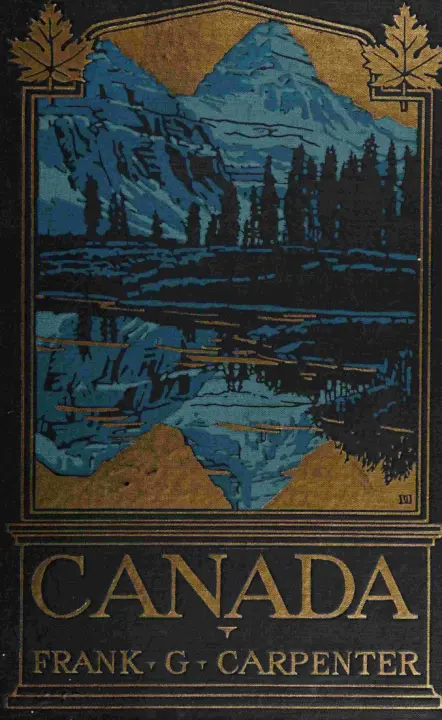
10. “Canada”
and Newfoundland
Millions of Americans have already found Carpenter their ideal fellow traveller, and have enjoyed visiting with him all the corners of the globe. He tells his readers what they want to know, shows them what they want to see, and makes them feel that they are there.
CARPENTER’S WORLD TRAVELS are the only works of their kind. These books are familiar talks about the countries and peoples of the earth, with the author on the spot and the reader in his home. No other one man has visited so much of the globe and written on the ground, in plain and simple language, the story of what he has found. CARPENTER’S WORLD TRAVELS are not the casual record of incidents of the journey, but the painstaking study of a trained observer, devoting his life to the task of international reporting. Each book is complete in itself; together they form the most vivid, interesting, and understandable picture of our modern world ever published. They are the fruit of more than thirty years of unparalleled success in writing for the American people, and the capstone of distinguished services to the teaching of geography in our public schools, which have used some four million copies of the Carpenter Geographical Readers.
Abitibi, large production of news-print at, 92.
Agriculture, in Newfoundland, 11;
in Quebec, 47, 48;
possibilities of Manitoba, 154.
Air plant, a polar orchid along the Yukon Trail, 236.
Airplanes, fail in attempt to reach Fort Norman, 205.
Alberta, coal deposits estimated to be one seventh of the world’s
total, 200;
extent of pure bred cattle and dairy industries, 208.
Alberta Railway and Irrigation Company, pioneer in Alberta
irrigationwork, 207.
Alfalfa, largely produced in southwestern Saskatchewan, 176.
American “branch plants” in Canada, 104.
American capital and investments in Canada, 105.
American owned pulp-mills and timber tracts in Canada, 96.
Americans, number of, in Canada, 2, 193.
Anderson, Charlie, his lucky strike in the Klondike, 275.
Annapolis Valley, Nova Scotia’s apple-growing district, 34.
Anyox, British Columbia, copper mines at, 223.
Apples, largely grown in Annapolis Valley, Nova Scotia, 34;
in the Okanagan Valley, 223.
Asbestos, most of world’s supply produced in Thetford district,
Quebec, 47.
Astrophysical Observatory at Victoria, British Columbia, 225.
“Athabaska Trail,” poem by Sir Arthur Conan Doyle, 205.
Automobiles, American, in Canada, 104.
Banff, finest mountain resort of Canada, 215.
Bank of Montreal, one of the world’s great banks, 73.
Banks and the banking system of Canada, 69, et seq.
Banting, Dr. F. G., discoverer of Insulin, 99.
Barley, production in the Winnipeg district, 149;
large crops at Edmonton, 200;
in Peace River Valley, 202.
Baseball, popular in Nova Scotia, 35;
in Toronto, 101.
Bassano, great irrigation dam at, 206.
Your reading position is saved on this browser. Take it to another device with a library code. Reading pages adapt to text, rather than matching a printed edition.
Frank G. (Frank George) Carpenter
Frank G. (Frank George) Carpenter
Frank G. (Frank George) Carpenter
BEHIND THE BOOK
This eBook is for the use of anyone anywhere in the United States and most other parts of the world at no cost and with almost no restrictions whatsoever. You may copy it, give it away or re-use it under the terms of the Project Gutenberg License included with this eBook or online at www.gutenberg.org. If you are not located in the United States, you will have to check the laws of the country where you are located before using this eBook. Read the source licence.
The original source file, including credits and licence, is retained by this library. Request an original-format copy at no charge. Please include the book title and Project Gutenberg identifier #71640.
KEEP YOUR CURIOSITY GOING
Wilfrid Scawen Blunt
Wilfrid Scawen Blunt

E. W. (Edgar Watson) Howe
Cécile Tormay

Moritz Busch
John L. Ransom