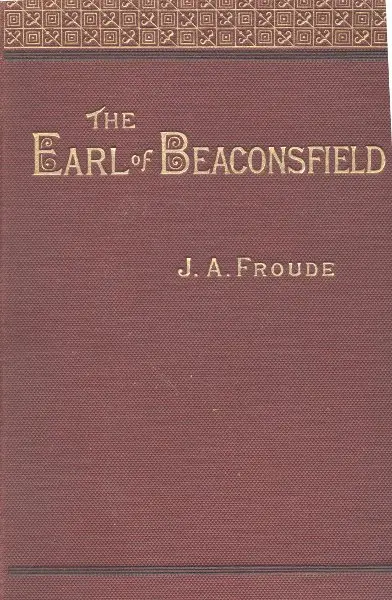
The Earl of Beaconsfield
James Anthony Froude
THE CLASSIC COLLECTION · 1879
"Caesar: A Sketch" by James Anthony Froude is a historical account written in the late 19th century. This work examines the life and historical significance of Julius Caesar, exploring the transition of the Roman Republic into a military empire and the complex political climate of the era. Froude's analysis delves into the societal structures, key figures, and significant events that shaped Rome during Caesar's time, providing insights into both Caesar's character and the broader implications of his leadership. The opening of "Caesar: A Sketch" presents a thorough prelude to the study of Julius Caesar and the fall of the Roman Republic, establishing key themes of political power and moral decay within Roman society. Froude discusses the limited historical resources available for a complete portrait of Caesar, emphasizing the reliance on ancient accounts by figures like Suetonius and Cicero. The text describes how the early Romans had a unique capability for self-governance, contrasting with the later corruption and decline of civic virtue, which ultimately paved the way for Caesar's rise to power. Through an analysis of the institutions and character of the era, Froude underscores the inevitable trends leading to the transformation of Rome from a republic into an autocratic rule, setting the stage for Caesar's historical narrative.
Introduction adapted from the source catalogue; source summaries may be automatically generated.
Free to read · English · 160,700 words · No account needed
MAKE TIME FOR A GOOD BOOK
On by default. Untick to stop anonymous reading totals. Each page counts after 10 seconds in view. How this works.
Anonymous counting is on unless you have switched it off.
[5] The fifth, dating the beginning of the year, in the old style, from
March.
[6] Dion Cassius.
[7] The second consul who had been put in held office but for a few
hours.
[8] Dion Cassius.
[9] See the 2nd Philippic, passim. In a letter to Decimus Brutus, he says: "Quare hortatione tu quidem non egos, si ne illâ quidem in re, quae a te gesta est post hominum memoriam maximâ, hortatorem desiderâsti." Ad Fam. xi. 5.
[10] To Atticus, xi. 5, 6.
[11] Ad Caelium, Ad Fam. ii. 16.
[12] To Atticus, xi. 7.
[13] See To Atticus, xi. 7-9; To Terentia, Ad Fam. xiv. 12.
[14] "Tantam enim mansuetudinem, tam inusitatam inauditamque clementiam, tantum in summâ potestate rerum omnium modum, tam denique incredibilem sapientiam ac paene divinam tacitus nullo modo praeterire possum."--Pro Marco Marcello, 1.
[15] Pro Marco Marcello, abridged.
[16] "Non intelligis, si id quod me arguis voluisse interfici Caesarem crimen sit, etiam laetatum esse morte Caesaris crimen esse? Quid enim interest inter suasorem facti et approbatorem? Aut quid refert utrum voluerim fieri an gaudeam factum? Ecquis est igitur te excepto et iis qui illum regnare gaudebant, qui illud aut fieri noluerit, aut factum improbarit? Omnes enim in culpâ. Etenim omnes boni quantum in ipsis fuit Caesarem occiderunt. Aliis consilium, aliis animus, aliis occasio defuit. Voluntas nemini."--2nd Philippic, 12.
[17] Dion Cassius.
[18] So Dion Cassius states, on what authority we know not. Suetonius says that as Caesar was returning from the Latin festival some one placed a laurel crown on the statue, tied with a white riband.
[19] The fact is certain. Cicero taunted Antony with it in the Senate,
in
the Second Philippic.
[20] "Cum ad rem publicam liberandam accessi, HS. mihi fuit
quadringenties amplius."--Decimus Brutus to Cicero,
Ad Fam. xi. 10.
[21] "Vellem Idibus Martiis me ad coenam invitâsses. Reliquiarum nihil fuisset."--Ad Cassium, Ad Fam. xii. 4. And again: "Quam vellem ad illas pulcherrimas epulas me Idibus Martiis invitâsses! Reliquiarum nihil haberemus."--Ad Trebonium, Ad Fam. x. 28.
[22] Dion Cassius, C. Julius Caesar, xliv. 17.
[23] "Spretâ religione."--Suetonius.
[24] Not perhaps Caius Cassius, but another. Suetonius says "alter e
Cassiis."
[25] So says Suetonius, the best extant authority, who refers to the famous words addressed to Brutus only as a legend: "Atque ita tribus et viginti plagis confossus est, uno modo ad primum ictum gemitu sine voce edito. Etsi tradiderunt quidam Marco Bruto irruenti dixisse [Greek: kai su ei ekeinon kai su teknon]"--Julius Caesar, 82.
[26] "Cruentum alte extollens Marcus Brutus pugionem, Ciceronem nominatim exclamavit atque ei recuperatam libertatem est gratulatus."--Philippic ii. 12.
Your reading position is saved on this browser. Take it to another device with a library code. Reading pages adapt to text, rather than matching a printed edition.
James Anthony Froude
James Anthony Froude
James Anthony Froude
James Anthony Froude
BEHIND THE BOOK
This eBook is for the use of anyone anywhere in the United States and most other parts of the world at no cost and with almost no restrictions whatsoever. You may copy it, give it away or re-use it under the terms of the Project Gutenberg License included with this eBook or online at www.gutenberg.org. If you are not located in the United States, you will have to check the laws of the country where you are located before using this eBook. Read the source licence.
The original source file, including credits and licence, is retained by this library. Request an original-format copy at no charge. Please include the book title and Project Gutenberg identifier #8425.
KEEP YOUR CURIOSITY GOING
Cécile Tormay

Moritz Busch
John L. Ransom
Frances Wright
Cécile Tormay

Mabel Potter Daggett