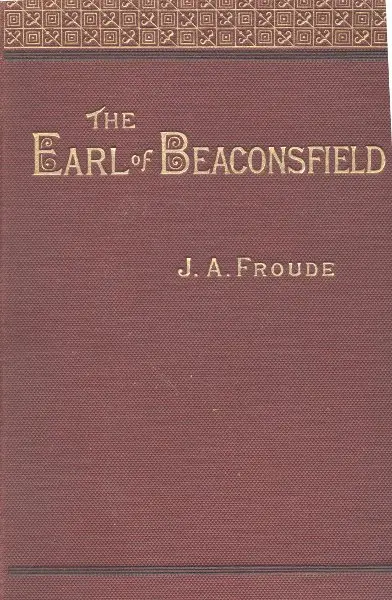
The Earl of Beaconsfield
James Anthony Froude
THE CLASSIC COLLECTION · 1879
"Caesar: A Sketch" by James Anthony Froude is a historical account written in the late 19th century. This work examines the life and historical significance of Julius Caesar, exploring the transition of the Roman Republic into a military empire and the complex political climate of the era. Froude's analysis delves into the societal structures, key figures, and significant events that shaped Rome during Caesar's time, providing insights into both Caesar's character and the broader implications of his leadership. The opening of "Caesar: A Sketch" presents a thorough prelude to the study of Julius Caesar and the fall of the Roman Republic, establishing key themes of political power and moral decay within Roman society. Froude discusses the limited historical resources available for a complete portrait of Caesar, emphasizing the reliance on ancient accounts by figures like Suetonius and Cicero. The text describes how the early Romans had a unique capability for self-governance, contrasting with the later corruption and decline of civic virtue, which ultimately paved the way for Caesar's rise to power. Through an analysis of the institutions and character of the era, Froude underscores the inevitable trends leading to the transformation of Rome from a republic into an autocratic rule, setting the stage for Caesar's historical narrative.
Introduction adapted from the source catalogue; source summaries may be automatically generated.
Free to read · English · 160,700 words · No account needed
MAKE TIME FOR A GOOD BOOK
On by default. Untick to stop anonymous reading totals. Each page counts after 10 seconds in view. How this works.
Anonymous counting is on unless you have switched it off.
It was observed with some surprise that Pompey, not long after, proposed and carried a law forbidding elections of this irregular kind, and insisting freshly on the presence of the candidates in person. Caesar's case was not reserved as an exception or in any way alluded to. And when a question was asked on the subject, the excuse given was that it had been overlooked by accident. Such accidents require to be interpreted by the use which is made of them.
[1] Ad Quintum Fratrem, ii. 15.
[2] "Ego enim ne pilo quidem minus me amabo."--Ibid., ii. 16. Other
editions read "te."
[3] "Videor id judicio facere: jam enim debeo: sed amore sum incensus."--Ad Quintum Fratrem, iii. 1.
[4] Ad Crassum. Ad Familiares, v. 8.
[5] Ad Lentulum. Ad Fam., i. 8.
[6] Ibid., i. 9.
[7] De Provinciis Consularibus.
[8] To Atticus, iv. 16.
[9] Pompey, as proconsul with a province, was residing outside the
walls.
[10] Ad Quintum fratrem, iii. 4.
[11] Ad Familiares, i. 9.
[12] "Meum non modo animum, sed ne odium quidem esse liberum."--Ad Quintum Fratrem, iii. 5.
[13] See the story in a letter to Atticus, lib. iv. 16-17.
[14] De Haruspicum Responsis.
[15] "Angit unus Milo. Sed velim finem afferat consulatus: in quo enitar non minus, quam sum enisus in nostro."--Ad Quintum Fratrem, iii. 9.
[16] Ad Familiares, ii. 6.
[17] "Incidebantur jam domi leges quae nos nostris servis addicerent.... Oppressisset omnia, possideret, teneret lege novâ, quae est inventa apud eum cum reliquis legibus Clodianis. Servos nostros libertos suos fecisset."--Pro Milone, 32, 33. These strong expressions can hardly refer to a proposed enfranchisement of the libertini, or sons of freedmen, like Horace's father.
[18] "Caesaris potentiam suam esse dicebat.... An consules in praetore coercendo fortes fuissent? Primum, Milone occiso habuisset suos consules."--Pro Milone, 33.
[19] The Oratio pro Milone, published afterwards by Cicero, was the speech which he intended to deliver and did not.
[20] Suetonius, De Vitâ Julii Caesaris. Cicero again and again acknowledges in his letters to Atticus that the engagement had really been made. Writing to Atticus (vii. 1), Cicero says: "Non est locus ad tergiversandum. Contra Caesarem? Ubi illae sunt densae dexterae? Nam ut illi hoc liceret adjuvi rogatus ab ipso Ravennae de Caelio tribuno plebis. Ab ipso autem? Etiam a Cnaeo nostro in illo divino tertio consulatu. Aliter sensero?"
Your reading position is saved on this browser. Take it to another device with a library code. Reading pages adapt to text, rather than matching a printed edition.
James Anthony Froude
James Anthony Froude
James Anthony Froude
James Anthony Froude
BEHIND THE BOOK
This eBook is for the use of anyone anywhere in the United States and most other parts of the world at no cost and with almost no restrictions whatsoever. You may copy it, give it away or re-use it under the terms of the Project Gutenberg License included with this eBook or online at www.gutenberg.org. If you are not located in the United States, you will have to check the laws of the country where you are located before using this eBook. Read the source licence.
The original source file, including credits and licence, is retained by this library. Request an original-format copy at no charge. Please include the book title and Project Gutenberg identifier #8425.
KEEP YOUR CURIOSITY GOING
Cécile Tormay

Moritz Busch
John L. Ransom
Frances Wright
Cécile Tormay

Mabel Potter Daggett