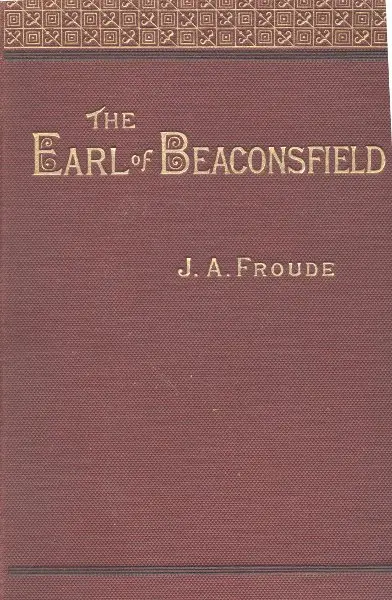
The Earl of Beaconsfield
James Anthony Froude
THE CLASSIC COLLECTION · 1879
"Caesar: A Sketch" by James Anthony Froude is a historical account written in the late 19th century. This work examines the life and historical significance of Julius Caesar, exploring the transition of the Roman Republic into a military empire and the complex political climate of the era. Froude's analysis delves into the societal structures, key figures, and significant events that shaped Rome during Caesar's time, providing insights into both Caesar's character and the broader implications of his leadership. The opening of "Caesar: A Sketch" presents a thorough prelude to the study of Julius Caesar and the fall of the Roman Republic, establishing key themes of political power and moral decay within Roman society. Froude discusses the limited historical resources available for a complete portrait of Caesar, emphasizing the reliance on ancient accounts by figures like Suetonius and Cicero. The text describes how the early Romans had a unique capability for self-governance, contrasting with the later corruption and decline of civic virtue, which ultimately paved the way for Caesar's rise to power. Through an analysis of the institutions and character of the era, Froude underscores the inevitable trends leading to the transformation of Rome from a republic into an autocratic rule, setting the stage for Caesar's historical narrative.
Introduction adapted from the source catalogue; source summaries may be automatically generated.
Free to read · English · 160,700 words · No account needed
MAKE TIME FOR A GOOD BOOK
On by default. Untick to stop anonymous reading totals. Each page counts after 10 seconds in view. How this works.
Anonymous counting is on unless you have switched it off.
It had been proposed to send Cicero on a mission to Egypt. "I should like well, and I have long wished," he said, "to see Alexandria and the rest of that country. They have had enough of me here at present, and they may wish for me when I am away. But to go now, and to go on a commission from Caesar and Pompey!
I should blush
To face the men and long-robed dames of Troy.[18]
What will our optimates say, if we have any optimates left? Polydamas will throw in my teeth that I have been bribed by the opposition--I mean Cato, who is one out of a hundred thousand to me. What will history say of me six hundred years hence? I am more afraid of that than of the chatter of my contemporaries."[19]
So Cicero meditated, thinking as usual of himself first and of his duty afterward--the fatalest of all courses then and always.
[1] "Si causam quaeris absolutionis, egestas judicum fuit et turpitudo.... Non vidit (Hortensius) satius esse illum in infamiâ relinqui ac sordibus quam infirmo judicio committi."--To Atticus, i. 16.
[2] "Jam vero, oh Dii Boni! rem perditam! etiam noctes certarum mulierum, atque adolescentulorum nobilium introductiones nonnullis judicibus pro mercedis cumulo fuerunt."--Ad Atticum, i. 16.
[3] "Nos hic in republicâ infirmâ, miserâ commutabilique versamur. Credo enim te audisse, nostros equites paene a senatu esse disjunctos; qui primum illud valde graviter tulerund, promulgatum ex senatus consulto fuisse, ut de iis, qui ob judicaudum pecuniam accepissent queareretur. Quâ in re decernendâ cum ego casu non affuissem, sensissemque id equestrem ordinem ferre moleste, neque aperte dicere: objurgavi senatum, ut mihi visus sum, summâ cum auctoritate, et in causâ non verecundâ admodum gravis et copiosus fui."--To Atticus, i. 17.
[4] A nickname under which Cicero often speaks of Pompey.
[5] "Solebat enim me pungere, ne Sampsicerami merita in patriam ad annos DC majora viderentur, quam nostra."--To Atticus, ii. 17.
[6] "Pompeius nobis amicissimus esse constat."--To Atticus, i. 13.
[7] "Non jucunda miseris, inanis improbis, beatis non grata, bonis non gravis. Itaque frigebat."--To Atticus, i. 14.
[8] "Metellus non homo, sed litus atque aer, et solitudo mera."--To
Atticus, i. 18.
[9] "Consul est impositus is nobis, quem nemo, praeter nos philosophos, aspicere sine suspiratu potest."--Ib. i. 18.
[10] "Pompeius togulam illam pictam silentio tuetur suam."--Ib. The "picta togula" means the triumphal robe which Pompey was allowed to wear.
[11] "Ceteros jam nosti; qui ita sunt stulti, ut amissâ republicâ piscinas suas fore salvas sperare videantur."--Ib.
[12] Ib., abridged.
[13] "Sentinam urbis," a worse word than he had blamed in Rullus three years before.--To Atticus, i. 19.
Your reading position is saved on this browser. Take it to another device with a library code. Reading pages adapt to text, rather than matching a printed edition.
James Anthony Froude
James Anthony Froude
James Anthony Froude
James Anthony Froude
BEHIND THE BOOK
This eBook is for the use of anyone anywhere in the United States and most other parts of the world at no cost and with almost no restrictions whatsoever. You may copy it, give it away or re-use it under the terms of the Project Gutenberg License included with this eBook or online at www.gutenberg.org. If you are not located in the United States, you will have to check the laws of the country where you are located before using this eBook. Read the source licence.
The original source file, including credits and licence, is retained by this library. Request an original-format copy at no charge. Please include the book title and Project Gutenberg identifier #8425.
KEEP YOUR CURIOSITY GOING
Cécile Tormay

Moritz Busch
John L. Ransom
Frances Wright
Cécile Tormay

Mabel Potter Daggett