THE CLASSIC COLLECTION✦My diaries, being a personal narrative of events 1888-1914, Part 2 (1900-1914)CLASSIC FREE BOOKS
My diaries, being a personal narrative of events 1888-1914, Part 2 (1900-1914)
Wilfrid Scawen Blunt
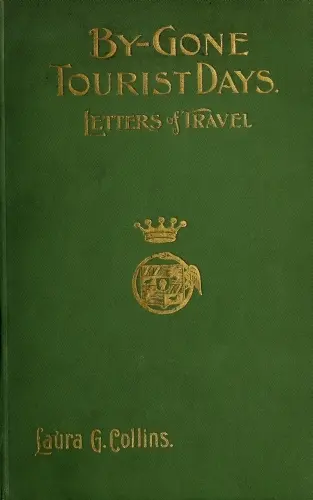
THE CLASSIC COLLECTION · 1899
"By-gone Tourist Days: Letters of Travel" by Laura G. Case Collins is a collection of travel letters written in the late 19th century. The letters chronicle the author's extensive travels across Europe, capturing her experiences and reflections in various cities such as London, Edinburgh, Heidelberg, and Paris. Collins' charming narrative style provides a vivid depiction of her observations on culture, architecture, and personal encounters during her journeys. At the start of the work, the author reflects on the tumultuous journey across the Atlantic aboard the steamer Adriatic, where she details the challenges of seasickness and the peculiar beauty of the turbulent ocean. Transitioning to her experiences in England, Collins explores historic cities like Chester and Stratford-upon-Avon, including visits to notable sites such as Shakespeare's birthplace. The opening letters set a tone of wonder and admiration for the landscapes and cultural treasures she encounters, while also sharing personal anecdotes and interactions with locals, effectively intertwining travel journalism with personal memoir.
Introduction adapted from the source catalogue; source summaries may be automatically generated.
Free to read · English · 67,404 words · No account needed
MAKE TIME FOR A GOOD BOOK
On by default. Untick to stop anonymous reading totals. Each page counts after 10 seconds in view. How this works.
Anonymous counting is on unless you have switched it off.
München, October 23, 1882.
Say, how many copies have you of those foaming sheets you sent me from M---- for a letter? And to how many other addresses have they been sent? I am curious to know. They were never evoked by me--of that I am sure. Nor do I attribute their existence to the overwhelming influence of any other special feminine divinity; rather to one of those supreme intervals--his satanic majesty’s own--when
“The d--l finds for idle hands
Some mischief still to do.”
You were alone; you were “in a state of mind;” you
“Sat in revery and watched
The changing colors of the waves that broke
Upon the idle seashore of the mind.”
You summoned up “spirits of that vasty deep, red, white and blue;” the flimsy creatures, what were they but shades of all your divinities, the slim maidens of your boyhood, the stately goddesses of your cavalier period, “the pretty widows” of your “old bachelor” era? And so with the prodding of that flock of shadows and the impulse of your besetting iniquity you wrote that sample letter--good for one, good for all? I can see the whole performance. Thankee, sir; I am not to be mistaken for one of that throng. There is nothing gregarious about me. Just leave me out when you give your “free lunch” feasts of sauce and sugar-plums! You--
But I enjoyed the composition “all the same.” What a pity you have never taken to novel writing. This letter--I can’t call it mine, you see, because it belongs to all of them--ah! this letter “shows your hand.” Believe me, you’ve missed your field in literature. Are you too old to begin over? I ask this because I am beginning to have misgivings in the face of my old sturdy belief that one never outgrew the ability to do if only the will were not wanting. I--I--how shall I admit it? I find there are things I can’t do. Of course it is because one grows old, even with the best intentions not to. No, I never want to; and here I am minus the roses of other days and plus wrinkles and gray hairs beyond all calculation, and seriously contemplating a mouthful of false teeth. Sigh for me! Was ever anything so lamentable? I am so glad you told me about your evening with my dear friends, the F----s. How plain you made me see the familiar room. It was good of you all to remember me so. They are of earth’s choicest--so high-souled, so loyal, so good. I have yet to see the man who does not do homage to Mrs. F----, and the Doctor is one I delight to love and honor. I hope you met my other friend, Mr. W----, of whom I dreamed last night. I was talking to you, and used this expression: “All the wrong he has ever done in his life--all and the only--is to have always done the right.” When I awoke I remembered it. How long I have known him--nearly from the beginning--away back yonder when I was a wee thing in pinafores. He said so pleasantly of that long acquaintance: “The first time I saw her she was so high” (meaning the midget I was) “and swinging in an apple tree; and she swung into my heart, and has been swinging there ever since.” Are not those the kind of words “for remembrance?” How good he has been to me. Some day I’ll make your heart throb, as these human hearts of ours are quick to do, hearing of the great and noble of earth, telling of all he has been to me and done for me in this life of mine, that has been more sorrow and heartache, you know, than comes to many. If you could know him as I do--I think, no--I know you would appreciate my affection and reverence. His life has been a constant growth, grace overcoming nature, the lower giving way to the higher, conquest upon conquest, till I almost tremble at that nearness to perfection which means fitness for that better Elsewhere, the ultimatum of all our hopes and dreams. Here are words of a man about him: “Isn’t his the tenderest, the lovingest, the gentlest, the purest, the whitest and best soul God ever gave to man?” Did ever you know any man speak so of another? Think what mine will be when I give them leave. Do you observe that I speak to you with perfect freedom, having no fear to express my enthusiasm? It is because I know you will not transmute the pure gold of such a friendship into any drosser metal. Ah! I shall indeed be disappointed if you do not meet him. You should call on his wife. You would find her very companionable. You remember her that rainy noon call, I am sure.
Your reading position is saved on this browser. Take it to another device with a library code. Reading pages adapt to text, rather than matching a printed edition.
BEHIND THE BOOK
This eBook is for the use of anyone anywhere in the United States and most other parts of the world at no cost and with almost no restrictions whatsoever. You may copy it, give it away or re-use it under the terms of the Project Gutenberg License included with this eBook or online at www.gutenberg.org. If you are not located in the United States, you will have to check the laws of the country where you are located before using this eBook. Read the source licence.
The original source file, including credits and licence, is retained by this library. Request an original-format copy at no charge. Please include the book title and Project Gutenberg identifier #48728.
KEEP YOUR CURIOSITY GOING
Wilfrid Scawen Blunt
Wilfrid Scawen Blunt

E. W. (Edgar Watson) Howe

David Patterson (Spirit) Hatch

David Patterson (Spirit) Hatch

David Patterson (Spirit) Hatch