THE CLASSIC COLLECTION✦My diaries, being a personal narrative of events 1888-1914, Part 2 (1900-1914)CLASSIC FREE BOOKS
My diaries, being a personal narrative of events 1888-1914, Part 2 (1900-1914)
Wilfrid Scawen Blunt
THE CLASSIC COLLECTION · 1899
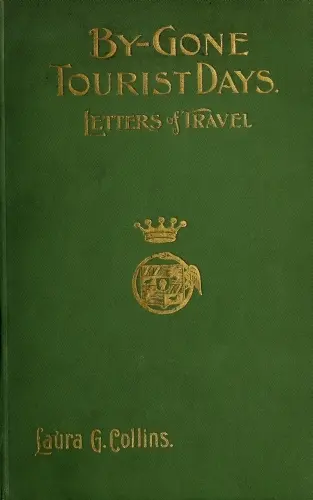
"By-gone Tourist Days: Letters of Travel" by Laura G. Case Collins is a collection of travel letters written in the late 19th century. The letters chronicle the author's extensive travels across Europe, capturing her experiences and reflections in various cities such as London, Edinburgh, Heidelberg, and Paris. Collins' charming narrative style provides a vivid depiction of her observations on culture, architecture, and personal encounters during her journeys. At the start of the work, the author reflects on the tumultuous journey across the Atlantic aboard the steamer Adriatic, where she details the challenges of seasickness and the peculiar beauty of the turbulent ocean. Transitioning to her experiences in England, Collins explores historic cities like Chester and Stratford-upon-Avon, including visits to notable sites such as Shakespeare's birthplace. The opening letters set a tone of wonder and admiration for the landscapes and cultural treasures she encounters, while also sharing personal anecdotes and interactions with locals, effectively intertwining travel journalism with personal memoir.
Introduction adapted from the source catalogue; source summaries may be automatically generated.
Free to read · English · 67,404 words · No account needed
MAKE TIME FOR A GOOD BOOK
On by default. Untick to stop anonymous reading totals. Each page counts after 10 seconds in view. How this works.
Anonymous counting is on unless you have switched it off.
Venice, June 8, 1883.
Saturday, at Zurich, yours of June 26th “came to hand.” Here in the filtered waters of glacier torrents, I drink to the letters that are never written! Now for your response. Let it be brilliant as the dewdrops of early morning, alluring as was to our childhood that trip to find the end of the rainbow with its reward of a bag of gold, satisfying as his day to Longfellow’s “Blacksmith.”
“Something attempted, something done.” Be sure it be of many simples “composed in all parts to perfection.” See to it you fall not short of Lamb’s happy hit--only this and nothing less.
Are you ready? I am in Switzerland. Bow your head; here is a snow-cap. Crane your neck; here is a chain of the Rigi’s lightning. Now straighten to your loftiest stature; only that can wear this mantle of clouds I snatch from the shoulders of Pilatus to fling over yours. And last, here is a dazzle of sunlight to set you in--like a saint in an aureole. How do you feel? Do not be frightened. You are not ready for your apotheosis; and I am no high priestess. Besides, in a breath you will seem to yourself never to have been other than the grand creature I have made you. You know that vital quality of us mortals that makes us feel we are greater than anything that comes to us.
“We feel that we are greater than we know.”
Just to think my last letter was from Venice. How long ago that seems, eons and eons! “I have lived so much since then.” Can I ever tell you the half? Ah! me! No, no. Only this impotent--I wish, oh! how I wish I could!
I have ransacked “ancient Padua,” thinking of exiled Romeo. Saw the great wooden horse of Danatello, that stands in the largest hall in Europe; holds sixteen men and is taken to pieces, carried down into the street, and put together again and used in procession on fête occasions. “Think of that Master Brook!” It is really a splendid, spirited-looking creature. Did any of your traveled friends ever tell you about it? I saw also, besides “the thousand things” I must omit, Goethe’s palm tree, the one he made use of in his theory of the Metamorphoses of Plants. The tree remains and flourishes. The man--where is he? “Light, give us more light,” were his last words. I think he has found it. From Padua, I hastened to Verona. Such a beautiful old city! There I sought out Juliet’s tomb, in the old monastery hid away in its garden. And I found the house of the Capulets, and stood in its court and gazed with eager interest at that queer hat carved on its shield, placed above the entrance in the wall. This repeated itself on columns and in different places, giving evidence of the prominent position of the family. I was quite unprepared to find the situation of Verona so picturesque, and one feature I have not seen elsewhere, that of its innumerable mills on wheels to be run into and out of “the rapid Adige.” Just fancy a line of these queer-looking structures some distance from shore, working away with all the impetuosity that swift current can give, and as steadily as is their wont! But everything about that Shakespeare-famed city is unique and fascinating. Thence to Milan, where I lingered a week, but was not specially impressed. The Cathedral is all that descriptions and pictures make it, and the Milanese claim for it, “the eighth wonder of the world.” I climbed to its tip-top perch, and every step revealed some marvel of architecture and sculpture. The workmanship is amazing. You have read all about it, and doubtless think you have a very good idea of it; but just come and stand before it and haunt it, and you will despair of ever taking in the half of its details! No two ornaments or points are alike! I quickly gave up, and looked away from it to the everlasting hills, too far away to force me to mathematical calculations. Have you read of the Grand Victor Emanuel Gallery, that “finest arcade in the world,” in shape like a cross, with an octagon center surmounted by a dome, and paved with beautiful mosaic, where the finest shops are, and which is the fashionable promenade, lit by 2,000 gas-lights, and--goodness! if I go on, you will think I am preparing to rival Badeker and get up a guide-book. Well, I just want you to know my apartments were on it, and I was quartered equal to a queen! Everything was gold and glitter, and grandeur and gorgeousness. And I took to it as naturally as a lark to the highest regions of air! Of course, I saw all the libraries, picture galleries, strange old churches, etc., and drove at the fashionable hour on the Corso, watching the gay and festive throngs in carriages, on horseback and afoot, this last most characteristic feature, perhaps, of all I saw. The fair dames in superb toilets holding levées in their splendid equipages! I enjoyed the spectacle. Then I sped away to the Italian lakes. Guess how my heart beat at the prospect of seeing those romantic sheets of water. That was a summerland, indeed, with tideless summer seas and tropical blooms and sounds and sights! Nightingales sang there night and day. Magnolias, oleanders, mimosas and myrtles were in full bloom, and the sun shone with almost pitiless fervor. I saw them all in their length and breadth. I haunted their shores and floated over their lovely green waters. And I fell in love with that bijou, Lake Lugano. Next to our own Lake George, it is the most exquisite sheet of water I have ever seen, and I have seen so many!
Your reading position is saved on this browser. Take it to another device with a library code. Reading pages adapt to text, rather than matching a printed edition.
BEHIND THE BOOK
This eBook is for the use of anyone anywhere in the United States and most other parts of the world at no cost and with almost no restrictions whatsoever. You may copy it, give it away or re-use it under the terms of the Project Gutenberg License included with this eBook or online at www.gutenberg.org. If you are not located in the United States, you will have to check the laws of the country where you are located before using this eBook. Read the source licence.
The original source file, including credits and licence, is retained by this library. Request an original-format copy at no charge. Please include the book title and Project Gutenberg identifier #48728.
KEEP YOUR CURIOSITY GOING
Wilfrid Scawen Blunt
Wilfrid Scawen Blunt

E. W. (Edgar Watson) Howe

David Patterson (Spirit) Hatch

David Patterson (Spirit) Hatch

David Patterson (Spirit) Hatch