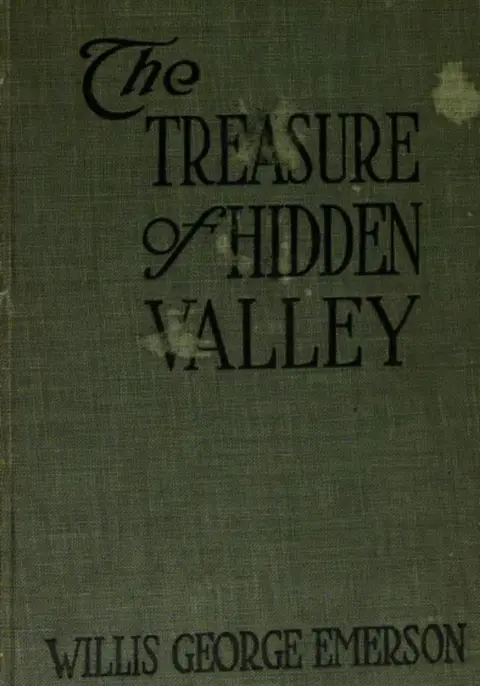
The Treasure of Hidden Valley
Willis George Emerson
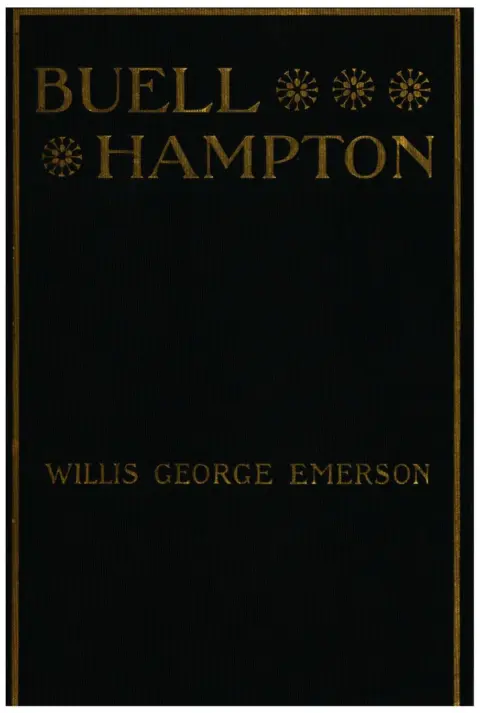
THE CLASSIC COLLECTION · 1902
"Buell Hampton" by Willis George Emerson is a novel written in the early 20th century. The story is set against the backdrop of the American Southwest and revolves around themes of ambition, social status, and romantic entanglements, primarily through the experiences of young Ethel Horton and the significant figures surrounding her, including her mother, Mrs. J. Bruce-Horton, and the cattle king John Horton. The opening portion introduces Ethel Horton, an American girl returning from an English education, and her mother, who longs for her daughter to marry into titled society. The narrative begins with a lively tennis match that reveals Ethel's spirited nature, while her mother engages in conversation with a friend, setting the stage for the societal aspirations that drive their lives. Mere moments later, Ethel’s interactions, as well as her delight in returning home, quickly set up the implications of family expectations and societal pressures. As the story unfolds, it hints at the growing tensions between the well-to-do and the farmers in their community, particularly with the cattle baron Horton at the center of the local landscape. This context establishes a rich setting filled with potential conflicts based on class, ambition, and the characters' personal journeys.
Introduction adapted from the source catalogue; source summaries may be automatically generated.
Free to read · English · 87,915 words · No account needed
MAKE TIME FOR A GOOD BOOK
On by default. Untick to stop anonymous reading totals. Each page counts after 10 seconds in view. How this works.
Anonymous counting is on unless you have switched it off.
Presendy the major arose from the divan, and, after lighting a cigar, observed, “By the way, Mr. Stanton, are you fond of books?”
“I certainly am,” replied Hugh, “they have been my best friends. Many hours of solitude have been beguiled by their pleasant and profitable companionship.”
“Of course you read novels?” said the major, inquiringly.
“I presume you regard it as a weakness,” replied Hugh, “but I must admit that a good novel has a great charm for me.”
“On the contrary,” replied the major, “I regard a good novel as healthful reading. The works of Scott, Thackeray, Dickens, Lytton, Victor Hugo, Hawthorne, J. Fenimore Cooper, and of many other novelists, may be read with profit. Some of our greatest historians have been novel readers, and some of our greatest novelists have clothed history with romance and made it immortal, thus diffusing historical facts far more widely than could have been done in any other manner.”
“I agree with you,” replied Hugh, “though I must admit that fiction has a general tendency to cultivate a dislike for more solid reading.”
They were interrupted by a knock at the door, and the major called out, “Come in!” The door opened and a tall, gaunt, rough-looking fellow came stalking in. The major, nastily rising from the divan, said:
“Why, hello, Dan, how do you do! Come right in. Mr. Stanton, allow me to introduce to you my friend Dan Spencer. Dan, this is Mr. Stanton, the new cashier of Captain Osborn’s bank. My friend, Spencer,” continued the major, “is one of our ‘horny handed sons of toil.’ He belongs to the big frontier army that is noted for having seen better days.’.rdquo;
The newcomer was, indeed, a study. He had exceedingly large feet and hands. Huge Mexican spurs were buckled to the heels of his high-topped boots. His small, restless, gray eyes and sandy hair were in keeping with his stubby red beard, large mouth, and sunburnt nose. It required no second introduction to discover that Dan Spencer regarded the major with reverential homage. Whenever he spoke, Dan had a habit of wambling and grinning, thereby disclosing his tobacco-colored teeth, and quivering like a creature in convulsions. The one noticeable feature about Dan Spencer was an abnormally long fanglike tooth, almost directly in front. This tooth protruded from the lower jaw, and when Dan spoke it wobbled about like a drunken man. Hugh fell to watching this tooth, and he fancied that every heavy breath on the part of its owner caused it to sway about like a willow buffeted by the wind.
After the introduction he said, addressing Hugh, “Waal, how do you like this ‘ere country?”
Your reading position is saved on this browser. Take it to another device with a library code. Reading pages adapt to text, rather than matching a printed edition.
Willis George Emerson
Willis George Emerson
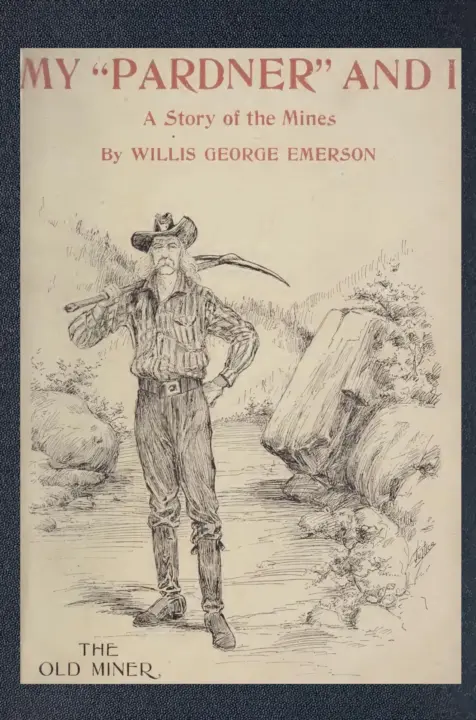
Willis George Emerson
Willis George Emerson
BEHIND THE BOOK
This eBook is for the use of anyone anywhere in the United States and most other parts of the world at no cost and with almost no restrictions whatsoever. You may copy it, give it away or re-use it under the terms of the Project Gutenberg License included with this eBook or online at www.gutenberg.org. If you are not located in the United States, you will have to check the laws of the country where you are located before using this eBook. Read the source licence.
The original source file, including credits and licence, is retained by this library. Request an original-format copy at no charge. Please include the book title and Project Gutenberg identifier #52449.
KEEP YOUR CURIOSITY GOING
Coulson Kernahan

Maurice Baring
Frances Wright
Cécile Tormay

Frederic Jesup Stimson

W. H. P. (William Henry Pope) Jarvis