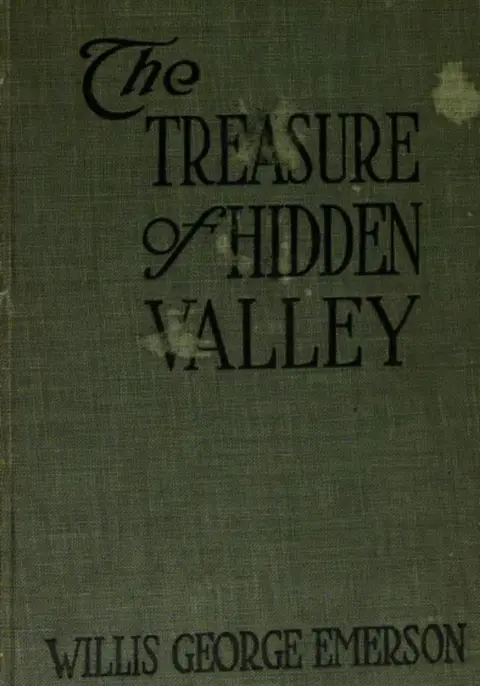
The Treasure of Hidden Valley
Willis George Emerson
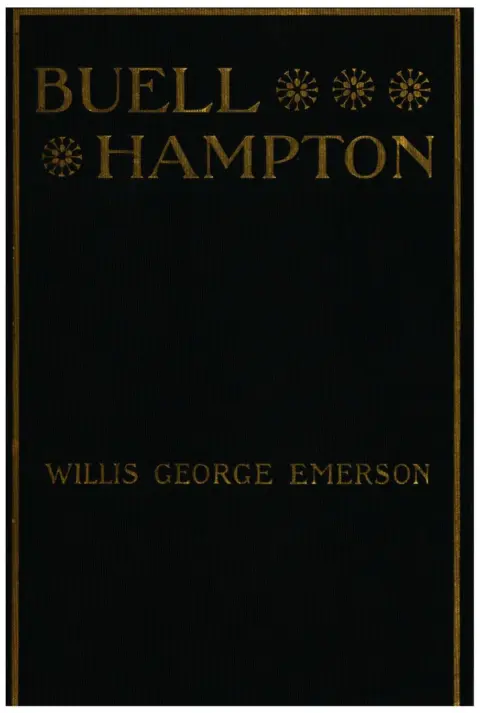
THE CLASSIC COLLECTION · 1902
"Buell Hampton" by Willis George Emerson is a novel written in the early 20th century. The story is set against the backdrop of the American Southwest and revolves around themes of ambition, social status, and romantic entanglements, primarily through the experiences of young Ethel Horton and the significant figures surrounding her, including her mother, Mrs. J. Bruce-Horton, and the cattle king John Horton. The opening portion introduces Ethel Horton, an American girl returning from an English education, and her mother, who longs for her daughter to marry into titled society. The narrative begins with a lively tennis match that reveals Ethel's spirited nature, while her mother engages in conversation with a friend, setting the stage for the societal aspirations that drive their lives. Mere moments later, Ethel’s interactions, as well as her delight in returning home, quickly set up the implications of family expectations and societal pressures. As the story unfolds, it hints at the growing tensions between the well-to-do and the farmers in their community, particularly with the cattle baron Horton at the center of the local landscape. This context establishes a rich setting filled with potential conflicts based on class, ambition, and the characters' personal journeys.
Introduction adapted from the source catalogue; source summaries may be automatically generated.
Free to read · English · 87,915 words · No account needed
MAKE TIME FOR A GOOD BOOK
On by default. Untick to stop anonymous reading totals. Each page counts after 10 seconds in view. How this works.
Anonymous counting is on unless you have switched it off.
“Well, possibly I am,” replied the captain, “one thing is certain, however, I am not a politician, and I manage, on account of our banking interests, to keep my views pretty close at home. At the same time, Stanton, an old, grizzled veteran like myself, who fought for four years for the preservation of the Union, is liable to be rather set in his political opinions.”
“While I do not agree with Major Hampton, politically,” observed Hugh, “yet otherwise I am very favorably impressed with him.”
“That’s right,” said Captain Osborn, “so am I. He is an amiable gentleman, always dresses immaculately, as you saw him this morning, and is noted far and wide for his deeds of charity and his kindness among the poor. If any are sick within twenty miles of Meade, Major Hampton knows all about it. He visits them, and takes care that they are properly provided with medical aid. He is a warm supporter of the Ladies’ Aid Society, and contributes most liberally to the different churches, although he evinces no preference for any particular creed. Indeed, he is quite popular, and, between ourselves, Hugh, I should not be a bit surprised if he told the truth about snowing us under at the polls this fall. You see the ‘Barley Hullers’ is a secret organization, and, therefore, an unknown quantity, and I have no doubt that the major will control it at the coming election, to a man.”
After banking hours that evening, Hugh called at the Patriot office. “Come in, Mr. Stanton,” cried the major, in most hospitable tones, as he ushered him into his own private “den.” Its moquette carpet, easy chairs, Turkish divan, beautiful pictures, and shelves well filled with books—all combined to make this little editorial “den” one of surprising elegance. The major had laid aside his Prince Albert coat for a smoking jacket.
“These are Congressional Records and works on political economy,” said he, waving his hand toward the book shelves, as he noticed Hugh looking at them. He lounged negligently on the divan, and threw one arm back carelessly over his head.
“You have quite an extensive library, Major,” observed Hugh, as he seated himself.
“My library is at my home,” replied the major, “these are but a few statistical volumes which I find necessary in writing editorials for the Patriot. There is hardly a recent work of a political nature published that is not represented on these shelves. By the way, Stanton, there are some pretty fair cigars in that box—help yourself.”
“Thank you,” said Hugh, as he lighted one.
Your reading position is saved on this browser. Take it to another device with a library code. Reading pages adapt to text, rather than matching a printed edition.
Willis George Emerson
Willis George Emerson
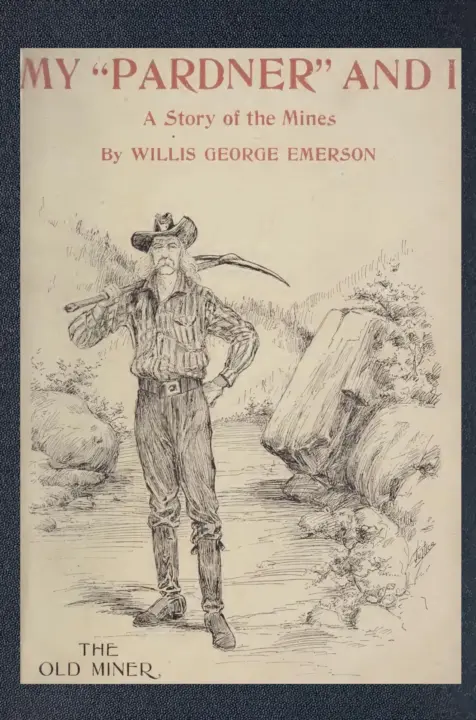
Willis George Emerson
Willis George Emerson
BEHIND THE BOOK
This eBook is for the use of anyone anywhere in the United States and most other parts of the world at no cost and with almost no restrictions whatsoever. You may copy it, give it away or re-use it under the terms of the Project Gutenberg License included with this eBook or online at www.gutenberg.org. If you are not located in the United States, you will have to check the laws of the country where you are located before using this eBook. Read the source licence.
The original source file, including credits and licence, is retained by this library. Request an original-format copy at no charge. Please include the book title and Project Gutenberg identifier #52449.
KEEP YOUR CURIOSITY GOING
Coulson Kernahan

Maurice Baring
Frances Wright
Cécile Tormay

Frederic Jesup Stimson

W. H. P. (William Henry Pope) Jarvis