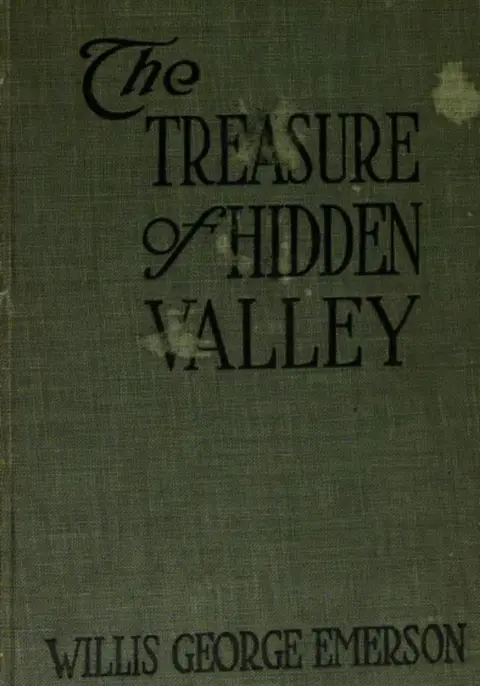
The Treasure of Hidden Valley
Willis George Emerson
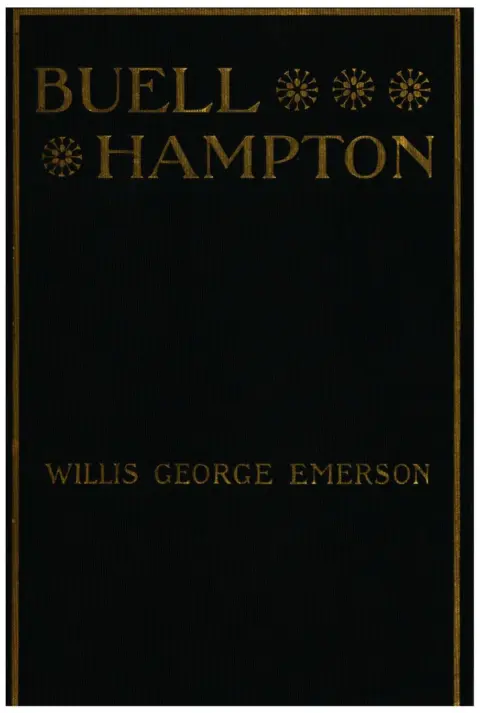
THE CLASSIC COLLECTION · 1902
"Buell Hampton" by Willis George Emerson is a novel written in the early 20th century. The story is set against the backdrop of the American Southwest and revolves around themes of ambition, social status, and romantic entanglements, primarily through the experiences of young Ethel Horton and the significant figures surrounding her, including her mother, Mrs. J. Bruce-Horton, and the cattle king John Horton. The opening portion introduces Ethel Horton, an American girl returning from an English education, and her mother, who longs for her daughter to marry into titled society. The narrative begins with a lively tennis match that reveals Ethel's spirited nature, while her mother engages in conversation with a friend, setting the stage for the societal aspirations that drive their lives. Mere moments later, Ethel’s interactions, as well as her delight in returning home, quickly set up the implications of family expectations and societal pressures. As the story unfolds, it hints at the growing tensions between the well-to-do and the farmers in their community, particularly with the cattle baron Horton at the center of the local landscape. This context establishes a rich setting filled with potential conflicts based on class, ambition, and the characters' personal journeys.
Introduction adapted from the source catalogue; source summaries may be automatically generated.
Free to read · English · 87,915 words · No account needed
MAKE TIME FOR A GOOD BOOK
On by default. Untick to stop anonymous reading totals. Each page counts after 10 seconds in view. How this works.
Anonymous counting is on unless you have switched it off.
“Come in,” said Hugh, as he went on with his toilet. The door opened, and Judge Lynn walked in. The judge’s facial appearance gave evidence that he had just come from a barber shop. He frequently passed one hand over his smooth-shaven chin, as if to call attention to it.
“Hello, Mr. Stanton,” said he, as he helped himself to a chair. “You’re dressin’ up like you might be goin’ somewhere.”
“I have been invited to dine with the Osborns.”
“Jist so; danged good place to get a square meal; bet yer life it is.”
“The Osborns are very hospitable people,” observed Hugh, as he went on with his toilet.
“Look ‘e here, Stanton,” said Judge Lynn, “did you think I was drunk the other evenin’ when you and Major Hampton and myself were discussin’ the Barley Hullers?”
“I don’t know,” replied Hugh, evasively, “were you?”
“No, sir,” said the judge, emphatically, “don’t you believe it; not for your life. I jist got to thinkin’ about a case I’d decided in my court that day. A complex, tryin’ question of law, sir, always exhausts me, as it did the other night, and I fell asleep.” Hugh turned his face away to conceal his amusement.
“What’s the matter with you, anyhow, Stanton; you’re gettin’ mighty disbelievin’ it ‘pears to me; what are you grinnin’ ‘bout? Can’t a feller go to sleep if he feels like it?” asked the judge.
“How is business in your court, Judge?” asked Hugh, paying no attention to his irritation.
“Oh, she’s poppin’ these days, and don’t you forget it,” replied the judge. “You see, we’ve had no rain since last fall, and here it’s the first of May. Dry weather nachally makes our people irritable and brittle. Fellers ‘round here can’t pay their interest, and the Eastern capitalists are gettin’ down on ‘em. Mortgages are bein’ foreclosed, right and left; bet yer life, law business with me is hummin’.”
“We certainly need rain,” said Hugh. “The farmers, however, tell me that the barley, wheat, corn, and other crops are looking fairly well, notwithstanding the dry weather.”
“That’s a fact,” replied the judge, “crops are lookin’ devilish good, considerin’. Fact is, there’s lots of water in the ground from last year’s rains, but she’s oozin’ out danged fast lately, and within a week or two more, unless we have rain, things’ll be dryer ‘n powder dust. Yes, sir, loan companies are already gettin’ skittish, and sendin’ back applications for farm loans, unfilled.”
Your reading position is saved on this browser. Take it to another device with a library code. Reading pages adapt to text, rather than matching a printed edition.
Willis George Emerson
Willis George Emerson
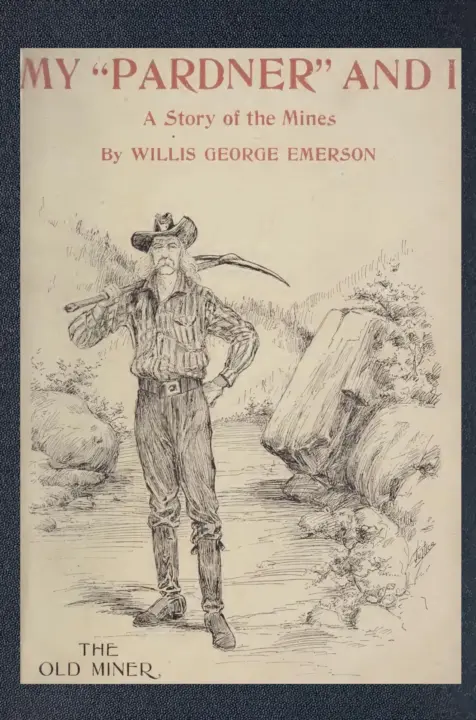
Willis George Emerson
Willis George Emerson
BEHIND THE BOOK
This eBook is for the use of anyone anywhere in the United States and most other parts of the world at no cost and with almost no restrictions whatsoever. You may copy it, give it away or re-use it under the terms of the Project Gutenberg License included with this eBook or online at www.gutenberg.org. If you are not located in the United States, you will have to check the laws of the country where you are located before using this eBook. Read the source licence.
The original source file, including credits and licence, is retained by this library. Request an original-format copy at no charge. Please include the book title and Project Gutenberg identifier #52449.
KEEP YOUR CURIOSITY GOING
Coulson Kernahan

Maurice Baring
Frances Wright
Cécile Tormay

Frederic Jesup Stimson

W. H. P. (William Henry Pope) Jarvis