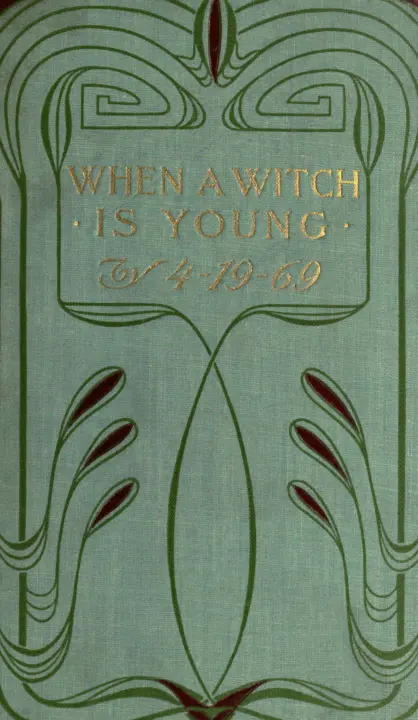
When a witch is young: a historical novel
Philip Verrill Mighels
THE CLASSIC COLLECTION · 1904
"Bruvver Jim's Baby" by Philip Verrill Mighels is a novel written in the early 20th century. The story revolves around a young child who is unexpectedly found amidst an Indian rabbit drive in the wilderness of Nevada by a rugged miner named Jim. The narrative explores themes of compassion, family, and community as Jim takes the child, who appears to be lost and abandoned, under his wing, prominently highlighting their bond and the miner's transformation as a paternal figure. The opening of the book sets the stage during a vivid description of a rabbit hunt by the Piute tribe. Here, we are introduced to a young boy, timidly riding on a pony, who finds himself separated from the Indian tribe and subsequently falls off, left behind amid the wilderness. This sets the scene for Jim's entrance, a lanky miner who discovers the boy sitting among scattered rabbits. Despite his rough exterior, Jim's heart opens to the lost child, whom he names "Skeezucks" or "Aborigineezer." The subsequent chapters follow their developing relationship, Jim's attempts at caring for the boy, and the unforeseen challenges they face in the rugged landscape of Borealis, ultimately showcasing the creation of a makeshift family against the backdrop of a close-knit community.
Introduction adapted from the source catalogue; source summaries may be automatically generated.
Free to read · English · 43,390 words · No account needed
MAKE TIME FOR A GOOD BOOK
On by default. Untick to stop anonymous reading totals. Each page counts after 10 seconds in view. How this works.
Anonymous counting is on unless you have switched it off.
But to open the service when quiet reigned again and expectation was once more concentrated upon him afforded something of a poser still to the lanky old Jim, elected to perform the offices of leading.
"Where's Shorty Hobb with his fiddle?" said he.
"Parky wouldn't leave him come," answered Bone. "He loaned him money on his vierlin, and he says he owns it and won't leave him play in no church that ever got invented."
"Parky, hey?" said Jim, drawlingly. "Wal, bless his little home'pathic
pill of a soul!"
"He says he's fed more poor and done more fer charity than any man in
town," informed a voice.
"Does, hey?" said the miner. "I'll bet his belly's the only poor thing he feeds regular. His hand ain't got callous cutting bread for the orphans. But he ain't a subject for church. If only I'd 'a' known what he was agoin' to do I'd made a harp. But let it go. We'll start off with roll-call and follow that up with a song."
He therefore began with the name of Webber, who responded "Here," and proceeding to note who was present, he drawled the name or familiar sobriquet of each in turn, till all had admitted they were personally in attendance.
"Ahem," said Jim, at the end of this impressive ceremony. "Now we'll sing a hymn. What hymn do you fellows prefer?"
There was not a great confusion of replies; in fact, the confusion
resulted from a lack thereof.
"As no one indicates a preference," announced the miner, "we'll tackle 'Darling, I am growing old.' Are there any objections? All in favor?--contrary minded?--the motion prevails. Now, then, all together--'Darling--'Why don't you all git in?"
"How does she go?" inquired Webber.
"She goes like this," Jim replied, clearing his throat:
"'Darling, I am growing o-old,
Silver bars among the gold;
Shine upon--te dum te dumpty--
Far from the old folks at home.'"
"Don't know it," said a voice.
"Neither do I."
"Nor I."
"Nor I."
The sheep of the flock all followed in a chorus of "Nor I's."
"What's the matter with 'Swing Low, Sweet Cheery O'?" inquired Lufkins.
"Suits me," Jim replied. "Steam up."
He and the teamster, in duet, joined very soon by all the congregation, sang over and over the only lines they could conjure back to memory, and even these came forth in remarkable variety. For the greater part, however, the rough men were fairly well united on the simple version:
"'Swing low, sweet cheery O,
Comin' for to carry me home;
Swing low, sweet cheery O,
Comin' for to carry me home.'"
Your reading position is saved on this browser. Take it to another device with a library code. Reading pages adapt to text, rather than matching a printed edition.
Philip Verrill Mighels
Philip Verrill Mighels
Philip Verrill Mighels
BEHIND THE BOOK
This eBook is for the use of anyone anywhere in the United States and most other parts of the world at no cost and with almost no restrictions whatsoever. You may copy it, give it away or re-use it under the terms of the Project Gutenberg License included with this eBook or online at www.gutenberg.org. If you are not located in the United States, you will have to check the laws of the country where you are located before using this eBook. Read the source licence.
The original source file, including credits and licence, is retained by this library. Request an original-format copy at no charge. Please include the book title and Project Gutenberg identifier #16608.
KEEP YOUR CURIOSITY GOING
Coulson Kernahan

Maurice Baring
Frances Wright
Cécile Tormay

Frederic Jesup Stimson

W. H. P. (William Henry Pope) Jarvis