THE CLASSIC COLLECTION✦Inkle and Yarico: An opera, in three actsCLASSIC FREE BOOKS
Inkle and Yarico: An opera, in three acts
George Colman
THE CLASSIC COLLECTION · 1803
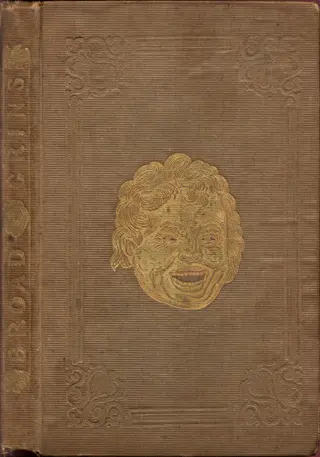
"Broad Grins" by George Colman, the Younger is a collection of humorous poetry and tales written in the early 19th century. Initially published under the title "My Night-Gown and Slippers," this edition includes new additional tales in verse. The book likely reflects societal themes of its time, focusing on the quirks and follies of human nature, particularly in a comedic context. The collection features a variety of characters and settings, drawing on both contemporary society and historical figures. The poem "The Knight and the Friar" tells the story of Sir Thomas Erpingham, a knight who struggles with ennui after returning from battle and resorts to marrying for company, only to find his wife embroiled in a comic scandal involving a friar. Other tales, such as "The Newcastle Apothecary," humorously explore the medical profession and the absurdities associated with it. Through witty dialogue, playful rhymes, and satirical critiques of societal norms, Colman's work encapsulates the joys and absurdities of life, showcasing his keen observation of human behavior and the comedic potential hidden within everyday situations.
Introduction adapted from the source catalogue; source summaries may be automatically generated.
Free to read · English · 12,734 words · No account needed
MAKE TIME FOR A GOOD BOOK
On by default. Untick to stop anonymous reading totals. Each page counts after 10 seconds in view. How this works.
Anonymous counting is on unless you have switched it off.
IN our Fifth Harry's reign, when 'twas the fashion To thump the French, poor creatures! to excess;-- Tho' Britons, now a days, shew more compassion, And thump them, certainly, a great deal less;--
In Harry's reign, when flush'd Lancastrian roses
Of York's pale blossoms had usurp'd the right;[3]
As wine drives Nature out of drunkards' noses,
Till red, triumphantly, eclipses white;--
In Harry's reign--but let me to my song,
Or good king Harry's reign may seem too long.
SIR THOMAS ERPINGHAM, a gallant knight,
When this king Harry went to war, in France,
Girded a sword about his middle;
Resolving, very lustily, to fight,
And teach the Frenchmen how to dance,
Without a fiddle.
And wond'rous bold Sir Thomas prove'd in battle,
Performing prodigies, with spear and shield;
His valour, like a murrain among cattle,
Was reckon'd very fatal in the field.
Yet, tho' Sir Thomas had an iron fist,
He was, at heart, a mild Philanthropist.
Much did he grieve, when making Frenchmen die, To any inconvenience to put 'em: "It quite distress'd his feelings," he would cry, "That he must cut their throats,"--and, then he cut 'em.
Thus, during many a Campaign,
He cut, and grieve'd, and cut, and came again;--
Pitying, and killing;--
Lamenting sorely for men's souls,
While pretty little eyelet holes,
Clean thro' their bodies he kept drilling:
Till palling on his Laurels, grown so thick,
(As boys pull blackberries, till they are sick,)
Homeward he bent his course, to wreath 'em;
And in his Castle, near fair Norwich town,
Glutted with glory, he sat down,
In perfect solitude, beneath 'em.
Now, sitting under Laurels, Heroes say,
Gives grace, and dignity--and so it may--
When men have done campaigning;
But, certainly, these gentlemen must own
That sitting under Laurels, quite alone,
Is much more dignified than entertaining.
Pious AEneas, who, in his narration
Of his own prowess, felt so great a charm;--
(For, tho' he feign'd great grief in the relation,
He made the story longer than your arm;[4])
Pious AEneas no more pleasure knew
Than did our Knight--who could he pious too--
In telling his exploits, and martial brawls:
But pious Thomas had no Dido near him--
No Queen--King, Lord, nor Commoner to hear him--
So he was force'd to tell them to the walls:
And to his Castle walls, in solemn guise,
The knight, full often, did soliloquize:--
For "Walls have ears," Sir Thomas had been told; Yet thought the tedious hours would seem much shorter, If, now and then, a tale he could unfold To ears of flesh and blood, not stone and mortar.
Your reading position is saved on this browser. Take it to another device with a library code. Reading pages adapt to text, rather than matching a printed edition.
George Colman
George Colman
George Colman
George Colman
BEHIND THE BOOK
This eBook is for the use of anyone anywhere in the United States and most other parts of the world at no cost and with almost no restrictions whatsoever. You may copy it, give it away or re-use it under the terms of the Project Gutenberg License included with this eBook or online at www.gutenberg.org. If you are not located in the United States, you will have to check the laws of the country where you are located before using this eBook. Read the source licence.
The original source file, including credits and licence, is retained by this library. Request an original-format copy at no charge. Please include the book title and Project Gutenberg identifier #25426.
KEEP YOUR CURIOSITY GOING

Eric Mackay
Edmund Gosse
Sophia Margaretta Hensley
Gilbert Parker
George MacDonald

Elizabeth Bibesco