THE CLASSIC COLLECTION✦Inkle and Yarico: An opera, in three actsCLASSIC FREE BOOKS
Inkle and Yarico: An opera, in three acts
George Colman
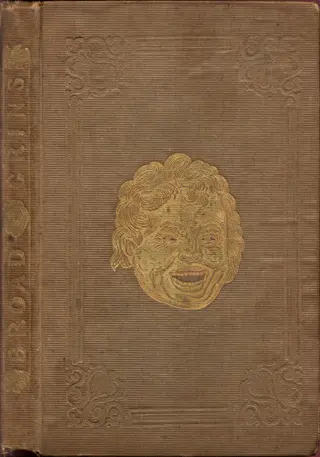
THE CLASSIC COLLECTION · 1803
"Broad Grins" by George Colman, the Younger is a collection of humorous poetry and tales written in the early 19th century. Initially published under the title "My Night-Gown and Slippers," this edition includes new additional tales in verse. The book likely reflects societal themes of its time, focusing on the quirks and follies of human nature, particularly in a comedic context. The collection features a variety of characters and settings, drawing on both contemporary society and historical figures. The poem "The Knight and the Friar" tells the story of Sir Thomas Erpingham, a knight who struggles with ennui after returning from battle and resorts to marrying for company, only to find his wife embroiled in a comic scandal involving a friar. Other tales, such as "The Newcastle Apothecary," humorously explore the medical profession and the absurdities associated with it. Through witty dialogue, playful rhymes, and satirical critiques of societal norms, Colman's work encapsulates the joys and absurdities of life, showcasing his keen observation of human behavior and the comedic potential hidden within everyday situations.
Introduction adapted from the source catalogue; source summaries may be automatically generated.
Free to read · English · 12,734 words · No account needed
MAKE TIME FOR A GOOD BOOK
On by default. Untick to stop anonymous reading totals. Each page counts after 10 seconds in view. How this works.
Anonymous counting is on unless you have switched it off.
At length, his old Castellum grew so dull,
That legions of Blue Devils seize'd the Knight;
Megrim invested his belaurell'd skull;
Spleen laid embargoes on his appetite;
Till, thro' the day-time, he was haunted, wholly,
By all the imps of "loathed Melancholy!"--
Heaven keep her, and her imps, for ever, from us!--
An Incubus,[5] whene'er he went to bed,
Sat on his stomach, like a lump of lead,
Making unseemly faces at Sir Thomas.
Plagues such as these might make a Parson swear;
Sir Thomas being but a Layman,
Swore, very roundly, a la militaire,
Or, rather, (from vexation) like a Drayman:
Damning his Walls, out of all line and level;
Sinking his drawbridges and moats;
Wishing that he were cutting throats--
And they were at the devil.
"What's to be done," Sir Thomas said one day,
"To drive Ennui away?
How is the evil to be parried?
What can remind me of my former life?--
Those happy days I spent in noise and strife!"
The last word struck him;--"Zounds!" says he,
"a Wife!"--
And so he married.
Muse! regulate your pace;--
Restrain, awhile, your frisking, and your giggling!
Here is a stately Lady in the case:
We mustn't, now, be fidgetting, and niggling.
O God of Love! Urchin of spite, and play!
Deserter, oft, from saffron Hymen's quarters;
His torch bedimming, as thou runn'st away,
Till half his Votaries become his Martyrs!
Sly, wandering God! whose frolick arrows pass Thro' hearts of Potentates, and Prentice-boys; Who mark'st with Milkmaids' forms, the tell-tale grass, And make'st the fruitful Prude repent her joys!
Drop me one feather, from thy wanton wing,
Young God of dimples! in thy roguish flight;
And let thy Poet catch it, now, to sing
The beauty of the Dame who won the Knight!
Her beauty!--but Sir Thomas's own Sonnet
Beats all that I can say upon it.
SIR THOMAS ERPINGHAM's[6] SONNET ON HIS LADY.
SUCH star-like lustre lights her Eyes,
They must have darted from a Sphere,
Our duller System to surprise,
Outshining all the Planets here;
And, having wander'd from their wonted place,
Fix in the wond'rous Heaven of her Face.
The modest Rose, whose blushes speak
The ardent kisses of the Sun,
Off'ring a tribute to her Cheek,
Droops, to perceive its Tint outdone;
Then withering with envy and despair,
Dies on her Lips, and leaves its Fragrance there.
Ringlets, that to her Breast descend,
Increase the beauties they invade;
Thus branches in luxuriance bend,
To grace the lovely Hills they shade;
And thus the glowing Climate did entice
Tendrils to curl, unprune'd, o'er Paradise.
Your reading position is saved on this browser. Take it to another device with a library code. Reading pages adapt to text, rather than matching a printed edition.
George Colman
George Colman
George Colman
George Colman
BEHIND THE BOOK
This eBook is for the use of anyone anywhere in the United States and most other parts of the world at no cost and with almost no restrictions whatsoever. You may copy it, give it away or re-use it under the terms of the Project Gutenberg License included with this eBook or online at www.gutenberg.org. If you are not located in the United States, you will have to check the laws of the country where you are located before using this eBook. Read the source licence.
The original source file, including credits and licence, is retained by this library. Request an original-format copy at no charge. Please include the book title and Project Gutenberg identifier #25426.
KEEP YOUR CURIOSITY GOING

Eric Mackay
Edmund Gosse
Sophia Margaretta Hensley
Gilbert Parker
George MacDonald

Elizabeth Bibesco