
Switch off
Oliver Optic
THE CLASSIC COLLECTION · 1895
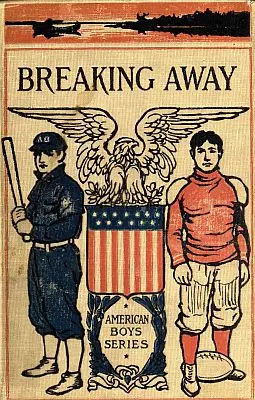
"Breaking Away; or, The Fortunes of a Student" by Oliver Optic is a novel written in the mid-19th century. The story centers around Ernest Thornton, a fourteen-year-old student who grapples with the challenges of school discipline, social dynamics, and a longing for family connections. Through his experiences, readers are introduced to themes of rebellion against authority, the struggles of the underdog, and the quest for personal integrity. At the start of the narrative, Ernest is summoned by the strict principal, Mr. Parasyte, accused of fighting with a popular student, William Poodles. As the events unfold, it becomes clear that the school environment is rife with favoritism and injustice, with Poodles enjoying the privilege of being the principal's pet. The opening portion sets the stage for Ernest’s inner conflict as he faces expulsion for defending himself, leading to a rebellion among his peers who stand against the tyranny of their schoolmaster. As tensions rise, it becomes evident that Ernest values truth and loyalty, and the groundwork is laid for a confrontation between student solidarity and oppressive authority.
Introduction adapted from the source catalogue; source summaries may be automatically generated.
Free to read · English · 58,815 words · No account needed
MAKE TIME FOR A GOOD BOOK
On by default. Untick to stop anonymous reading totals. Each page counts after 10 seconds in view. How this works.
Anonymous counting is on unless you have switched it off.
I listened, with astonishment and dismay, to the tale which Bob Hale told me. I could not help asking myself to what extent I was responsible for the troubles which overwhelmed the Parkville Liberal Institute. I told Bob how I felt, and he ridiculed the idea of my shouldering any portion of the blame.
"Even the parson says you are not to blame, and that you have behaved like a gentleman from the beginning," said he, alluding to Henry Vallington, who, on account of his intended profession, often went by the name of the "parson."
"Can you imagine why Mr. Hardy was discharged?" I asked.
"We don't know; but it is easy enough to see that he blamed Mr. Parasyte, though he never said a word to the fellows. The idea of staying at the Institute after Mr. Hardy goes is not to be thought of," replied Bob, who, like myself, was a day scholar at the school. "What did Parasyte mean when he said your uncle wished him to flog you into subjection?"
"He meant that; my uncle told him to do so," I replied, with shame and mortification, not for myself, but for him who should have been my guardian and protector.
"Did he, though? Well, that was amiable of him," added Tom Rush. "He and Parasyte will do to go together."
"They do go together. I find that Mr. Parasyte owes my uncle a large sum of money. I had no idea that they were even acquainted with each other before," I continued.
"Then I wonder that Parasyte made a row with you, if he owed your
uncle so much money."
"I don't understand it; but I think Mr. Parasyte didn't expect any trouble. He judged hastily between Poodles and me, and when he had given his decision, he was too proud and too obstinate to alter it. I suppose he was a little afraid after what he had done, and went to see my uncle and ask for instructions."
"But it was cold-blooded for your uncle to say what he did."
"Probably Parasyte told his own story," I replied, willing to shield my uncle as much as possible.
"What did your uncle say to you when you went home?" asked Bob Hale, full of interest and sympathy.
"We had some words, and he disowned and cast me out--to use his own
expression."
"Turned you out of house and home!" exclaimed Tom Rush.
"That was what he meant."
"Don't mind it, Ernest," interposed Bob. "You shall come to my house."
"I can take care of myself, I think," was my reply, rather proudly
spoken.
Your reading position is saved on this browser. Take it to another device with a library code. Reading pages adapt to text, rather than matching a printed edition.
BEHIND THE BOOK
This eBook is for the use of anyone anywhere in the United States and most other parts of the world at no cost and with almost no restrictions whatsoever. You may copy it, give it away or re-use it under the terms of the Project Gutenberg License included with this eBook or online at www.gutenberg.org. If you are not located in the United States, you will have to check the laws of the country where you are located before using this eBook. Read the source licence.
The original source file, including credits and licence, is retained by this library. Request an original-format copy at no charge. Please include the book title and Project Gutenberg identifier #22433.
KEEP YOUR CURIOSITY GOING
Coulson Kernahan

Maurice Baring
Frances Wright
Cécile Tormay

Frederic Jesup Stimson

W. H. P. (William Henry Pope) Jarvis
