
Switch off
Oliver Optic
THE CLASSIC COLLECTION · 1895
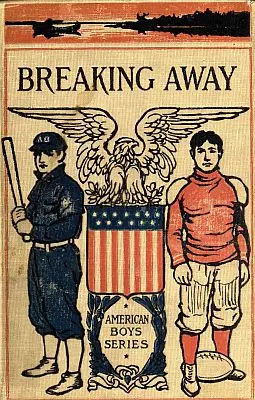
"Breaking Away; or, The Fortunes of a Student" by Oliver Optic is a novel written in the mid-19th century. The story centers around Ernest Thornton, a fourteen-year-old student who grapples with the challenges of school discipline, social dynamics, and a longing for family connections. Through his experiences, readers are introduced to themes of rebellion against authority, the struggles of the underdog, and the quest for personal integrity. At the start of the narrative, Ernest is summoned by the strict principal, Mr. Parasyte, accused of fighting with a popular student, William Poodles. As the events unfold, it becomes clear that the school environment is rife with favoritism and injustice, with Poodles enjoying the privilege of being the principal's pet. The opening portion sets the stage for Ernest’s inner conflict as he faces expulsion for defending himself, leading to a rebellion among his peers who stand against the tyranny of their schoolmaster. As tensions rise, it becomes evident that Ernest values truth and loyalty, and the groundwork is laid for a confrontation between student solidarity and oppressive authority.
Introduction adapted from the source catalogue; source summaries may be automatically generated.
Free to read · English · 58,815 words · No account needed
MAKE TIME FOR A GOOD BOOK
On by default. Untick to stop anonymous reading totals. Each page counts after 10 seconds in view. How this works.
Anonymous counting is on unless you have switched it off.
Mr. Parasyte had evidently obtained some information in regard to the great rebellion before he entered the school-room; for though he looked extremely troubled, he did not seem to be so much astonished as might have been expected. He was admitted by order of the judge, and took off his hat as he walked up the aisle to the platform, wiping away the perspiration which gathered on his heated brow under the severe mental struggles his position induced.
"What does all this mean?" he demanded, with a sternness which we could not help seeing was assumed.
The boys were all orderly and quiet; the school room was as still as during the regular sessions of the Institute. The sentinels, with their bats and clubs, stood immovable at their stations, and the scene produced its full impression upon the mind of the principal. As he did not seem to be prepared to receive an answer to his question, none was given; and Mr. Parasyte glanced uneasily around the room, apparently seeking to obtain a better understanding of the scene.
"What does all this mean?" demanded he, a second time.
"It means, sir," replied Henry Vallington, "that the boys are dissatisfied, and intend to have things set right."
"Is this a proper way to express their dissatisfaction--to take advantage of my absence to get up a riotous assembly?"
"We have been perfectly orderly, sir," added the judge, in respectful
tones.
"How came you here, Thornton?" continued the principal, as his gaze
rested on me.
"We brought him here, sir," promptly interposed Vallington, anxious to relieve me of any responsibility for my escape from my prison-chamber.
"Vallington, I confess my astonishment at seeing you engaged in an affair of this kind," said Mr. Parasyte, reproachfully; and he fixed his gaze upon the judge, and again wiped the perspiration from his forehead. "I have always regarded you as an orderly and well-behaved boy."
"I do not expect to forfeit my reputation as such by what I have done. Mr. Parasyte, the boys are dissatisfied. We are not little children. We have all reached the years of discretion, and we know the difference between right and wrong, between justice and injustice."
"Do you intend to read me a lecture?" demanded the principal, angrily.
"No, sir; I had no such intention--only to state the facts."
"But you are arraigning me, the principal of the Parkville Liberal Institute," added Mr. Parasyte, measuring the judge from head to foot.
"You may call it what you please, sir."
"May I ask what you purpose to do?" continued the principal, in a sneering tone, not unmingled with timidity.
"Poodles," said the judge, turning to the lank toady, "stand up."
Your reading position is saved on this browser. Take it to another device with a library code. Reading pages adapt to text, rather than matching a printed edition.
BEHIND THE BOOK
This eBook is for the use of anyone anywhere in the United States and most other parts of the world at no cost and with almost no restrictions whatsoever. You may copy it, give it away or re-use it under the terms of the Project Gutenberg License included with this eBook or online at www.gutenberg.org. If you are not located in the United States, you will have to check the laws of the country where you are located before using this eBook. Read the source licence.
The original source file, including credits and licence, is retained by this library. Request an original-format copy at no charge. Please include the book title and Project Gutenberg identifier #22433.
KEEP YOUR CURIOSITY GOING
Coulson Kernahan

Maurice Baring
Frances Wright
Cécile Tormay

Frederic Jesup Stimson

W. H. P. (William Henry Pope) Jarvis
