
Switch off
Oliver Optic
THE CLASSIC COLLECTION · 1895
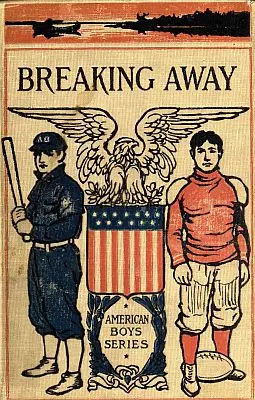
"Breaking Away; or, The Fortunes of a Student" by Oliver Optic is a novel written in the mid-19th century. The story centers around Ernest Thornton, a fourteen-year-old student who grapples with the challenges of school discipline, social dynamics, and a longing for family connections. Through his experiences, readers are introduced to themes of rebellion against authority, the struggles of the underdog, and the quest for personal integrity. At the start of the narrative, Ernest is summoned by the strict principal, Mr. Parasyte, accused of fighting with a popular student, William Poodles. As the events unfold, it becomes clear that the school environment is rife with favoritism and injustice, with Poodles enjoying the privilege of being the principal's pet. The opening portion sets the stage for Ernest’s inner conflict as he faces expulsion for defending himself, leading to a rebellion among his peers who stand against the tyranny of their schoolmaster. As tensions rise, it becomes evident that Ernest values truth and loyalty, and the groundwork is laid for a confrontation between student solidarity and oppressive authority.
Introduction adapted from the source catalogue; source summaries may be automatically generated.
Free to read · English · 58,815 words · No account needed
MAKE TIME FOR A GOOD BOOK
On by default. Untick to stop anonymous reading totals. Each page counts after 10 seconds in view. How this works.
Anonymous counting is on unless you have switched it off.
Pearl looked troubled. He was under very great obligations to Mr. Parasyte. If he denied that he had helped Poodles, and it was then proved against him, the boys would insist that he should be expelled. If he stood out, he must either be expelled or the Institute be broken up. He did not appear willing to take such a responsibility.
"You can do as you please, Pearl; but tell the truth, if you say anything," continued Vallington.
"I did help Poodles," said he, looking down at the floor.
"How much did you help him?"
"I lent him my examination paper, and he copied all the solutions upon
his own."
"And after that you were willing to declare that you had not assisted any one?" demanded the judge, with a look of supreme contempt on his fine features.
"I had not helped any one when I signed my paper."
"Humph!" exclaimed Vallington, with a withering sneer. "That is the
meanest kind of a lie."
"I didn't mean to assist him; he teased me till I couldn't help
myself," pleaded Pearl.
A further examination showed that Poodles had browbeaten and threatened him; and we were disposed to palliate Pearl's offence, in consideration of his poverty and his dependent position, after he had confessed his error.
"Are you willing to make this acknowledgment to Mr. Parasyte?" asked the judge, in a tone of compassion.
"I don't want to; but I will. I suppose he will send me home then,"
replied the culprit.
"We will do what we can for you," added the judge.
Pearl had been a pretty good fellow among the boys, was generally popular, and all were sorry for him. But his confession in a manner absolved him, and the students heartily declared that they would stand by him.
"Our business is finished," said Vallington, "unless Poodles has
something more to say."
Poodles had listened with consternation to the confession of Pearl, and he now appeared to be dissatisfied with himself rather than with the court.
"I didn't think Dick Pearl would let on in that way," said he, casting a reproachful glance at his fellow-culprit.
"He has told the truth. If he had not confessed, we could have proved that he helped you," added Vallington. "I have seen the six papers that were all right myself. Pearl performed the third example in a very peculiar and roundabout way; and Poodles had it in the same way, while the other did it by the most direct method."
"I suppose it's of no use to stand out now," said Poodles, timidly.
"Will you confess now?"
"I will, if it will do any good."
Your reading position is saved on this browser. Take it to another device with a library code. Reading pages adapt to text, rather than matching a printed edition.
BEHIND THE BOOK
This eBook is for the use of anyone anywhere in the United States and most other parts of the world at no cost and with almost no restrictions whatsoever. You may copy it, give it away or re-use it under the terms of the Project Gutenberg License included with this eBook or online at www.gutenberg.org. If you are not located in the United States, you will have to check the laws of the country where you are located before using this eBook. Read the source licence.
The original source file, including credits and licence, is retained by this library. Request an original-format copy at no charge. Please include the book title and Project Gutenberg identifier #22433.
KEEP YOUR CURIOSITY GOING
Coulson Kernahan

Maurice Baring
Frances Wright
Cécile Tormay

Frederic Jesup Stimson

W. H. P. (William Henry Pope) Jarvis
