
Switch off
Oliver Optic
THE CLASSIC COLLECTION · 1895
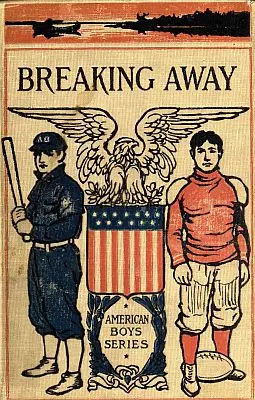
"Breaking Away; or, The Fortunes of a Student" by Oliver Optic is a novel written in the mid-19th century. The story centers around Ernest Thornton, a fourteen-year-old student who grapples with the challenges of school discipline, social dynamics, and a longing for family connections. Through his experiences, readers are introduced to themes of rebellion against authority, the struggles of the underdog, and the quest for personal integrity. At the start of the narrative, Ernest is summoned by the strict principal, Mr. Parasyte, accused of fighting with a popular student, William Poodles. As the events unfold, it becomes clear that the school environment is rife with favoritism and injustice, with Poodles enjoying the privilege of being the principal's pet. The opening portion sets the stage for Ernest’s inner conflict as he faces expulsion for defending himself, leading to a rebellion among his peers who stand against the tyranny of their schoolmaster. As tensions rise, it becomes evident that Ernest values truth and loyalty, and the groundwork is laid for a confrontation between student solidarity and oppressive authority.
Introduction adapted from the source catalogue; source summaries may be automatically generated.
Free to read · English · 58,815 words · No account needed
MAKE TIME FOR A GOOD BOOK
On by default. Untick to stop anonymous reading totals. Each page counts after 10 seconds in view. How this works.
Anonymous counting is on unless you have switched it off.
"What did you bring her in here for? If I hadn't stopped her when I did, you would have smashed her up."
"Perhaps I should," I answered with a sneer, when I found it was
impossible to make any headway against the general's unreasonable
speech.
"You were going at full speed; and it is lucky I happened to see the shore and stop her when I did."
"I have nothing more to say," I replied, seating myself on the rail of
the steamer.
"I don't think there is much more to be said. Here we are, hard aground; and anybody that has a mind to come after us can take us."
I made no reply. Vallington went to the gangway and looked over into the shallow water. Then he walked over to the other side, and I had no doubt our situation looked hopeless to him. After he had walked about a while, his anger abated; and perhaps he was conscious that he had been too fast in expressing himself.
"What's to be done? That's the next question," said he.
"I suppose nothing can be done," replied Tom Rush, who was more disappointed than any other fellow on board. "They say the Champion will be down after us this afternoon. Perhaps she will drag us off, and then our tyrants will treat us as they think proper."
"You needn't disturb yourselves about the Champion," I interposed. "She can't come within half a mile of us at least."
"Is that so?"
"That is so."
"It doesn't make much difference whether she can or not. We must stay here till some one helps us out of the scrape," added Vallington. "It was stupid to come in here."
"I don't think so," said Bob Hale, decidedly.
"Here we are aground, anyhow."
"Harry," continued Bob, gently and kindly, "I think Ernest was right in what he said. If you hadn't stopped the engine, we should have gone through well enough."
Vallington bit his lips, and he and Bob walked aft together. They were absent a few moments; and when he returned, the general's face wore a different expression.
"Thornton, I acknowledge that I was wrong," said he, extending his
hand to me.
The boys standing around us immediately began to clap their hands in token of their satisfaction. In matters of navigation they were more willing to believe in me than in Vallington; and probably most of them were satisfied that I had been in the right.
"Don't say another word," I replied, jumping down from my seat, and
grasping his offered hand.
"You will excuse my hasty language," he continued.
"Certainly; and I ask the same favor of you," I replied.
Your reading position is saved on this browser. Take it to another device with a library code. Reading pages adapt to text, rather than matching a printed edition.
BEHIND THE BOOK
This eBook is for the use of anyone anywhere in the United States and most other parts of the world at no cost and with almost no restrictions whatsoever. You may copy it, give it away or re-use it under the terms of the Project Gutenberg License included with this eBook or online at www.gutenberg.org. If you are not located in the United States, you will have to check the laws of the country where you are located before using this eBook. Read the source licence.
The original source file, including credits and licence, is retained by this library. Request an original-format copy at no charge. Please include the book title and Project Gutenberg identifier #22433.
KEEP YOUR CURIOSITY GOING
Coulson Kernahan

Maurice Baring
Frances Wright
Cécile Tormay

Frederic Jesup Stimson

W. H. P. (William Henry Pope) Jarvis
