THE CLASSIC COLLECTION✦The romance of the animal worldCLASSIC FREE BOOKS
The romance of the animal world
Edmund Selous
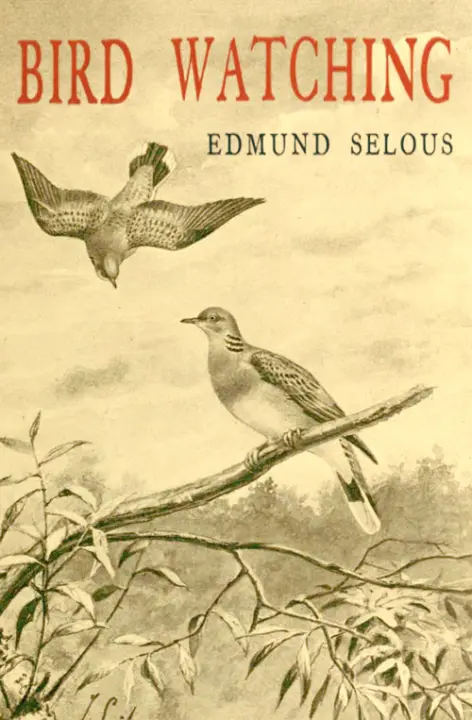
THE CLASSIC COLLECTION · 1901
"Bird Watching" by Edmund Selous is a nature observation book written in the early 20th century. It focuses on the detailed observations of various bird species and their behaviors, primarily narrated from the author's perspective. This book will appeal to readers interested in ornithology, nature writing, or anyone who enjoys immersing themselves in the world of wildlife. The opening of "Bird Watching" sets the stage for the author's personal experiences with birdwatching, emphasizing a more intimate and casual exploration rather than formal scientific studies. Selous introduces readers to the great plover, or stone-curlew, describing its physical appearance and habits with great detail. He paints vivid scenes of the bird sitting, preening, and engaging in lively acts, reflecting on the social dynamics among the birds and their behaviors during different times of the day. Through his observations, the author seeks to convey both factual details and the emotions stirred by witnessing these creatures in their natural habitat, inviting readers to join him in discovering the joys of birdwatching.
Introduction adapted from the source catalogue; source summaries may be automatically generated.
Free to read · English · 100,843 words · No account needed
MAKE TIME FOR A GOOD BOOK
On by default. Untick to stop anonymous reading totals. Each page counts after 10 seconds in view. How this works.
Anonymous counting is on unless you have switched it off.
If life is, as some hold it to be, a vast melancholy ocean over which ships more or less sorrow-laden continually pass and ply, yet there lie here and there upon it isles of consolation on to which we may step out and for a time forget the winds and waves. One of these we may call Bird-isle--the island of watching and being entertained by the habits and humours of birds--and upon this one, for with the others I have here nothing to do, I will straightway land, inviting such as may care to, to follow me. I will speak of birds only, or almost only, as I have seen them, and I must hope that this plan, which is the only one I have found myself able to follow, will be accepted as an apology for the absence of much which, not having seen but only read of, I therefore say nothing about. Also, if I sometimes here record what has long been known and noted as though I were making a discovery, I trust that this, too, will be forgiven me, for, in fact, whenever I have watched a bird and seen it do anything at all--anything, that is, at all salient--that is just how I have felt. Perhaps, indeed, the best way to make discoveries of this sort is to have the idea that one is doing so. One looks with the soul in the eyes then, and so may sometimes pick up some trifle or other that has not been noted before.
However this may be, one of the most delightful birds (for one must begin somewhere) to find, or to think one is finding things out about, is the great or Norfolk plover, or, as it is locally and more rightly called--for it is a curlew and not a plover[1]--the stone-curlew. These birds haunt open, sandy wastes to which but the scantiest of vegetation clings, and here, during the day, they assemble in some chosen spot, often in considerable numbers--fifty or more I have sometimes seen together. If it is early in the day, and especially if the weather be warm and sunny, most of them will be sitting, either crouched down on their long yellow shanks, or more upright with these extended in front of them, looking in this latter attitude as if they were standing on their stumps, their legs having been "smitten off" and lying before them on the ground. Towards evening, however--which is the best time to watch these birds--they stand attending to their plumage, or walk with picked steps in a leisurely fashion, which, with their lean gaunt figure, sad and rusty coloured, and a certain sedateness, almost punctiliousness, of manner, fancifully suggests to one the figure of Don Quixote de la Mancha, the Knight of the rueful countenance, with a touch or two, perhaps, thrown in of the old Baron of Bradwardine of Tullyveolan. One can lie on the ground and watch them from far off through the glasses, or, should a belt of bracken fringe the barren area, one has then an excellent opportunity of creeping up to within a short or, at least, a reasonable distance. To do this one must make a wide circuit and enter the bracken a long way off. Then having walked, or rather waded for some way towards them, at a certain point--experience will teach the safety-line--one must sink on one's hands and knees, and the rest is all creeping and wriggling, till at length, lying flat, one's face just pierces the edge of the cover and the harmless glasses are levelled at the quarry one does not wish to kill. The birds are standing in a long, straggling line, ganglion-like in form, swelling out into knots where they are grouped more thickly with thinner spaces between. As they preen themselves--twisting the neck to one or the other side so as to pass the primary quill feathers of the wings through the beak--one may be seen to stoop and lay one side of the head on the ground, the great yellow eye of the other side staring up into the sky in an uncanny sort of way. The meaning of this action I do not know. It is not to scratch the head, for the head is held quite still; and, moreover, as, like most birds, they can do this very neatly and effectively with the foot, other methods would seem to be superfluous. Again, and this is a more characteristic action, one having stood for some time upright and perfectly still, makes a sudden and very swingy bob forward with the head, the tail at the same time swinging up, just in the way that a wooden bird performs these actions upon one's pulling a string. This again seems to have no special reference to anything, unless it be deportment.
Your reading position is saved on this browser. Take it to another device with a library code. Reading pages adapt to text, rather than matching a printed edition.
BEHIND THE BOOK
This eBook is for the use of anyone anywhere in the United States and most other parts of the world at no cost and with almost no restrictions whatsoever. You may copy it, give it away or re-use it under the terms of the Project Gutenberg License included with this eBook or online at www.gutenberg.org. If you are not located in the United States, you will have to check the laws of the country where you are located before using this eBook. Read the source licence.
The original source file, including credits and licence, is retained by this library. Request an original-format copy at no charge. Please include the book title and Project Gutenberg identifier #50175.
KEEP YOUR CURIOSITY GOING

Charles G. (Charles Griffith) Ross
Hannah Webster Foster

Emily Lawless
Edwin Hamlin Carr

Charles De Lano Hine
Andrew Ure