THE CLASSIC COLLECTION✦Outline Studies in the New Testament for Bible TeachersCLASSIC FREE BOOKS
Outline Studies in the New Testament for Bible Teachers
Jesse Lyman Hurlbut
THE CLASSIC COLLECTION · 1884
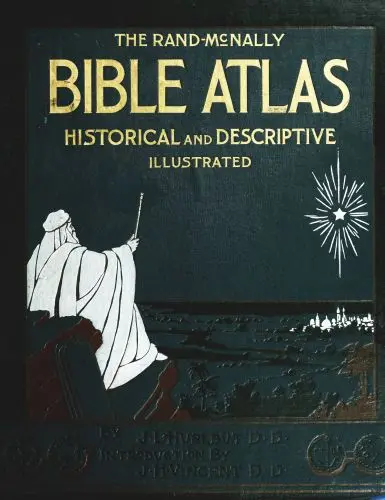
"Bible Atlas: A Manual of Biblical Geography and History" by Jesse Lyman Hurlbut is a detailed reference work that blends biblical geography and history, likely written in the late 19th century. This manual is designed specifically for teachers and students of the Bible and includes maps, charts, and illustrated views of significant biblical locations. The book aims to provide readers with a thorough understanding of the historical context and geography surrounding biblical events, enhancing the study of these ancient texts. At the start of the manual, the introduction sets the stage by discussing the Bible as an ancient, multifaceted work that intertwines history, poetry, and doctrine. It highlights the importance of understanding the geographical and historical framework of the Bible to grasp its narratives accurately. The author, along with a supporting introduction by Bishop John H. Vincent, emphasizes how vital it is for readers and students to connect the biblical narratives with their real-world counterparts in ancient lands, underscoring that without such contextual knowledge, the richness and reality of the scriptures may be lost. This foundation prepares the reader to engage deeply with the content of the atlas as it unfolds.
Introduction adapted from the source catalogue; source summaries may be automatically generated.
Free to read · English · 85,838 words · No account needed
MAKE TIME FOR A GOOD BOOK
On by default. Untick to stop anonymous reading totals. Each page counts after 10 seconds in view. How this works.
Anonymous counting is on unless you have switched it off.
These have been already noticed, to some extent, but may be named together. Upon the Maritime Plain, we notice: 1. Phoenicia, a very narrow strip along the Mediterranean, north of Mount Carmel, never possessed by the Israelites, and having Tyre and Sidon as its principal cities. 2. Directly south of Mount Carmel, Sharon, having Cæsarea and Joppa as its most important places. 3. Still further south, Philistia, the land of Israel's ancient enemies, containing several cities, of which Gaza and Ashkelon (afterward Ascalon) were chief. Upon the Mountain Region we find imbedded, 4. The Plain of Esdraelon, a Y-shaped region, 250 feet above the sea-level, surrounded by mountains, and situated between Mounts Carmel, Tabor and Gilboa. 5. The Negeb, or South Country, between Hebron and the desert, in Southern Judæa, may be regarded as a plain, though of rolling character, as its hills are not so high as those on the north. 6. In the Jordan Valley, just north of the Dead Sea, is a place called "the Plain of Jordan," or "the Plain of Jericho," the site of the destroyed "cities of the plain." 7. In the northern section of the Eastern Table-Land is the vast highland known as "the Hauran," anciently called Bashan, watered by the streams which form the Hieromax river.
I. Dimensions. 1. Canaan. 2. Palestine (Twelve Tribes). 3. Land of
Promise.
II. Natural Divisions. 1. Maritime Plain. 2. Mountain Region (Upper Galilee, Lower Galilee, Hill Country, Shefelah, Negeb). 3. Jordan Valley (Merom, Galilee, Dead Sea). 4. Eastern Table-Land (Bashan, Gilead, Moab).
III. Waters. 1. Jordan (sources, sections). 2. Lakes (Merom, Galilee, Dead Sea). 3. Brooks. (1.) East: Hieromax, Jabbok, Arnon. (2.) Mountain Region: Farah, Cherith, Kedron. (3.) Maritime Plain: Leontes, Kishon, Besor.
IV. Mountains. 1. West of Jordan: Lebanon, Jermuk, Hattin, Tabor, Little Hermon, Gilboa, Carmel, Ebal, Gerizim, Zion, Olives, Hebron. 2. East of Jordan: Hermon, Gilead, Nebo.
V. Plains. 1. Phoenicia. 2. Sharon. 3. Philistia. 4. Esdraelon. 5. Negeb. 6. Jordan. 7. Hauran.
AT the close of the eleventh chapter of Genesis a change is made in the subject of the Bible story. Thus far it has been a history of the entire race; but from this point to the close of Genesis a single family is brought into prominent notice, and the rest of the tribes of men are referred to only incidentally. The family of Abraham, of Semitic origin, deserve all their prominence in sacred history, since through them the true religion was perpetuated until the world was ready for its wider dissemination in the gospel period.
Your reading position is saved on this browser. Take it to another device with a library code. Reading pages adapt to text, rather than matching a printed edition.
Jesse Lyman Hurlbut

Jesse Lyman Hurlbut
Jesse Lyman Hurlbut
Jesse Lyman Hurlbut
BEHIND THE BOOK
This eBook is for the use of anyone anywhere in the United States and most other parts of the world at no cost and with almost no restrictions whatsoever. You may copy it, give it away or re-use it under the terms of the Project Gutenberg License included with this eBook or online at www.gutenberg.org. If you are not located in the United States, you will have to check the laws of the country where you are located before using this eBook. Read the source licence.
The original source file, including credits and licence, is retained by this library. Request an original-format copy at no charge. Please include the book title and Project Gutenberg identifier #41140.
KEEP YOUR CURIOSITY GOING

David Patterson (Spirit) Hatch

David Patterson (Spirit) Hatch

David Patterson (Spirit) Hatch
Cécile Tormay

Moritz Busch
John L. Ransom