THE CLASSIC COLLECTION✦Outline Studies in the New Testament for Bible TeachersCLASSIC FREE BOOKS
Outline Studies in the New Testament for Bible Teachers
Jesse Lyman Hurlbut
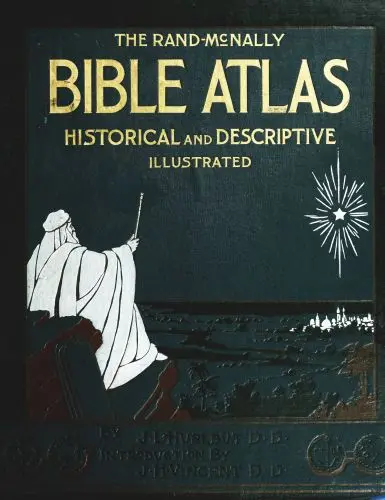
THE CLASSIC COLLECTION · 1884
"Bible Atlas: A Manual of Biblical Geography and History" by Jesse Lyman Hurlbut is a detailed reference work that blends biblical geography and history, likely written in the late 19th century. This manual is designed specifically for teachers and students of the Bible and includes maps, charts, and illustrated views of significant biblical locations. The book aims to provide readers with a thorough understanding of the historical context and geography surrounding biblical events, enhancing the study of these ancient texts. At the start of the manual, the introduction sets the stage by discussing the Bible as an ancient, multifaceted work that intertwines history, poetry, and doctrine. It highlights the importance of understanding the geographical and historical framework of the Bible to grasp its narratives accurately. The author, along with a supporting introduction by Bishop John H. Vincent, emphasizes how vital it is for readers and students to connect the biblical narratives with their real-world counterparts in ancient lands, underscoring that without such contextual knowledge, the richness and reality of the scriptures may be lost. This foundation prepares the reader to engage deeply with the content of the atlas as it unfolds.
Introduction adapted from the source catalogue; source summaries may be automatically generated.
Free to read · English · 85,838 words · No account needed
MAKE TIME FOR A GOOD BOOK
On by default. Untick to stop anonymous reading totals. Each page counts after 10 seconds in view. How this works.
Anonymous counting is on unless you have switched it off.
4. The victory at =Aphek=, won by Ahab over Ben-hadad and the Syrians. Ahab, however, allowed the fruits of the victory to be lost, when he might have made it decisive in its results. (1 Kings 20:26-43.)
5. The battle of =Ramoth-gilead=, in which the Syrians, under Ben-hadad, were victorious over allied Israel and Judah, and Ahab was slain. (1 Kings 22.)
6. The slaughter of the allied Moabites, Ammonites and Edomites, at =Berachah=, "the valley of blessing," in the reign of Jehoshaphat, king of Judah. (2 Chron. 20.)
7. The war of Israel, Judah and Edom, against the Moabites, in which a great battle took place at =Kir-haraseth=, in the land of Moab, when the king of Moab offered his own son as a sacrifice in presence of the contending armies. (2 Kings 3.) This was during the reign of Jehoshaphat in Judah, and of Jehoram in Israel.
8. A second siege of =Samaria=, by the Syrians, under Ben-hadad, in the reign of Jehoram; and a miraculous deliverance. (2 Kings 6, 7.)
9. A battle at =Zair= (probably Sela, or Petra), in Edom, in which Jehoram was surrounded by the revolting Edomites, and won a victory, yet could not prevent the Edomites from gaining their liberty. (2 Kings 8:21, 22.)
10. The capture of =Gath=, by the Syrians, under Hazael, in the reign of Jehoash, king of Judah. (2 Kings 12:17.)
11. The victory of King Jehoash, of Israel, over the Syrians, at =Aphek=, foretold by Elisha. (2 Kings 13:17-25.)
12. The battle of =Beth-shemesh=, a victory of Israel over Judah, resulting in an Israelite army entering Jerusalem, in the reign of Amaziah. (2 Kings 14.)
13. The final capture of =Samaria= by the Assyrians, and the extinction of the kingdom of the Ten Tribes. (2 Kings 17:1-6.)
14. The battle of =Megiddo=, in which King Josiah, of Judah, lost his life while resisting the invasion of Pharaoh-necho, the king of Egypt. (2 Kings 23:29.)
15. Two battles at =Carchemish=, near the Euphrates, in the first of which, Pharaoh-necho, of Egypt, was victorious (B.C. 608) over the Assyrians, and in the second (B.C. 606) was thoroughly defeated by Nebuchadnezzar, and compelled to relinquish all his conquests in Asia. (2 Chron. 35:20.)
16. The destruction of =Jerusalem= by Nebuchadnezzar, and the extinction of the kingdom of Judah. (2 Kings 25.)
1. Draw on the blackboard the map of Solomon's Empire, as already given, showing its boundaries, and placing on it the city of Jerusalem, the river Jordan, etc.
2. Divide the map into the five kingdoms of Syria, Israel,
Judah, Moab and Edom, and show their capitals and political
relations.
3. Drill the class upon the leading events of the five historical periods named in the above description, placing upon the map the localities named in the history.
Your reading position is saved on this browser. Take it to another device with a library code. Reading pages adapt to text, rather than matching a printed edition.
Jesse Lyman Hurlbut
Jesse Lyman Hurlbut
Jesse Lyman Hurlbut
Jesse Lyman Hurlbut
BEHIND THE BOOK
This eBook is for the use of anyone anywhere in the United States and most other parts of the world at no cost and with almost no restrictions whatsoever. You may copy it, give it away or re-use it under the terms of the Project Gutenberg License included with this eBook or online at www.gutenberg.org. If you are not located in the United States, you will have to check the laws of the country where you are located before using this eBook. Read the source licence.
The original source file, including credits and licence, is retained by this library. Request an original-format copy at no charge. Please include the book title and Project Gutenberg identifier #41140.
KEEP YOUR CURIOSITY GOING

David Patterson (Spirit) Hatch

David Patterson (Spirit) Hatch

David Patterson (Spirit) Hatch
Cécile Tormay

Moritz Busch
John L. Ransom