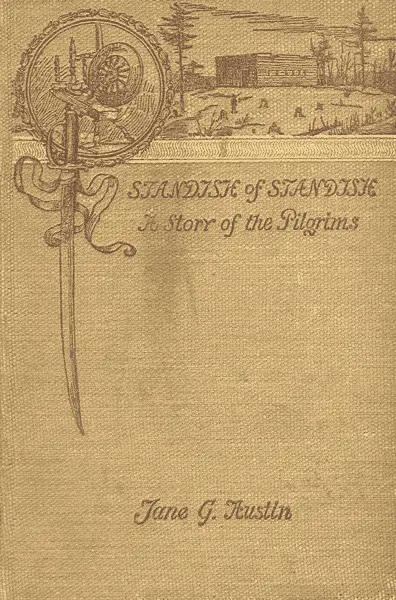
Standish of Standish: A Story of the Pilgrims
Jane G. (Jane Goodwin) Austin
THE CLASSIC COLLECTION · 1891
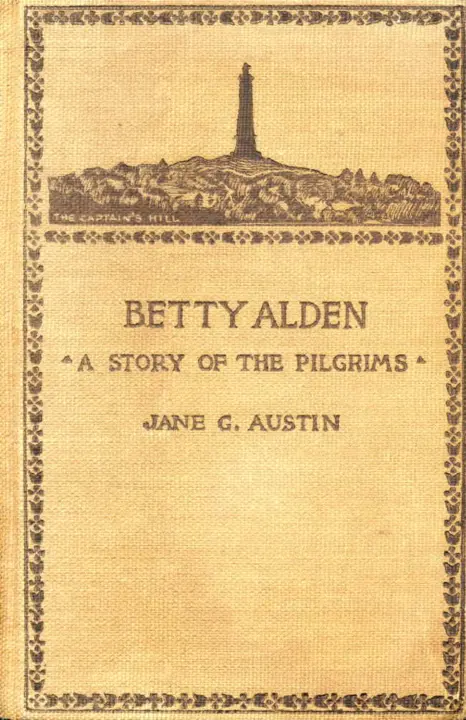
"Betty Alden: The First-Born Daughter of the Pilgrims" by Jane G. Austin is a historical novel written in the late 19th century. The book explores the life of Betty Alden, the daughter of John and Priscilla Alden, as it intricately weaves her story with the broader historical context of the Pilgrims’ struggles and triumphs in the New World. The narrative likely emphasizes the lives and societal roles of women during this early American period, highlighting Betty's significance as a pivotal character. The opening of the novel introduces the reader to a lively dialogue between characters, revealing the tense political atmosphere in Plymouth as they navigate suspicions of treason among new arrivals, particularly figures like John Lyford and John Oldhame. Priscilla Alden and Barbara Standish engage in spirited banter about the men’s reluctance to heed warnings from women, setting the tone for a community grappling with external threats and internal discord. Through witty exchanges, the characters establish a vivid portrayal of life in Plymouth, hinting at Betty's future involvement in the conflicts that surround her family and colony.
Introduction adapted from the source catalogue; source summaries may be automatically generated.
Free to read · English · 109,719 words · No account needed
MAKE TIME FOR A GOOD BOOK
On by default. Untick to stop anonymous reading totals. Each page counts after 10 seconds in view. How this works.
Anonymous counting is on unless you have switched it off.
“Is he at the Bay, sir, and will he serve you if you can make him know?” asked Betty eagerly; and the knight, who had forgotten her, turned with a sudden smile and uplifted eyebrows.
“What! we’re in council together, are we, Betty? Nay, Sir Ferdinando Gorges is in England, and-- Come, now, child, I read thine honest eyes, and I know thou ’rt sorry for me, and would not add to my discomfort, hadst thou the chance of doing it.”
“Nay, sir, indeed and indeed I would not do so.”
“I am sure of it. Well, then, Betty, promise me thou’lt not say over again what just slipped my lips, and most particularly the name. I’ll be sworn thou hast even now forgotten”--
“Nay, sir, I’ve not forgotten; ’tis Sir Ferdinando Gorges that would befriend you, but he’s in England and may not be reached, but an the Bay does you an injury he’ll revenge it.”
“Thou hast too good a memory, Betty, and a wonderful quickness for thy years,” replied the knight, biting his lip, and staring almost angrily at the child. “Yet I must e’en trust thee. Thou’lt not lisp one word of that lesson thou hast so pat? Mind you, child, ’twas not meant for your ears!”
“I’ll not say it over to any one, sir, and I did not want to hear it.” And Betty, with a pretty air of dignity, took up the tray and was leaving the room when Sir Christopher recalled her:--
“Betty, you’re taking away my posy! Was not it meant to tarry with the poor prisoner, and comfort him a little?”
“Yes, indeed, sir. Will you be so gentle as to take it off the tray?”
“Ay, and thank you, Betty. Good-by, my pretty turnkey.”
“I know not what that is, sir. Can I bring you aught else?”
“Yes, Betty. I fain would have pens and ink and paper, if I may; and will you or some other ministering sprite redd up the room a little?”
“I’ll ask mother, sir,” replied Betty comprehensively, and disappeared, leaving Sir Christopher plunged in meditation both perplexing and futile.
“I must wait and see how much they know before I frame my reply,” at length said he aloud; and throwing off the weight with a shrug of his broad shoulders, he took a small dressing-case from one of the inner pockets of his doublet, and began to comb, to perfume, and to curl the long dark hair which was in itself an abomination to the Puritans, and an object of scorn to the Pilgrims.
Your reading position is saved on this browser. Take it to another device with a library code. Reading pages adapt to text, rather than matching a printed edition.
Jane G. (Jane Goodwin) Austin
BEHIND THE BOOK
This eBook is for the use of anyone anywhere in the United States and most other parts of the world at no cost and with almost no restrictions whatsoever. You may copy it, give it away or re-use it under the terms of the Project Gutenberg License included with this eBook or online at www.gutenberg.org. If you are not located in the United States, you will have to check the laws of the country where you are located before using this eBook. Read the source licence.
The original source file, including credits and licence, is retained by this library. Request an original-format copy at no charge. Please include the book title and Project Gutenberg identifier #67608.
KEEP YOUR CURIOSITY GOING
Cécile Tormay

Moritz Busch
Coulson Kernahan
John L. Ransom

Maurice Baring
Frances Wright