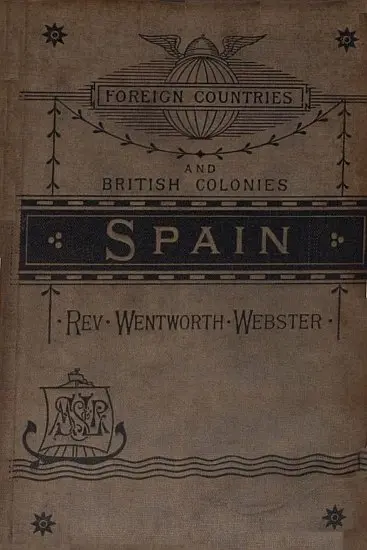
Spain
Wentworth Webster
THE CLASSIC COLLECTION · 1877
"Basque Legends; With an Essay on the Basque Language" by Wentworth Webster is a collection of traditional tales and folklore from the Basque region, written in the late 19th century. The book explores the unique mythology and cultural narratives of the Basques, including legendary creatures such as the Tartaro and the Heren-Suge, as well as various animal fables. It offers an intriguing look into the Basque societal values and linguistic elements, making it a valuable resource for anthropology and folklore enthusiasts. At the start of the work, the introduction emphasizes the significance of studying comparative mythology and highlights the Basque people’s distinct cultural heritage, characterized by their unwritten language and rich oral traditions. The opening portion sets the stage for the stories to come, revealing how these legends—believed to represent ancient truths—are recounted by Basque peasants during communal activities. The narratives intertwine historical influences and local beliefs, depicting characters like the one-eyed Tartaro and heroic figures enmeshed in quests and adventures, illustrating themes of cleverness, survival, and the interplay of the familiar with the supernatural.
Introduction adapted from the source catalogue; source summaries may be automatically generated.
Free to read · English · 96,186 words · No account needed
MAKE TIME FOR A GOOD BOOK
On by default. Untick to stop anonymous reading totals. Each page counts after 10 seconds in view. How this works.
Anonymous counting is on unless you have switched it off.
[186] This little wand plays an important part of its own. In many of its uses it resembles the Caduceus of Mercury; a touch from it renders invisible, puts to death, or restores to life at the will of the Satanic possessor. It appears also as given to the hero in many of the "Legends;" cf. pp. 34, 35, above.
[187] An account of the acting of Richard Sans Peur, at Larrau, in June 1864, is given in Macmillan's Magazine, January, 1865.
[188] Cf. Legends above, p. 151.
[189] This MS. was kindly lent by M. J. Vinson, to whom we have been
so often indebted.
[190] Ercilla, the author of the "Araucana," was however of Basque blood, and Basque names occur frequently among the poets and dramatists of Spain, especially in recent years.
[191] The claim put forth in the "Revista Euskara," p. 61, April, 1878, may be fully conceded:--"Si; éste es el carácter distintivo de la poesía euskara; su exquisita moralidad. Jamás se encuentra en ella nada que se parezca, ni á una apología del vicio, ni á una excusa del crimen."
[192] "Cancionero Vasco, acompañado de traducciones castellanas, juicios criticos," etc., por José Manterola. San Sebastian. 1877-8. Serie I., 2, p. 39.
[193] The reader will remark that there is really no authority for treating these words as proper names. This, however, is the universal interpretation among Basques.
[194] Ibargüen's words after quoting the song are: "Por este órden referidas yba este cantar contando toda esta historia que habemos dicho atrás en este capítulo de las guerras ceviles que en cinco años Octaviano Cesar Augusto hizo en esta Provincia Cantábrica, y aunque esta hereciat (historical song) tenga otros muy muchos versos rodados tan solamente dellos he tomado los diez e seis primeros, porque los demas estaban carcomidos, y los pongo aquí para el que fuere bascongado, contentándome con solo ellos ebitando largueza importuna de los demás, que el pergamino está muy roñoso e viejo," cited in the "Cancionero Vasco," 2, iii., pp. 4, 5.
[195] Cf. Alexandre Dihinx in the Impartial de Bayonne, in 1873. These articles have been reprinted by M. J. Vinson in L'Avenir de Bayonne, May, 1878.
[196] "The master of the house," the usual respectful address to a Basque proprietor of any rank. His wife is "Etcheco Anderea," "The mistress of the house."
[197] Altabiscar is the mountain on the East, Ibañeta that on the West of the supposed scene of conflict.
[198] Of course it ought to be "vultures." The Basque is distinctly "eagles;" an error which no Basque shepherd could have made.
[199] The use of rocks "is confirmed by the Basque ballad of Altabiscar, in which, however, there is no allusion to the powerful inducement of booty."
Your reading position is saved on this browser. Take it to another device with a library code. Reading pages adapt to text, rather than matching a printed edition.
Wentworth Webster
BEHIND THE BOOK
This eBook is for the use of anyone anywhere in the United States and most other parts of the world at no cost and with almost no restrictions whatsoever. You may copy it, give it away or re-use it under the terms of the Project Gutenberg License included with this eBook or online at www.gutenberg.org. If you are not located in the United States, you will have to check the laws of the country where you are located before using this eBook. Read the source licence.
The original source file, including credits and licence, is retained by this library. Request an original-format copy at no charge. Please include the book title and Project Gutenberg identifier #34902.
KEEP YOUR CURIOSITY GOING

Maurice Baring
Francis Greenleaf Allinson & Anne C. E. (Anne Crosby Emery) Allinson
Stuart Dodgson Collingwood
Percy Keese Fitzhugh
Mary Macleod & Edmund Spenser

Cooke Don-Carlos