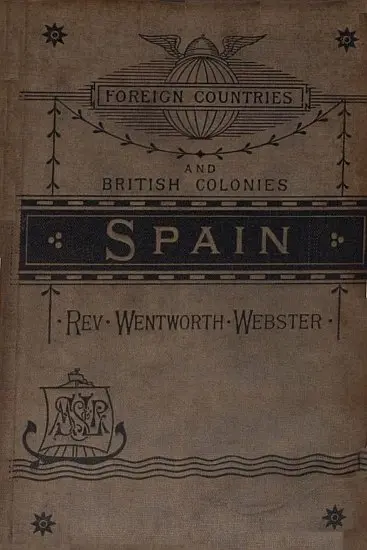
Spain
Wentworth Webster
THE CLASSIC COLLECTION · 1877
"Basque Legends; With an Essay on the Basque Language" by Wentworth Webster is a collection of traditional tales and folklore from the Basque region, written in the late 19th century. The book explores the unique mythology and cultural narratives of the Basques, including legendary creatures such as the Tartaro and the Heren-Suge, as well as various animal fables. It offers an intriguing look into the Basque societal values and linguistic elements, making it a valuable resource for anthropology and folklore enthusiasts. At the start of the work, the introduction emphasizes the significance of studying comparative mythology and highlights the Basque people’s distinct cultural heritage, characterized by their unwritten language and rich oral traditions. The opening portion sets the stage for the stories to come, revealing how these legends—believed to represent ancient truths—are recounted by Basque peasants during communal activities. The narratives intertwine historical influences and local beliefs, depicting characters like the one-eyed Tartaro and heroic figures enmeshed in quests and adventures, illustrating themes of cleverness, survival, and the interplay of the familiar with the supernatural.
Introduction adapted from the source catalogue; source summaries may be automatically generated.
Free to read · English · 96,186 words · No account needed
MAKE TIME FOR A GOOD BOOK
On by default. Untick to stop anonymous reading totals. Each page counts after 10 seconds in view. How this works.
Anonymous counting is on unless you have switched it off.
[173] This seems to be one of the many variations of the "Golden Legend," the "Aurea Legenda" which Longfellow has so well versified.
[174] The idea of this incident is not confined to Christianity; a similar story is told of a Mahommedan saint, and a caliph or king. The scene of the story is Cairo.
[175] As is plain by the sequel, where the angel hangs him for a moment, the original story must have had "hanged." This is a good example of the way in which the dress of a story gets gradually altered, as old customs are forgotten among a people.
[176] This whole picture is, unhappily, more true to life than one would think at first sight. The whole history of the Cagots, and a good deal of that of witchcraft, shows how virulent this kind of irrational dislikes is, and how difficult to deal with and to overcome when once they have been introduced into a rural population.
[177] I am not unaware that certain portions of the theory above stated have been recently disputed, especially by Mr. Sayce ("Principles of Comparative Philology," Trübner, London, 1874). But I am unable, for the present at least, to accept all these criticisms, and I have here no opportunity of discussing them fully, or to good purpose.
[178] "Poésies Basques de Bernard Dechepare." A most careful reprint, word for word, was published by Cazals, Bayonne, in 1874.
[179] An exact reprint of the Gospel of St. Mark in this version, with notes, &c., by M. J. Vinson, was also published at Bayonne (Cazals), 1874.
[180] For more minute and complete topographical details, see the excellent linguistic maps of Prince L. L. Bonaparte, which are models of the application of geography to the aid of philological study. The peculiar dialect spoken in every village, and, in some instances, in almost every house, may be there traced.
[181] M. Van Eys has consecrated an excellent article to these etymologies in the "Revue de Linguistique," Juillet, 1874, pp. 3-15.
[182] It must, however, be acknowledged that M. Luchaire, in various pamphlets relating to the ancient toponymy of Spain, has made certain of these explanations more acceptable.
[183] A form of skull, postero-dolichocephalous, with good facial angle, ortho- or opistho-gnathous, but of comparatively small cerebral content, is claimed by some as peculiar to the Basques.--W. W.
[184] The names of some of the most famous improvisatori, or Coblacaris, as they are called in Basque, have been preserved: Fernando Amezquetarra, in the Spanish Provinces; and Pierre Topet dit Etchehun, and Bernard Mardo of Barcus, in the French Pays Basque.
[185] An exception is occasionally made in the case of the "Satans," as the part is almost too fatiguing for girls.
Your reading position is saved on this browser. Take it to another device with a library code. Reading pages adapt to text, rather than matching a printed edition.
Wentworth Webster
BEHIND THE BOOK
This eBook is for the use of anyone anywhere in the United States and most other parts of the world at no cost and with almost no restrictions whatsoever. You may copy it, give it away or re-use it under the terms of the Project Gutenberg License included with this eBook or online at www.gutenberg.org. If you are not located in the United States, you will have to check the laws of the country where you are located before using this eBook. Read the source licence.
The original source file, including credits and licence, is retained by this library. Request an original-format copy at no charge. Please include the book title and Project Gutenberg identifier #34902.
KEEP YOUR CURIOSITY GOING

Maurice Baring
Francis Greenleaf Allinson & Anne C. E. (Anne Crosby Emery) Allinson
Stuart Dodgson Collingwood
Percy Keese Fitzhugh
Mary Macleod & Edmund Spenser

Cooke Don-Carlos